Have we ever wished we could refill our PCP air rifle or paintball tank wherever we are—without lugging around a huge, noisy compressor or messing with oil and water?
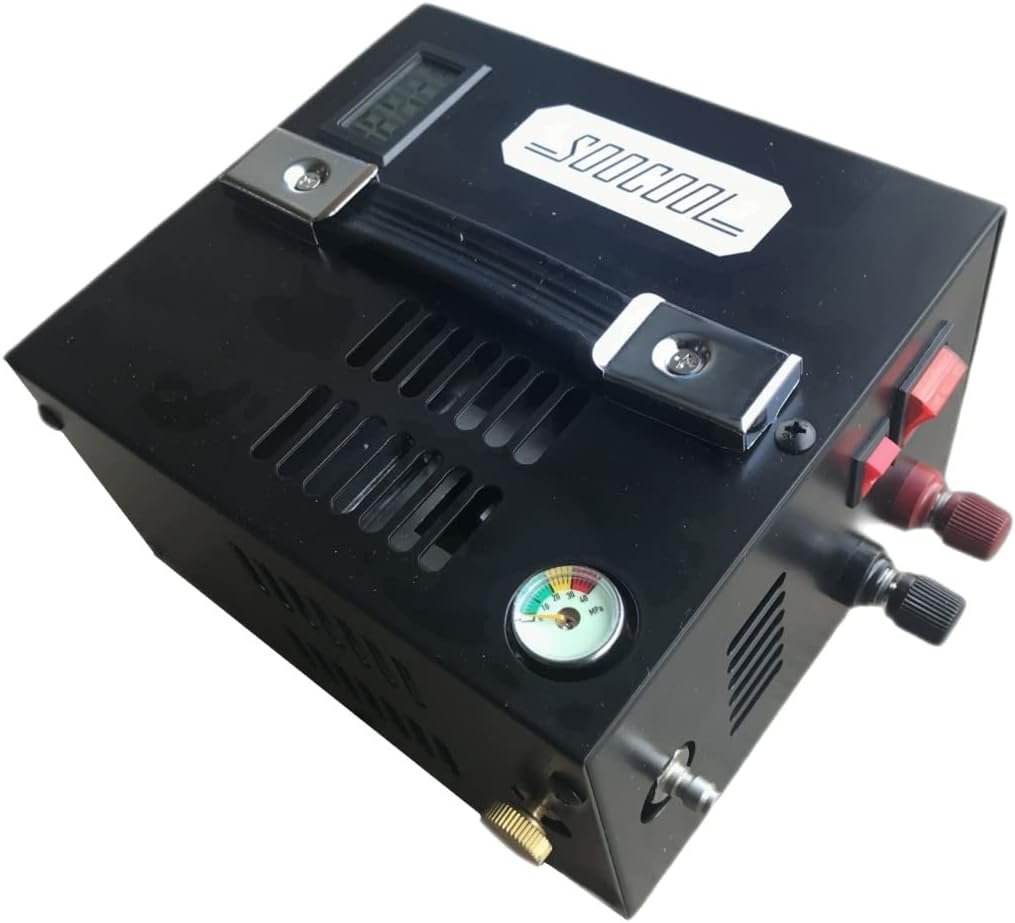

What Is the A+ Quality Portable PCP High Pressure Air Compressor?
This A+ Quality Portable PCP High Pressure Air Compressor is a compact, oil-free, water-free high‑pressure pump designed for PCP air rifles, pistols, paintball tanks, and small scuba/air bottles. It runs either on a standard 110V household outlet or directly from a 12V car battery, and it can reach pressures up to 4500 psi (30 MPa).
Instead of being tied to a big garage setup or a dive shop, we can carry this unit almost anywhere. It is built with an auto‑stop function, built‑in fan cooling, and a water‑oil separator filter to keep the air clean and to help protect our equipment.
Key Specifications and Features
When we look at a high‑pressure compressor for air guns and paintball, the details matter—pressure rating, portability, power source, and maintenance all affect how we actually use it.
Main Technical Specs at a Glance
We often find it easier to compare and understand a product when we see the specs lined up clearly. Here is a quick breakdown of the main information about this compressor:
| Feature | Specification / Description |
|---|---|
| Product Name | A+ Quality Portable PCP High Pressure Air Compressor |
| Max Working Pressure | 300 bar / 4500 psi / 30 MPa |
| Power Sources | 110V AC (home outlet) or 12V DC (car battery) |
| Tank Size Recommendation | Best for tanks under 0.45 L (approx. 60 cu in); not recommended above 1 L |
| Lubrication | Oil-free (no oil needed) |
| Cooling Method | Built-in fan cooling; no external water pump required |
| Filtration | Water-oil separator filter included |
| Portability | Lightweight and compact; designed for easy carrying |
| Auto‑Stop Function | Yes, can automatically shut off at the pre‑set pressure |
| Typical Uses | PCP air rifles/pistols, paintball tanks, small diving bottles, firefighting, leak testing |
| Maximum Rated Pressure | 4500 psi / 30 MPa / 300 bar |
These specs put the compressor squarely in the “portable field use” category. It is not trying to be a big workshop compressor for huge scuba tanks, but a compact solution for small cylinders and PCP guns.
Design and Build Quality
When we invest in high‑pressure gear, we want something that feels sturdy and trustworthy, not a flimsy gadget that makes us nervous every time it powers up.
Compact and Lightweight Form Factor
The first thing we notice about this compressor is how small and light it is compared to traditional shop compressors. It is designed to be carried by one person without much effort, so we can throw it in the trunk or back seat along with our gear.
Despite its compact form, the layout is functional: pressure gauge, connections, and controls are easy to reach. It is the sort of unit we can quickly set up on a bench, tailgate, or even on the ground if necessary.
Build Materials and Overall Finish
While we do not have every exact material spec, the product is marketed as “high quality guaranteed,” and the housing and fittings are generally built to cope with high pressures up to 4500 psi. The hose and connectors feel solid enough for repeated hook‑ups and disconnections.
The overall fit and finish are practical rather than luxurious. It is built as a tool, not as a decorative object, but it still gives us a sense of confidence that it can handle repeated use out in the field or at home.
Power Options: 110V and 12V Flexibility
One of the strongest aspects of this compressor is its ability to run off both a wall outlet and a vehicle battery. That alone makes it far more versatile than many other options.
Using 110V AC at Home
When we are at home, we can plug the compressor into a standard 110V outlet. That means no messing with car batteries, no jumper cables, and no extra fuss. For many of us who like to fill our tanks before heading out, that is a huge convenience.
Running on 110V also tends to be the most stable and consistent way to power the unit. We can set our desired cut‑off pressure, start the compressor, and let it do its job under steady power conditions.
Using 12V DC From a Car Battery
The 12V option is what really makes this compressor shine for field use. Out in a remote shooting spot, paintball field, or camping area, we can connect it directly to our car battery and fill our tanks on the spot.
We should, however, treat it like any other device that draws significant current from a car battery. It is smart to:
- Run the car engine to avoid draining the battery.
- Use good quality clamps or connections.
- Avoid extremely long extension leads that could cause voltage drops.
This combination of 110V at home and 12V on the move gives us genuine flexibility. We are not limited to any one environment.
Pressure Performance: Up to 4500 psi / 30 MPa
The core job of this compressor is to provide reliable, high‑pressure air for PCP air guns, paintball, and similar applications.
300 bar / 4500 psi Capability
With a maximum working pressure of 300 bar (4500 psi / 30 MPa), this compressor covers virtually all common PCP air rifle and paintball tank requirements. Most PCP systems operate somewhere between 200 and 300 bar, so this pressure capacity allows us to fill to the upper limits when needed.
Having 4500 psi capability means:
- We can fill higher‑pressure tanks fully, not halfway.
- We can match typical paintball tanks rated to 3000–4500 psi.
- We get some headroom between our desired fill pressure and the absolute maximum.
Auto‑Stop Function for Safety and Convenience
The auto‑stop feature is a highlight worth emphasizing. We can set a desired pressure, and the compressor will automatically shut off when it reaches that level. This gives us:
- Better safety: We reduce the risk of overfilling.
- Convenience: We are not forced to sit and stare at the gauge the entire time.
- Consistency: Our fill levels are more repeatable, which helps with consistent shot performance for PCP rifles.
Of course, we should still pay attention while filling and treat high‑pressure air with full respect, but the auto‑stop adds an extra layer of reassurance.
Air Quality: Oil-Free and Water-Oil Separation
For PCP and paintball systems, clean air is essential. Contamination can damage seals, reduce accuracy, and, in some cases, become a safety issue.
Oil-Free Operation
This compressor is explicitly oil‑free, meaning:
- We do not need to add or change compressor oil.
- We reduce the chance of oil vapor or droplets contaminating our tanks.
- Maintenance is simplified, especially for newer users who may not want to manage lubrication systems.
For many PCP air gun and paintball owners, oil getting into the system is a major concern. With this oil‑free design, we greatly reduce that risk by design rather than by habit.
Water-Oil Separator Filter
The unit includes a water‑oil separator filter in the air line. Even without oil in the compressor, moisture from ambient air is always a concern in high‑pressure systems.
The separator helps:
- Capture moisture before it reaches our tank.
- Reduce long‑term corrosion risk inside tanks and valves.
- Improve long‑term reliability of seals and internal components.
We might still want to monitor and periodically service or replace filter elements depending on how intensively we use the compressor and how humid our environment is, but having this filter built in is a real plus.
Cooling System: Built‑In Fan, No Water Needed
Cooling is essential for the longevity and safety of any high‑pressure compressor. Overheating can shorten the life of the motor, seals, and other components.
Built-In Fan Cooling
This compressor uses a built‑in fan cooling system, rather than a water‑cooled setup. That means:
- We do not need to carry water buckets, hoses, or pumps.
- Setup is plug‑and‑play—just connect power and air, and we are ready.
- Cooling is automatic and continuous while the unit is running.
By constantly moving air across key components, the fan helps control temperature. This is especially useful when filling multiple small tanks or topping off a PCP gun repeatedly.
No External Water Pump Required
Some high‑pressure compressors rely on water jackets and circulation pumps. Those can be effective, but they add complexity, weight, and extra failure points.
With this compressor, we avoid:
- Dealing with leaks and spills.
- Ensuring a clean water source in the field.
- Extra hoses and wiring.
For most users, air cooling with a fan is simpler and more convenient, as long as we respect the recommended duty cycles and allow the unit to rest when it gets hot.


Intended Use: Small Tanks and PCP / Paintball Systems
Knowing the limits of any compressor is as important as understanding its capabilities. This model is clearly tailored to a specific type of job.
Best for Tanks Under 0.45 L / 60 cu in
The manufacturer specifically states that this compressor is designed primarily for tanks under 0.45 L (around 60 cubic inches). That includes:
- Many PCP air rifle onboard cylinders.
- Many paintball tanks used with markers.
- Small diving bottles (within that capacity range).
Smaller tanks fill relatively quickly, which means less sustained runtime and less heat buildup. That aligns perfectly with the cooling and duty cycle of a portable compressor like this.
Not Recommended Above 1 L
The product details explicitly say we should not inflate tanks larger than 1 L, and we should not consider it suitable for repeated use on such larger tanks. Reasons include:
- Extended run times on large tanks increase heat stress.
- The 12V side in particular is at risk of overload or damage.
- The overall design is optimized for short bursts, not long continuous duty.
If we have large scuba tanks (for example, 6–12 L) and plan to refill them from empty on a regular basis, we would be better served by a larger, heavier-duty compressor system. For this model, staying within the recommended range is crucial for longevity and safety.
Typical Applications and Use Cases
Understanding how this compressor fits into real‑world scenarios helps us determine whether it aligns with our needs.
PCP Air Rifles and Pistols
For PCP air gun enthusiasts, this compressor is specifically tailored. It allows us to:
- Fill onboard cylinders directly via standard PCP fittings.
- Top off small detachable tanks.
- Maintain consistent fill levels without driving to a shop.
If we frequently shoot at ranges or on private land away from services, having this compressor with us can transform our routine. Instead of limiting our session to the air already in our tank, we can refill as needed.
Paintball Tanks
Paintball players often use 3000 or 4500 psi tanks in the 13–68 cu in range. For smaller tanks in that family, especially up to about 60 cu in, this compressor is very well suited.
We can:
- Top off personal tanks between games.
- Support small events or private games where no commercial filling station is available.
- Reduce reliance on shops during off‑hours or in remote areas.
We should still monitor heat and let the compressor rest between fills if we are running a lot of tanks in a row.
Small Diving Bottles and Specialty Uses
The description also mentions:
- Small diving bottle inflation (within the capacity limits).
- Firefighting support (for certain small high‑pressure cylinders).
- Leakage detecting and pressure‑tight tests.
- Some automotive uses where high‑pressure testing is needed.
We should keep in mind that for life‑support scuba use, strict standards and procedures apply. We should always follow appropriate safety and regulatory guidance for breathing air systems.
Ease of Use and Day‑to‑Day Operation
Many of us are not professional technicians. We want something we can use with confidence without reading a 100‑page technical manual.
Simple Setup Process
Basic operation typically follows this general pattern:
-
Power connection
- At home: plug into a 110V outlet.
- In the field: connect to a 12V car battery with proper clamps.
-
Air connection
- Attach the hose to the compressor outlet.
- Connect the other end to our tank or PCP rifle with the appropriate adapter.
-
Pressure setting
- Set our desired cut‑off pressure (within the safe limits of our tank).
-
Start and monitor
- Start the compressor and keep an eye on the gauge and temperature.
- Let the auto‑stop feature shut the unit off at the set pressure.
-
Disconnect and cool down
- Turn off power, vent line pressure if needed, then disconnect the fittings.
- Allow the unit to cool between fills, especially after longer runs.
Once we go through it a couple of times, the whole process becomes familiar and quick.
Learning Curve for New Users
If we are new to high‑pressure air, there will be a short learning curve, particularly about:
- Understanding safe working pressures.
- Knowing our specific tank’s rated limits.
- Using the correct fittings and adapters.
- Following cooling and duty cycle recommendations.
That said, the compressor’s oil‑free, water‑free, auto‑stop design removes several common pain points. We do not need to worry about oil levels or setting up a water pump, which lowers the barrier for new users.
Portability and Field Use
Portability is a defining strength of this compressor. It is built around the idea that we might want power and pressure wherever we are.
Size and Weight in Practical Terms
While exact weight figures can vary by batch, it is noticeably lighter and smaller than shop‑grade air compressors that offer similar pressure ratings. We can pick it up with one hand, carry it across a range, or move it between storage and trunk without straining.
It fits easily in:
- Car trunks.
- Back seats.
- Gear lockers or cabinets.
For anyone who travels regularly to shoot or play paintball, this combination of small size and high pressure is appealing.
Real-World Scenarios
Some typical situations where this compressor shines:
-
Remote hunting or target shooting trips
We bring our PCP rifles and tanks, plus this compressor, and refill as needed from our vehicle battery. -
Private property plinking
We set up in the backyard or on rural land, plug into a nearby outlet or our vehicle, and keep our airguns supplied all afternoon. -
Small paintball gatherings
We support a group of friends with personal 48–60 cu in tanks, topping them up throughout the day.
In each of these cases, we avoid the logistics and time of visiting external filling stations.
Maintenance and Longevity
Even an oil‑free, water‑free compressor still requires a bit of care if we want it to last and remain safe.
Routine Checks
Some basic habits can significantly improve longevity:
- Inspect hoses and fittings periodically for wear, cracks, or leaks.
- Check the filter in the water‑oil separator and change or clean it as needed.
- Monitor run times to avoid overheating the unit.
- Keep vents and the fan area clear of dust and obstructions to maintain good airflow.
These are quick steps that can save us from more serious problems later.
Respecting Duty Cycle and Tank Limits
The manufacturer’s advice not to inflate tanks over 1 L is more than a gentle suggestion. Ignoring it can:
- Overload the motor.
- Cause excessive heat that shortens component life.
- Risk internal damage that may not be immediately obvious.
By sticking to smaller tanks and giving the compressor time to rest after demanding fills, we are far more likely to enjoy stable performance over the long term.
Safety Considerations
High‑pressure air is incredibly useful but also potentially dangerous if mishandled. This compressor incorporates some protective features, but our own practices are equally important.
Built-In Safety Features
This unit provides several design elements that support safe operation:
- Auto‑stop at a set pressure.
- Pressure gauge for real-time monitoring.
- Built-in fan cooling to manage temperature.
- Water‑oil separator to help maintain air quality and reduce internal tank corrosion.
These features do not replace common‑sense safety, but they add meaningful layers of protection.
Best Practices for Users
We should always:
- Verify the pressure rating on our tanks and never exceed it.
- Use only appropriate hoses, fittings, and adapters.
- Avoid placing our face or body directly above connection points while filling.
- Keep children and bystanders at a safe distance.
- Power the compressor from reliable, appropriate power sources.
By combining the unit’s safety design with responsible handling, we can work confidently at these high pressures.
Pros and Cons
Every product comes with trade‑offs. Summarizing both sides can help clarify whether this compressor suits our personal needs.
Advantages
- High pressure capability up to 4500 psi / 30 MPa, suitable for modern PCP and paintball systems.
- True portability thanks to the lightweight build and dual power options (110V and 12V).
- Oil-free operation for cleaner air and simpler maintenance.
- No external water cooling required, making setup easier and more convenient.
- Water‑oil separator filter for improved air quality and equipment protection.
- Auto‑stop function for safer and more convenient fills.
- Designed for PCP and paintball with direct compatibility for typical nipples and small tanks.
These strengths make it very attractive for active PCP shooters and paintball players who value mobility.
Limitations
- Not suitable for large tanks above 1 L; it is optimized for small-volume cylinders.
- Duty cycle must be respected; extended continuous runs can overheat the unit.
- Noise level can still be noticeable (as with most compressors), so it is not silent.
- Field use on 12V requires care to avoid draining or stressing the vehicle battery.
If we primarily need to fill large scuba tanks from empty, or if we plan to run marathon filling sessions, a bigger, more industrial compressor would likely be a better match.
Who Is This Compressor Best For?
Understanding the ideal user profile helps us decide if this model fits our situation or if we should look elsewhere.
PCP Air Gun Enthusiasts
For anyone serious about PCP rifles or pistols, this compressor checks most of the boxes:
- Compact enough to store easily with our gun gear.
- Powerful enough to fill typical PCP cylinders to full pressure.
- Flexible enough to run off home electricity or a car battery.
Whether we are into precision target shooting, pest control, or casual plinking, being able to refill our airguns on demand changes the entire experience.
Recreational and Competitive Paintball Players
If we use paintball tanks within the recommended size limits, this compressor is very appealing:
- We can top off between matches without leaving the field.
- We reduce dependence on commercial fill stations and their schedules.
- Our group can be more self‑sufficient during day‑long or weekend events.
For small teams and clubs, this compressor can be a shared asset that makes events smoother and more flexible.
Technical Users and Hobbyists
Because it can also support leak detection, pressure‑tight tests, and some specialized high‑pressure tasks, technically minded users might find additional uses beyond PCP and paintball.
As long as we respect the working pressure, capacity limits, and safety guidelines, this unit can be a versatile tool in our workshop or hobby space.
Practical Tips for Getting the Most Out of It
Beyond the specs and features, a few practical habits can really enhance our experience and protect our investment.
Plan Fills Strategically
Instead of running the compressor constantly:
- Top off regularly rather than letting tanks run all the way down, which shortens fill times.
- Rotate tanks if possible, so the compressor gets short breaks between fills.
- Use the 110V power at home whenever available, saving the 12V option for when we truly need field mobility.
This approach keeps heat under control and prolongs component life.
Store and Transport with Care
When not in use:
- Keep the compressor in a dry, dust‑free environment.
- Protect hoses and fittings from kinks and sharp bends.
- Cover or case the unit if we frequently transport it, reducing the risk of impact damage.
During transport, securing it so it does not slide around can prevent accidental knocks to gauges and connectors.
Overall Value and Final Thoughts
The A+ Quality Portable PCP High Pressure Air Compressor for Air Rifle Gun etc, Car 12V or 110V, Auto-Stop, Oil-Free, Water-Oil Separator Filter, 4500Psi/30Mpa, Paintball/Scuba Tank Compressor Pump delivers a combination of portability, pressure capability, and user‑friendly operation that is clearly tailored to modern PCP and paintball users.
We gain:
- True field independence, thanks to 12V car battery operation.
- Easy at‑home use with 110V power.
- Clean, oil‑free air with moisture control.
- Convenient auto‑stop functionality for safe and repeatable fills.
We do have to respect its intended use: small tanks (ideally under 0.45 L) and reasonable fill sessions with cooling breaks. It is not designed as a heavy‑duty industrial powerhouse, but as a practical, portable solution for active shooters and players.
If our main goal is to keep PCP rifles, pistols, and modest‑size paintball tanks filled—whether at home or out in the field—this compressor offers a well‑balanced blend of convenience, performance, and safety. For that specific role, it is a compelling option that can significantly improve how we use and enjoy our high‑pressure air gear.

Disclosure: As an Amazon Associate, I earn from qualifying purchases.