Have we ever wished we had a powerful, reliable air setup that actually kept up with our projects instead of slowing us down?

Why This CRAFTSMAN Air Compressor + Flexzilla Hose Combo Stands Out
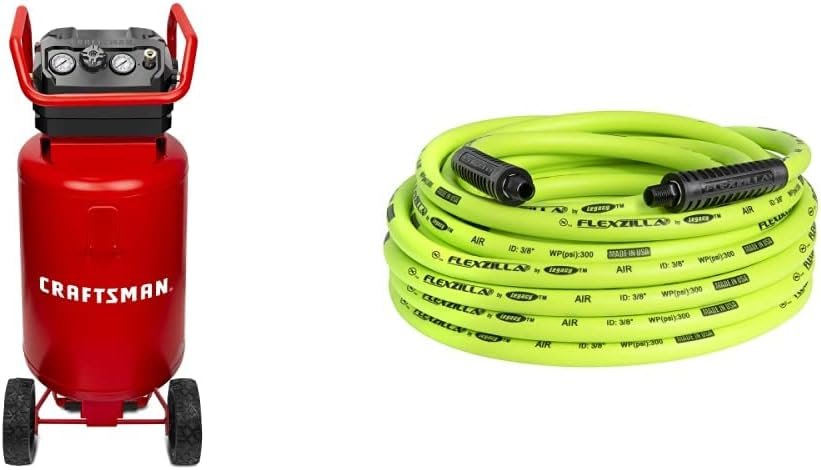
When we pair a solid compressor with a high-quality hose, our entire workflow changes. This combo – the CRAFTSMAN Air Compressor, 20 Gallon, 1.8 HP, Oil-Free, Red plus the Flexzilla Air Hose, 3/8 in. x 50 ft., ZillaGreen – is designed to give us more power, fewer interruptions, and easier handling. Instead of piecing together mismatched tools, we get a cohesive setup built for real work in garages, workshops, and on jobsites.
In this review, we walk through what this setup can really do, how it performs for different tasks, and whether it’s worth the investment for our needs.
Key Features at a Glance
Sometimes it helps to see the essentials laid out clearly. Here’s a quick snapshot of what we get with this combo.
| Feature | CRAFTSMAN Compressor | Flexzilla Hose |
|---|---|---|
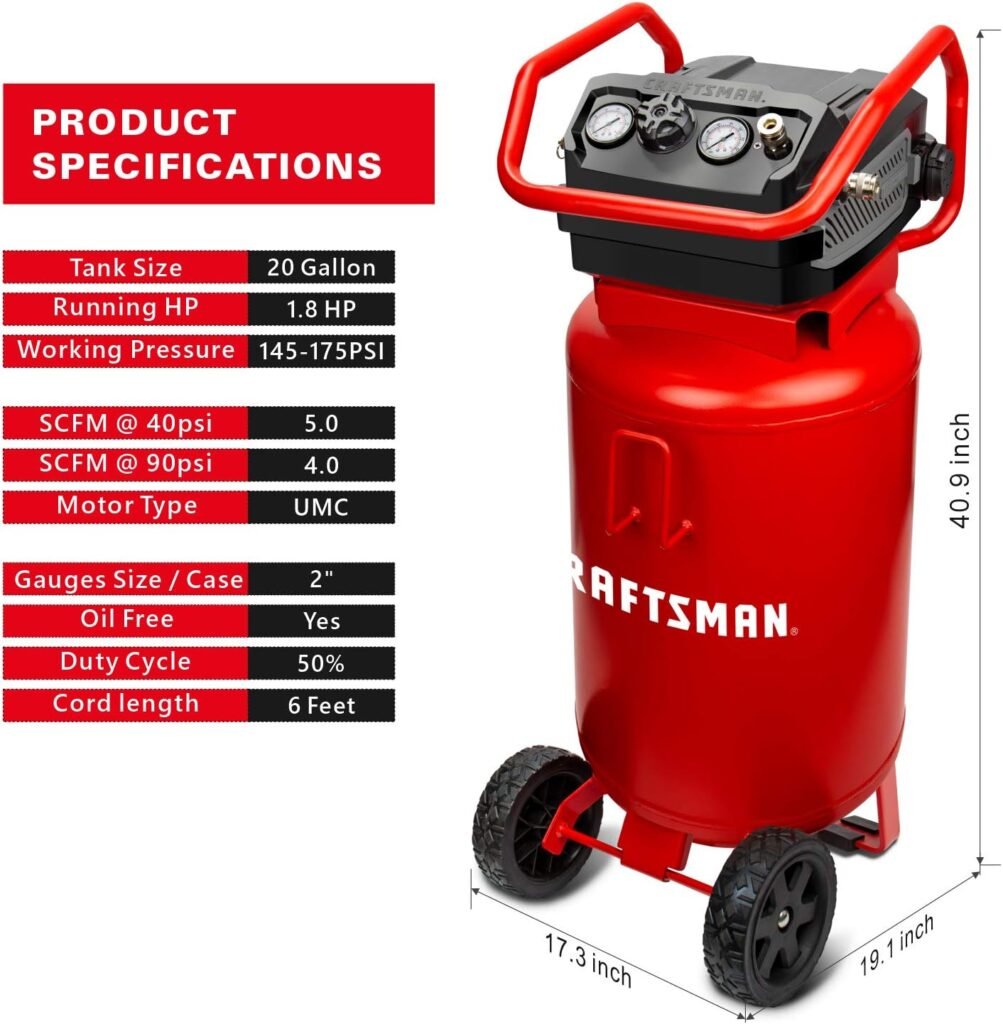
| Tank Size | 20 gallons | N/A |
| Motor Power | 1.8 HP | N/A |
| Max Tank Pressure | 175 PSI | 300 PSI maximum working pressure |
| Air Delivery | 4 SCFM @ 90 PSI | 3/8 in. internal diameter |
| Pump Type | Oil-free (no maintenance) | Hybrid polymer (no kinking, zero memory) |
| Construction | Stainless steel tank, rubber feet | Abrasion-resistant cover, aircraft aluminum fittings |
| Hose Length | N/A | 50 ft |
| Temperature Range | N/A | -40°F to 140°F all-weather flexibility |
| Port/Fittings | Standard compressor outlets | 1/4 in. MNPT fittings |
| Best Uses | Nailers, inflating, cleaning, spraying, light auto work | General air tool use, long reach, indoor/outdoor |
We appreciate that both pieces are designed around real-world conditions: high pressure, long tool run time, and a hose that won’t fight us with kinks or stiff coils.
Build Quality and Durability
Construction and Materials of the Compressor
The compressor’s 20-gallon tank is made of stainless steel, which gives us a sturdy, corrosion-resistant base. This matters when we keep the compressor in a garage or workshop where humidity, dust, and occasional bumps are part of life. Stainless steel and solid welds help extend the lifespan compared with cheaper, flimsier builds.
Rubber feet on the compressor reduce vibration and movement while running. That not only cuts down on noise transfer through the floor but also keeps the unit from “walking” slightly when it kicks on. Over time, that stability is surprisingly important for comfort and safety in our workspace.
The oil-free pump is another major part of the durability story. There’s no messy oil to change or monitor and no risk of oil contamination reaching our air tools or paint sprayers. While some heavy-duty industrial compressors still use oil-lubricated pumps for continuous commercial use, for most home and small-shop users, oil-free means far less hassle.
Hose Durability and Fittings
Flexzilla is known for its outer jacket, and this hose backs that reputation. We get an abrasion-resistant outer cover that’s meant to handle dragging across concrete, around vehicles, and over sharp edges better than basic vinyl hoses. It will still scuff over time, but it is clearly built for rough handling.
The aircraft aluminum fittings with bend restrictors are another plus. Aluminum keeps things lightweight, while the crush-resistant design gives us a better chance of avoiding damage when the hose gets stepped on, rolled over, or pinched. Bend restrictors help prevent stress cracks near the ends, which is a common failure point on cheap hoses.
Overall, in terms of build quality, this combo feels far from “disposable.” It’s made for regular, even frequent use in realistic environments.
Power and Performance
Compressor Power: 1.8 HP and 175 PSI
A 1.8 HP motor driving a 20-gallon tank up to 175 PSI gives us a nice blend of capacity and pressure. For most homeowner and small workshop tasks, that’s more than enough power. The drivetrain and pump deliver 4 SCFM at 90 PSI, which is a practical figure we can use to compare with tool requirements.
What this means for us:
- We can operate most finish and brad nailers with no problem.
- We can use roofing nailers and framing nailers on smaller to moderate jobs.
- We can run impact wrenches, ratchets, air chisels, and drills for intermittent use.
- We can support paint sprayers and caulk guns suitable for DIY and light professional work.
While this is not a huge industrial compressor, it delivers respectable performance for its size and price range. For continuous sandblasting or long, continuous heavy-impact use, we might want larger capacity or more SCFM, but for typical mixed tasks, we are in a very comfortable performance zone.
SCFM and Recovery Time
At 4 SCFM @ 90 PSI, our tools get a steady air supply for many common applications. When we’re firing a nailer or using a wrench in bursts, this flow rate works very well.
The manufacturer highlights quick compressor recovery time, which matters when we’re cycling between high-demand tasks and the tank refilling. Because the tank goes up to 175 PSI, we effectively store more energy between cycles. This allows the compressor to stay ahead longer before kicking on and to maintain usable pressure longer during heavy bursts.
In real terms, that means:
- Less time waiting for the compressor to “catch up.”
- Fewer interruptions when inflating large tires or using air blow guns.
- Smoother operation when we’re working with tools that draw air intermittently.
We would not call this a continuous-duty industrial unit, but for home mechanics and DIY builders, recovery speed is more than adequate.
Hose Performance Under Pressure
The Flexzilla hose is rated for 300 PSI maximum working pressure, which comfortably exceeds the compressor’s 175 PSI. That gives us a good safety margin and means the hose will not be the weak link in our system.
Because of the hybrid polymer design, the hose:
- Won’t kink under pressure – which is huge when we’re working around corners or under vehicles.
- Has zero memory, so it lays flat instead of constantly curling back into loops.
- Coils easily for storage, without wrestling it back into shape.
All of this contributes to practical performance: we spend less time untangling and more time working.
Tank Capacity and Run Time
What a 20-Gallon Tank Gives Us
A 20-gallon tank is a sweet spot between small, portable compressors and huge stationary shop units. It stores enough air to:
- Run nailers for long stretches without the motor constantly cycling.
- Perform multiple tire inflations or blow-off tasks in a row.
- Support painting and spraying projects on a moderate scale.
We can think of tank size like a battery for our air system. A larger “battery” means our tools can run longer before the system needs to recharge. That extra volume at 175 PSI increases the effective run time before the pressure drops below what our tools require.
Longer Tool Run Times in Practice
The product details highlight longer tool run times, and that really is where this compressor shines for its class. For example:
- When roofing or framing with nailers, we can work through quite a few nails before the compressor cycles on.
- When running an impact wrench on stubborn bolts, we have more sustained pressure to maintain torque.
- When spraying paint or coatings, we can keep a more consistent fan pattern longer before pressure dips.
We still need to be mindful of high-consumption tools and long continuous runs, but for most DIY and semi-professional use, this tank size provides a noticeable upgrade over small “pancake” or 6-gallon units.
Ease of Use and Setup
User-Friendly Compressor Design
The oil-free pump alone makes this compressor much easier to live with. We avoid:
- Checking oil levels.
- Performing oil changes.
- Worrying about oil mist reaching our finish work.
Setup is straightforward: we plug it into an appropriate power source, connect our hose to the outlet, and set our regulator pressure according to the tool we’re using. Because it’s a 20-gallon model, it’s not feather-light, but it’s still manageable for a garage or workshop setting. Many units in this range include wheels and a handle, which make repositioning much easier (we would confirm our specific model’s mobility features, but this is typical for this class).
Once we’ve dialed in our pressure, most users find the controls intuitive. Gauges for tank and regulated pressure allow us to monitor performance at a glance.
Handling the Flexzilla Hose
The hose is where ease-of-use really shines. Thanks to the hybrid polymer and zero memory, handling is far less frustrating than with stiff PVC hoses.
In practical terms:
- It uncoils easily when we pull it across the garage or yard.
- It lies flat instead of constantly twisting or flipping over.
- It stays flexible in cold weather, even down to -40°F, which is a major plus if we work outside or in an unheated shop.
The 1/4 in. MNPT fittings are standard, so mating it with the CRAFTSMAN compressor (which also uses common fittings) is simple with the appropriate couplers. Once connected, the hose feels lightweight enough to reduce fatigue when we’re moving around a vehicle, up a ladder, or across a worksite.

Portability and Storage
Compressor Mobility
While this is not a compact, ultra-portable unit, a 20-gallon compressor is still reasonably manageable. We tend to use this size in more semi-permanent locations like:
- Our garage or home workshop.
- A small jobsite where it remains parked for the day.
- An outbuilding where we regularly perform maintenance or projects.
The stainless steel tank adds a bit of reassuring heft, and if we have wheels and a handle, we can tilt and roll it to wherever it’s needed. It’s not something most of us will be lifting in and out of a vehicle regularly on our own, but it’s perfect as a “hub” compressor that stays in one main spot most of the time.
Hose Length and Storage
The 50 ft length of the Flexzilla hose gives us generous reach from a fixed compressor position. We can park the compressor in a corner and still reach:
- Most areas of a two-car garage.
- Vehicles parked in the driveway.
- Workbenches, tools, and corners of the shop.
For storage, the zero-memory design makes it easier to wind onto a hose reel or into large loops on a hook. Since the hose is lightweight compared with many rubber or stiff PVC models, we don’t feel like we’re wrestling with it when cleaning up.
Noise and Comfort in Use
Noise Levels From the Compressor
While the exact decibel rating is not specified in the details provided, we know that oil-free compressors tend to have a moderately sharp sound compared to some oil-lubed units. That said, for a 1.8 HP, 20-gallon compressor, noise is usually in the acceptable range for garages and workshops.
From a comfort standpoint:
- We may want hearing protection if we’re standing right next to it for long periods.
- Positioning it a bit away from our main working area can reduce fatigue.
- Rubber feet help tame vibration noise going into the floor.
For typical users, the sound level is more of a background machine noise than an overwhelming roar. We can still communicate and move around our space comfortably, especially if the compressor is not cycling constantly.
Comfort When Handling the Hose
Using the Flexzilla hose is noticeably more comfortable than dealing with old, heavy rubber or stiff plastic hoses. Its lightweight and flexible design means:
- Less tugging and dragging to get slack.
- Fewer battles with coiling and looping.
- Easier movement around obstacles without snagging and kinking.
Over the course of a long project, this comfort adds up. We’re less tired, and we’re not constantly stopping to free knots or straighten twists.
Applications: What We Can Actually Do With This Setup
Garage and Auto Work
For many of us, the first test of a compressor setup is what it can do in the garage. With this CRAFTSMAN + Flexzilla combo, we can comfortably:
- Inflate tires on cars, trucks, bikes, trailers, and equipment.
- Use impact wrenches for lug nuts and stubborn bolts (within reasonable SCFM limits).
- Run air ratchets and air chisels for automotive repair tasks.
- Use air blow guns for cleaning engine bays, workbenches, and parts.
The 20-gallon capacity and 4 SCFM @ 90 PSI give us enough “staying power” to perform these tasks without feeling like we’re waiting constantly for the tank to refill.
Carpentry, Construction, and Remodeling
In the workshop or on light construction jobs, air tools are often in constant rotation. This compressor is well suited for:
- Brad nailers and finish nailers for trim, cabinetry, and paneling.
- Staple guns / pinners for upholstery, underlayment, and light assembly.
- Roofing nailers for smaller roofing jobs or patch repairs.
- Framing nailers for limited framing tasks and repairs.
Where we might feel the limitations is on sustained, high-production framing or roofing where multiple users and tools are drawing air continuously. For a single user or a couple of nailers used in bursts, this system works very well.
Painting, Spraying, and Finishing
With the right spray gun and pressure settings, this compressor can support:
- HVLP or conventional spray guns for small to medium projects.
- Paint sprayers for furniture, fences, doors, and similar tasks.
- Caulk guns powered by air for consistent application.
We’ll want to pay attention to the air requirements of our specific sprayer. Many HVLP systems are very efficient, but some conventional guns demand higher SCFM. For occasional or moderate spraying, this compressor gives us a good foundation.
Cleaning, Inflating, and General Shop Tasks
Besides power tools, compressors excel at everyday tasks around the shop:
- Using an air nozzle to blow dust and chips off benches, tools, and machinery.
- Inflating sports equipment, pool toys, and inflatable tools.
- Powering air drills for specific drilling jobs where corded tools are less convenient.
Paired with the flexible, lightweight hose, we can reach into tight corners, under benches, and around complex setups without fighting our air line.
Weather and Environmental Performance
All-Weather Hose Flexibility
One of the biggest advantages of the Flexzilla hose is its all-weather flexibility from -40° to 140°F. Many standard hoses become stiff, brittle, or kink-prone in cold temperatures, which is frustrating and can even be a safety hazard.
With this hose, we can:
- Work comfortably in unheated garages in winter.
- Use the hose outdoors on cold mornings without it turning into a rigid coil.
- Avoid softening and sagging too much in hot sunny conditions.
For those of us who live in climates with temperature swings, this wide operating range is a genuine practical benefit rather than just a spec on paper.
Durability in Rough Environments
The abrasion-resistant outer cover holds up better when dragged over rough surfaces. We still want to be mindful of sharp edges and hot surfaces, but overall, this hose is made with real-world abuse in mind.
The crush resistant aircraft aluminum fittings also help prevent damage if a tire rolls over the end or something heavy lands on it. It’s not indestructible, but it’s clearly more robust than the cheaper brass or plastic fittings we see on budget hoses.
Maintenance and Longevity
Oil-Free Compressor Advantages
One of the strongest selling points for this compressor is that it’s oil-free. That gives us several advantages:
- No oil changes – one of the main maintenance tasks is removed.
- Cleaner air output – less risk of oil contamination in paint, finishes, or tools.
- Simpler storage – we don’t have to worry as much about oil levels when moving the unit.
We still need to follow good compressor practices, such as:
- Draining condensation from the tank regularly to prevent internal rust.
- Inspecting hoses and fittings for leaks or damage.
- Keeping the area around the air intake free of dust and debris.
With these basic habits, we can expect a long life from an oil-free compressor like this, especially in non-commercial settings.
Hose Maintenance
The Flexzilla hose does not demand much from us, but we can extend its life by:
- Avoiding dragging it over very sharp edges if we can help it.
- Coiling it neatly after use, rather than leaving it tangled underfoot.
- Keeping it away from open flames or extremely hot exhaust parts.
Thanks to the zero memory, coiling it after each use is easy, which naturally leads to better care over time.
Pros and Cons
What We’ll Probably Love
- Strong performance for its size: 1.8 HP motor, 175 PSI, and 4 SCFM @ 90 PSI cover a wide range of tools.
- Generous 20-gallon tank: Delivers longer tool run times and fewer interruptions than small pancake units.
- Oil-free pump: Low maintenance, clean air, and no oil changes.
- Durable construction: Stainless steel tank, rubber feet, and quality components.
- Extremely flexible hose: Hybrid polymer with zero memory, easy to handle, even in cold weather.
- High-pressure hose rating: 300 PSI working pressure with abrasion-resistant cover.
- Lightweight hose and robust fittings: Easy on our arms, tough enough for daily shop use.
Potential Drawbacks to Consider
- Not ultralight or ultra-portable: A 20-gallon compressor is best suited for semi-stationary use rather than being carried from site to site.
- Noise typical of oil-free compressors: Not extremely loud, but not whisper-quiet either; some of us may prefer hearing protection.
- SCFM limitations for very heavy-duty tasks: Continuous, industrial-level air demands may outpace this unit.
- Requires adequate power circuit: We should ensure our outlet and circuit can handle the compressor startup load without frequent breaker trips.
Who This Combo Is Best For
Ideal Users and Workspaces
We think this compressor and hose combination will be an excellent fit for:
- Home mechanics and DIY enthusiasts who want power and capacity beyond small, portable units.
- Woodworkers and remodelers using nailers, staplers, brad/finish nailers, and occasional roofing/framing tools.
- Small shop owners who need a dependable air source for day-to-day tasks without a huge industrial setup.
- Hobbyists and makers who do a mix of inflating, cleaning, spraying, and light metal or auto work.
If we mostly do light tasks like inflating tires and running a brad nailer occasionally, this setup may feel like more than we strictly need, but it will give us room to grow. If we run multiple high-demand tools all day in a production environment, we might outgrow this compressor and need a larger, higher-SCFM unit.
Situations Where It Might Not Be Ideal
We may want to look elsewhere if:
- We need ultra-quiet operation for a shared indoor space where noise is a major issue.
- We perform continuous-duty industrial tasks, such as large-scale sandblasting or multi-operator spray systems.
- We require a tiny, easily carried compressor for very mobile onsite work with minimal air demand.
For most serious DIY and light professional users, though, this system strikes a strong balance between capability, convenience, and cost.
Tips for Getting the Most From This Setup
Matching Tools to the Compressor
To make sure we’re using the compressor efficiently, we can:
- Check SCFM and PSI ratings on each air tool and compare them with the compressor’s output (4 SCFM @ 90 PSI).
- Set the regulator pressure only as high as our tool requires, instead of maxing it out.
- Avoid running multiple high-demand tools at once if we notice frequent pressure drops.
By understanding air demands, we keep the system performing at its best and avoid unnecessary stress on the motor and pump.
Optimizing Hose Use and Layout
To get the most from the Flexzilla hose:
- Position the compressor in a central spot, then use the 50 ft reach to cover our workspace rather than moving the compressor frequently.
- Use quick-connect fittings and couplers of good quality to maintain a leak-free connection.
- Keep the hose as straight as possible during heavy use, letting its natural flexibility and zero memory do the work.
This helps us maintain pressure, reduce tripping hazards, and make each project smoother.
Safety Considerations
Compressor Safety
We should always respect compressed air systems. A few key points:
- Regularly inspect the tank and fittings for signs of rust or damage.
- Drain condensation from the tank to limit corrosion and maintain safety.
- Never exceed the recommended pressure limits for tools and accessories.
- Keep the compressor on a stable, level surface and ensure good ventilation.
Following basic safety guidelines helps us enjoy years of reliable use without incident.
Hose and Tool Safety
With the hose and connected tools:
- Avoid pointing air blow guns at ourselves or others; compressed air can cause serious injury.
- Inspect the hose regularly for cracks, cuts, or worn spots.
- Make sure fittings are securely tightened to prevent sudden disconnections under pressure.
- Store the hose away from sharp edges and high heat sources to prevent damage.
By enjoying the flexibility and performance of the Flexzilla hose while staying mindful of safety, we can build a comfortable, efficient air system.
Final Thoughts: Is This Compressor + Hose Combo Worth It?
This combination of the CRAFTSMAN 20-Gallon, 1.8 HP, Oil-Free Air Compressor and the Flexzilla 3/8 in. x 50 ft. Air Hose (ZillaGreen) offers a very capable, user-friendly setup for most home and light shop applications. We get:
- Enough power and capacity to handle a wide spectrum of air tools.
- A durable, low-maintenance compressor built with a stainless steel tank and oil-free pump.
- A flexible, all-weather hose that significantly improves day-to-day usability over cheap, stiff alternatives.
For those of us who are ready to step up from small, portable compressors but do not need a massive industrial system, this combo hits a very attractive middle ground. We can confidently run nailers, impact wrenches, blow guns, inflators, and assorted air tools, all while enjoying the convenience of a hose that works with us rather than against us.
If our goal is to build a solid air setup for our garage, workshop, or small jobsite – one that balances power, durability, and ease of use – this CRAFTSMAN and Flexzilla pairing is a strong choice we can feel good about relying on for a wide range of projects.

Disclosure: As an Amazon Associate, I earn from qualifying purchases.