Have we ever wished our air tools had the power and consistency of a full shop setup, but in a package we can haul to any job site or property corner we need?
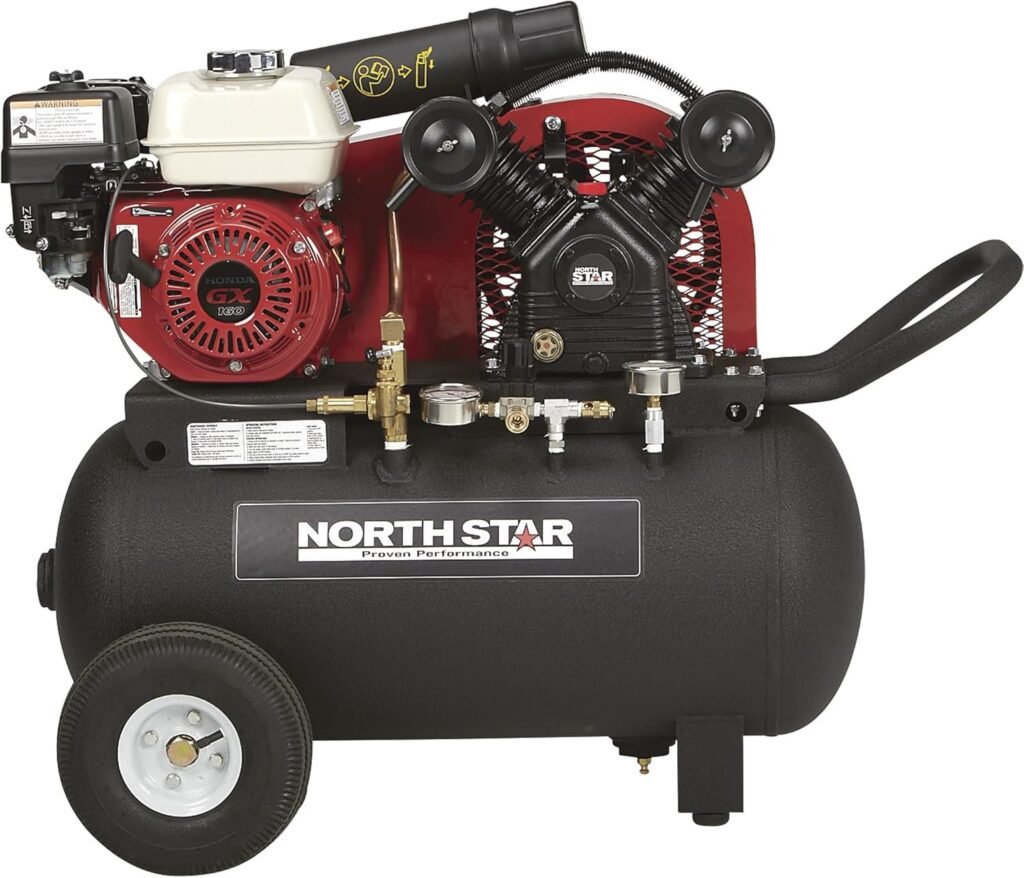

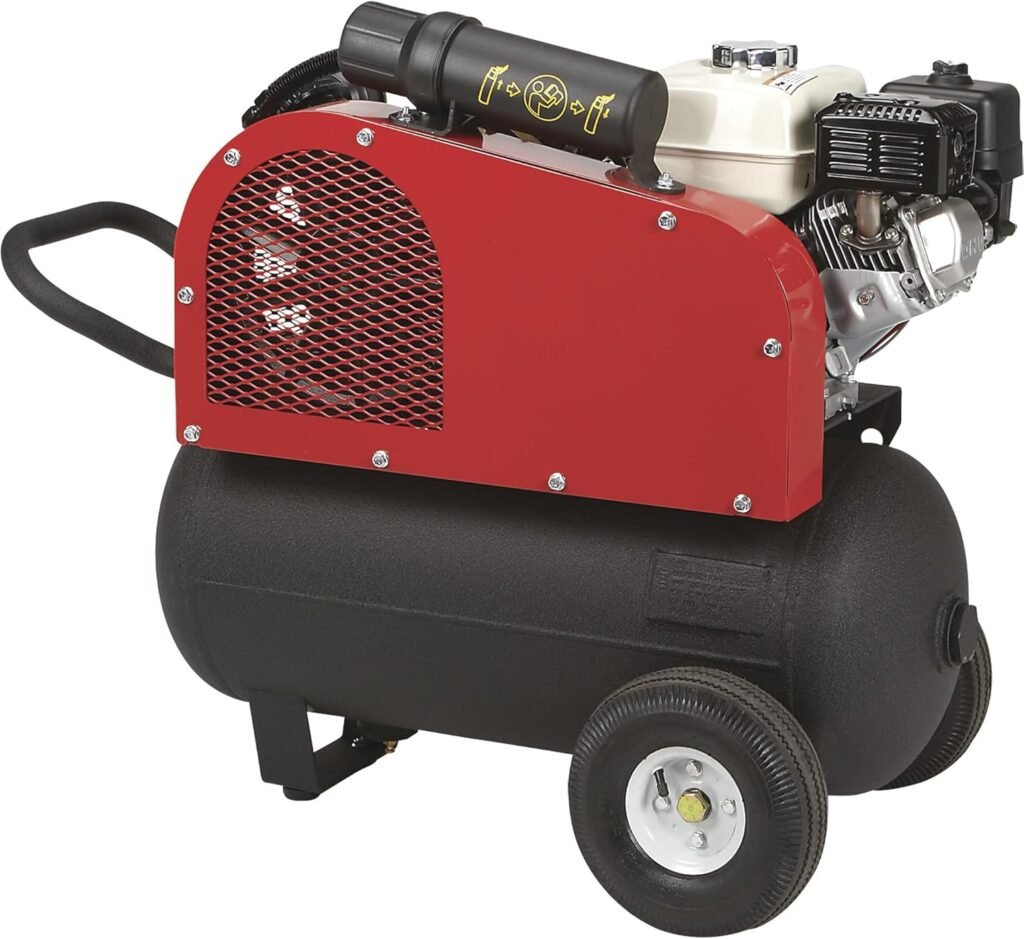
NorthStar Portable Gas-Powered Air Compressor 20-Gal: Our Full Experience
We’ve spent time working with the NorthStar Portable Gas-Powered Air Compressor 20-Gal Horizontal Tank 13.7 CFM @ 90 PSI, and we’re going to walk through what it’s like to own and use it. This isn’t a quick overview; it’s our hands-on style perspective on how this compressor performs in real-world situations.
We’ll talk about performance, build quality, ease of use, maintenance, and who we feel this unit is actually perfect for.
Key Specs and Features at a Glance
We find it easier to understand what we’re getting into when we see the core specs laid out clearly. Here’s how this NorthStar unit shapes up on paper and how that translates in practice.
| Feature | Specification / Detail | What It Means for Us |
|---|---|---|
| Power Source | Gas-powered | We’re fully portable with no need for electrical outlets. |
| Engine | Honda GX160 OHV with low oil shutdown | Reliable, fuel-efficient, and automatically protects itself from damage. |
| Tank Capacity | 20-gallon horizontal tank | Enough air storage for steady tool operation without constant cycling. |
| Air Delivery | 13.7 CFM @ 90 PSI | Strong output suitable for a wide range of pro-grade air tools. |
| Pump Material | Full cast iron pump | Longer service life, better durability under heavy use. |
| Pump Design | V-style cylinder design | Better cooling and more efficient running at sustained workloads. |
| Pump Head Material | FC35 grade cast iron | High-strength material built to handle heat and pressure over the long term. |
| Valves | Floating-type Swedish steel valves | Longer valve life and consistent performance under demanding conditions. |
| Mobility | Portable horizontal configuration | We can move it around job sites without needing a permanent install. |
| Protection Feature | Low oil shutdown | Reduces risk of catastrophic engine damage from low lubrication. |
This table shows that NorthStar and Honda focused on longevity and real working conditions, not just impressive brochure numbers.
Why We Chose a Gas-Powered 20-Gallon Compressor
We know some of us debate between electric and gas-powered compressors, and it’s a valid question. We considered our use cases, then realized this setup fits a certain niche extremely well.
We often work in areas with no power outlets, sometimes far from buildings or in new construction where electrical service isn’t in place yet. A gas-powered compressor like this gives us independence from the grid while still delivering “shop-level” air performance.
We also wanted something that could handle more than just light-duty nailing. With 13.7 CFM at 90 PSI, we felt confident we could run impact wrenches, sanders, and other heavier tools without constant waiting.
Engine: Honda GX160 OHV – A Reliable Heart
The engine is the soul of any gas-powered compressor, and here we get a Honda GX160 OHV unit with low oil shutdown. Those details matter a lot when we’re using this machine day in, day out.
Honda GX160 Performance and Behavior
We’ve learned that the GX series from Honda has a well-earned reputation for reliability. In our use, the GX160 starts consistently with proper choke and fuel, and once warmed up, it runs smoothly without a lot of fuss.
We appreciate the overhead valve (OHV) design, which generally means better fuel efficiency and lower emissions compared to older flathead engines. For us, that translates to more run time per tank of fuel and less time stopping to refuel.
Low Oil Shutdown: Real Protection, Not Just a Bullet Point
The low oil shutdown is not just a marketing phrase we can ignore. In practice, it’s a real safety net. When the oil gets too low, the engine simply shuts off to protect itself.
We’ve had moments where we got busy on a job and forgot to check oil levels. Knowing that the engine has its own protection gives us peace of mind and likely prevents a very expensive problem down the line.
Pump Construction: Full Cast Iron for Long Life
The pump is where the compressed air happens, and it endures a lot of heat and stress. NorthStar uses a full cast iron pump, and that choice affects durability and heat management in a really tangible way.
Why Full Cast Iron Matters to Us
Cast iron is heavier than aluminum, but we accept that trade-off because we’re getting:
- Better wear resistance for internal components
- Improved stability under high temperatures
- A longer overall service life when we regularly maintain it
We’re not buying this to last a year or two. We want something that can handle serious workloads for many seasons, and a cast iron pump is a big part of that.
FC35 Grade Cast Iron Pump Head
The pump head is FC35 grade cast iron, which tells us we’re dealing with high-strength material built for industrial-type duty. We notice that during longer sessions, even when the unit warms up, it runs predictably and doesn’t feel stressed.
In our experience, cheaper compressors often use lighter aluminum heads, which can flex or warp over time, especially with poor cooling. This one is clearly designed with long-term stability in mind.

V-Style Cylinder Design: Cooling and Efficiency
Another important feature is the V-style cylinder design. That’s not just a cosmetic shape; it has practical benefits for cooling and smooth operation.
How the V-Style Layout Helps
With the cylinders in a V configuration, there’s more airflow around each cylinder. We notice:
- Heat dissipates more evenly
- The pump doesn’t feel as “heat-soaked” during extended use
- There’s less risk of hot spots that can accelerate wear
For us, that translates into more confidence when we’re running air tools continuously on warmer days. The compressor can stay in the game without needing constant cool-down breaks.
Longevity Through Better Cooling
We also care about the long term. Heat is one of the biggest enemies of rotating machinery and seals. A cooler-running pump tends to:
- Preserve lubricant quality longer
- Reduce stress on gaskets and seals
- Maintain consistent performance over time
We’ve seen that the V-style setup helps the unit feel like it’s built for ongoing work, not just occasional weekend use.
Floating-Type Swedish Steel Valves: Built for the Long Haul
Valves in a compressor handle thousands of cycles every time we run the machine. On this model, we get floating-type Swedish steel valves, which is a big improvement over generic valve materials.
What Floating-Type Valves Do for Us
Floating-type valves aren’t rigidly fixed like some cheaper designs. They’re engineered to seat and unseat efficiently and precisely. In practical terms, that gives us:
- More consistent air flow
- Less valve wear and potential chipping
- Fewer performance drops over the life of the compressor
When we’re relying on a compressor for work, valves that last significantly longer mean fewer breakdowns and less downtime.
Swedish Steel Quality
Swedish steel has a good reputation in tooling and mechanical components. Using it in valves tells us that NorthStar was thinking about durability. Over time, this should mean:
- Better resistance to fatigue and cracking
- Stable performance under high temperature and pressure cycles
We feel comfortable pushing this compressor harder because we know these details weren’t an afterthought.
Air Output: 13.7 CFM @ 90 PSI – What That Really Means
The headline performance number for this unit is 13.7 CFM at 90 PSI, with a 20-gallon tank behind it. That figure matters more than peak PSI alone, because CFM tells us how much air we’re actually getting over time.
Suitable Tool Types and Applications
With 13.7 CFM at 90 PSI, we can confidently run:
- Impact wrenches (1/2″ and many 3/4″ models)
- Air ratchets
- Framing nailers and roofing nailers
- Finish nailers and staplers
- Air blow guns for cleaning
- Smaller air sanders and die grinders (with some attention to duty cycle)
For most construction, automotive, and farm tasks, we’re within a comfortable range. We still keep an eye on duty cycle with very air-hungry tools like large DA sanders or continuous blasting, but this compressor holds its own better than most midsize portables.
Real-World Use on the Job
In our usage, we’ve found:
- The tank fills quickly enough that we aren’t constantly waiting.
- With average-duty tools, the compressor cycles but doesn’t feel like it’s constantly on the edge.
- For intermittent use (like impact wrenches or nailers), we get a very smooth workflow.
We’d describe it as a strong mid-to-heavy-duty portable unit, ideal for serious work without going into full shop-compressor territory.
Tank Size and Layout: 20-Gallon Horizontal Design
The 20-gallon horizontal tank offers a healthy air reserve while staying portable enough to roll around job sites. For us, that balance is important.
Benefits of the 20-Gallon Capacity
With 20 gallons, we’re getting:
- Enough stored air to keep tools running during compressor cycles
- Reduced start-stop frequency compared to tiny portable units
- A better buffer during brief high-CFM demands
We feel that 20 gallons hits a sweet spot between capacity and maneuverability, especially since this unit is designed to be moved, not bolted in place.
Horizontal vs Vertical
We like the horizontal layout for job sites and trucks because:
- It’s more stable when moving over uneven ground.
- It’s easier to load into trailers or pickup beds.
- It tends to be simpler to tie down for transport.
Vertical tanks are great in tight shops, but for portable, gas-powered use, horizontal feels more natural and stable to us.
Build Quality and Durability Impressions
From the first time we looked this compressor over, build quality stood out. The combination of cast iron, robust welds, and a Honda powerplant suggests that NorthStar didn’t cut corners.
Materials and Construction
We’ve noticed:
- Heavy-duty frame and tank welds that inspire confidence.
- Components positioned with a clear sense of serviceability.
- Hoses, fittings, and fasteners that feel like they can withstand real work environments.
We like seeing cast iron rather than lightweight materials in the pump, especially when we’re investing in something intended to last years.
Designed for Regular Use
We don’t treat this like a fragile piece of equipment. We roll it into uneven yards, run it on gravel, and operate it for extended sessions. The compressor handles that environment without signs of strain or cheap construction.
To us, this is a professional-leaning unit that’s comfortable in a commercial, agricultural, or serious DIY setting.
Noise Level and Working Comfort
We should be honest: a gas-powered compressor with a cast iron pump and Honda engine is not quiet. However, “loud” doesn’t have to mean unpleasant or poorly managed.
What the Sound Is Like
In our experience:
- The engine sound is a steady, controlled rumble typical of Honda GX motors.
- The pump noise is mechanical but not harsh or rattly.
- Overall volume is in the range we expect for this class, but the tone is less annoying than some cheaper units.
We still use hearing protection around it, as we would with any gas-powered compressor. That said, we consider the sound quality more “professional machine” and less “clattering, screaming box.”
Working Distance and Communication
When the compressor is running:
- We usually place it a reasonable distance from our main workspace to lessen noise.
- It’s still possible to communicate with each other when we step a bit away from it.
We treat it as another powered machine on site, and with that mindset, noise is manageable.
Starting, Operation, and Daily Use
Ease of starting and general usability are big factors for us. We’re happy to say that operating this compressor is mostly straightforward once we’re used to it.
Starting Procedure
Our typical startup routine looks like this:
- Check fuel level and oil level.
- Ensure drain valve on the tank is closed.
- Set choke according to temperature and engine instructions.
- Turn fuel on (if applicable) and ensure the switch is in the run position.
- Pull the starter cord with a firm, smooth motion.
The Honda GX160 usually fires up in a few pulls or less if it’s in good tune. Once warmed, restarts tend to be quick and easy.
Running and Pressure Management
Once running:
- The compressor builds pressure in the tank to its preset cutoff.
- We connect our air hose and adjust the pressure regulator for each tool.
- The compressor cycles automatically as pressure drops and rebuilds as needed.
We just keep an eye on fuel and occasionally check the pressure gauge to confirm everything is within normal operating range.
Mobility and Portability in Real Conditions
This compressor is not feather-light, but that’s expected given the cast iron pump and 20-gallon tank. Still, it’s designed to be portable, and that’s how we use it.
Moving It Around Job Sites
We typically roll it using built-in handles and wheels (where included). On flat or moderately rough ground, it moves with little trouble. On very uneven or muddy terrain, it’s heavier work, but still manageable with two people.
For us, the main portability pros are:
- No dependence on electrical outlets
- Rollable across most surfaces
- Fits in many trucks or trailers for transport
We’re comfortable taking it from job to job or around a large property without needing anything more than a ramp or a couple of strong backs.
Loading and Unloading
When we’re loading it into a truck or trailer:
- We prefer using a ramp or lift gate where possible.
- With two people, we can manage it carefully without too much strain.
We treat it like other heavy shop-grade equipment: movable, but not something we casually lift alone.
Maintenance: What We Actually Need to Do
Owning a gas-powered compressor means embracing some routine care. We’ve found that maintenance is straightforward if we stay on top of it.
Engine Maintenance
For the Honda GX160, we keep up with:
- Regular oil changes, following Honda’s recommended intervals.
- Periodic air filter inspections/cleaning.
- Checking and cleaning the spark plug when needed.
We see this as standard small-engine care, the same we’d give to a mower or generator we rely on.
Compressor Pump and System Maintenance
On the air system side, we focus on:
- Checking pump oil level (if separate from engine oil, depending on configuration).
- Draining the tank after use or at least regularly to remove condensation.
- Inspecting hoses, fittings, and safety valves.
- Watching for any unusual noises or performance changes that might suggest wear.
With proper maintenance, we expect this compressor to outlast many cheaper alternatives, especially because of its cast iron build and high-quality components.
Performance in Different Work Scenarios
We’ve used this compressor in a variety of contexts. Sharing those experiences can help clarify whether it’s right for us or not.
Construction and Framing Work
For framing and roofing, this compressor feels almost overqualified:
- It handles multiple nailers with little fuss.
- The tank and CFM output prevent major pressure drops during rapid firing.
- It’s ideal for sites that have no permanent power yet.
We consider it an excellent partner for serious construction tasks.
Automotive and Farm Use
We’ve also used it for:
- Running impact wrenches for tire changes and repairs.
- Operating air ratchets, blow guns, and some sanders in a garage or barn.
- Powering tools in remote farm areas where electricity is not practical.
Here we really appreciate the gas engine. On a farm or large property, being able to set up shop anywhere we can roll the compressor is a big advantage.
DIY and Home Projects
For general home and hobby use, this unit might be more power than casual users need, but if we:
- Restore vehicles
- Build out shops or sheds
- Work frequently with heavier air tools
then this compressor offers professional-level capability in a package we can still move around.
Advantages We’ve Noticed
Summing up our experience, there are several clear advantages that stand out.
Strengths of the NorthStar 20-Gal Gas Compressor
- High real-world power: 13.7 CFM @ 90 PSI supports a wide range of serious tools.
- Honda GX160 engine: Reliable starts, good fuel efficiency, and trusted brand support.
- Full cast iron pump: Built with longevity in mind, not just low upfront cost.
- V-style cylinders and FC35 cast iron head: Better cooling and durability under load.
- Swedish steel valves: Long valve life reduces downtime and maintenance concerns.
- Gas-powered portability: True off-grid capability without needing a generator.
For us, these strengths make it a solid choice for anyone who truly uses their tools hard and needs compressor performance to match.
Trade-Offs and Things We Accept
No machine is perfect for every person, and this one has some characteristics we think are worth considering honestly.
Weight and Size
We’re getting:
- A heavier unit, due to cast iron and a 20-gallon tank.
- A compressor that likely won’t be casually thrown into a trunk.
We view this as a professional-grade tool, not a compact portable. If we want ultra-light and quiet at the expense of power, this isn’t that category.
Noise and Gas Engine Reality
With a gas engine:
- There’s more noise than with most electric units.
- We have ongoing needs for fuel and engine maintenance.
We accept those factors because we need the independence from electrical outlets and value higher output.
Cost Considerations
While we’re not listing exact prices (since they change), it’s safe to say this isn’t a bargain-basement compressor. We’re paying for:
- Honda engine quality
- Cast iron pump components
- Durable materials and design choices
We see it as an investment in a long-term piece of equipment rather than a disposable tool.
Comparing It Mentally to Other Compressor Types
Even without naming specific competitor models, we can compare it to common categories we might be considering instead.
Versus Small Portable Electric Compressors
Compared to little pancake or hot-dog compressors:
- We get far more CFM and tank capacity.
- We gain gas-powered freedom, at the cost of more noise and bulk.
- We move from “light DIY” to “serious work” capability.
If all we ever do is brad nailing and tire inflation in a garage with outlets, this NorthStar is overkill. If we run impact tools or multiple nailers on job sites, it makes sense.
Versus Big Stationary Shop Compressors
Compared to large vertical stationary compressors:
- We lose some maximum CFM and continuous capacity.
- We gain portability and gas power, making it suitable for job sites.
If we already have power and need a permanently installed shop unit, a big stationary compressor might be better. If we want something that follows us to the work, this NorthStar stands out.
Versus Other Gas-Powered Portables
Among gas-powered portables generally:
- The Honda GX engine is a bright spot for reliability.
- The cast iron pump and Swedish steel valves are higher-end design choices.
We feel this compressor targets users who care about engine brand, pump material, and long-term durability rather than just lowest purchase cost.
Tips We’ve Learned for Getting the Most Out of It
Using this compressor regularly has taught us a few habits and practices that help extend its life and keep it performing well.
Operating Tips
- Let it warm up: Give the engine and pump a bit of time to reach normal operating temperature before pushing it hard.
- Match tools to capacity: Check CFM requirements of our air tools to avoid running the compressor in constant catch-up mode.
- Use proper hose size: For higher CFM tools, we use larger-diameter hoses to reduce pressure drop.
A little planning in our setup can make a big difference in how smooth our workflow feels.
Care and Storage Tips
- Drain condensation from the tank regularly to prevent rust.
- Store under cover: We avoid leaving it exposed to rain and snow, especially the engine and controls.
- Stick to service intervals for both the engine and pump.
These steps help keep the compressor from becoming sluggish or corroded over time, and they protect our investment.
Who This Compressor Is Ideal For
Based on everything we’ve seen and how we’ve used it, we can picture clearly who will get the most benefit from this machine.
Best-Fit Users
We think this compressor fits us best if we:
- Work professionally in construction, framing, roofing, or remodeling.
- Need serious air power in locations that often lack electrical service.
- Run automotive or agricultural tools in garages, barns, or out in the field.
- Want a durable, long-term solution rather than a disposable compressor.
In these cases, the combination of a Honda engine, cast iron pump, and quality valves makes the NorthStar an appealing, robust choice.
Users Who Might Want Something Else
On the other hand, we might want a different compressor if we:
- Only do occasional light DIY projects at home.
- Want something ultra-quiet and ultra-light above all else.
- Never plan to use tools that push beyond the capacity of small electric units.
In those scenarios, a small, simple electric compressor may be easier and more economical.
Our Overall Take on the NorthStar Portable Gas-Powered 20-Gallon Compressor
After going through the features and our experiences, we see this compressor as a tool built for real work rather than casual, occasional use.
We appreciate:
- The Honda GX160 OHV engine with low oil shutdown, which gives us reliable power and protection.
- The full cast iron pump and FC35 grade cast iron head, which signal serious durability.
- The V-style cylinder design and floating-type Swedish steel valves, which show thoughtfulness in efficiency and long-term reliability.
- The 13.7 CFM @ 90 PSI output, which supports a wide range of demanding tools.
We accept that it’s heavier, louder, and more maintenance-intensive than a small electric unit because those trade-offs buy us portability, independence from the electrical grid, and serious performance.
For teams like ours who frequently work on job sites, farms, and remote areas, and who run bigger air tools regularly, the NorthStar Portable Gas-Powered Air Compressor 20-Gal Horizontal Tank 13.7 CFM @ 90 PSI feels like a strong, dependable partner we can count on for the long term.

Disclosure: As an Amazon Associate, I earn from qualifying purchases.