Have we been looking for a portable air compressor that actually keeps up with our projects without waking the whole neighborhood?


What Makes This 8 Gallon Portable Air Compressor Stand Out?
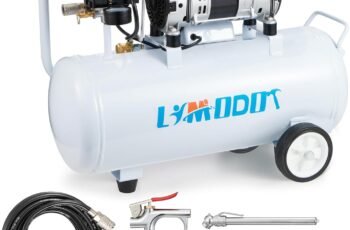
When we first look at this 8 Gallon Portable Air Compressor (Max 150 PSI, 2HP, oil free, 2.8 SCFM @ 90 PSI, 3.8 SCFM @ 40 PSI), it seems designed for us who want a serious tool for the garage without jumping into full industrial equipment. It promises strong performance, relatively quiet operation, and an 8 gallon tank that suits both home and light professional use.
In this review, we walk through how it performs in real use: from car repair and spray painting to woodwork nailing and general DIY tasks. We also point out who it suits best and where we might want to keep expectations in check.
Key Specifications at a Glance
Before we talk about how it feels to use, it helps to see the numbers laid out clearly. That way we can quickly judge whether it meets our needs for airflow, pressure, and power.
Core Specs and Features
The manufacturer highlights a 2HP motor, 8 gallon tank, and up to 150 PSI. Those numbers tell us this unit aims to handle more than just occasional tire inflation, but we also know it is not meant to replace a big shop compressor.
Here is a straightforward breakdown of the main specs and what they mean for us:
| Feature | Specification | What It Means for Us |
|---|---|---|
| Tank Capacity | 8 Gallons | Enough air for short to medium tool use; still compact and portable |
| Motor Power | 2 HP | Stronger than many small homeowner units; handles more demanding tasks |
| Maximum Pressure | 150 PSI | Supports a wide range of air tools and inflating needs |
| Airflow @ 90 PSI | 2.8 SCFM | Suitable for nailers, staplers, and light-duty air tools |
| Airflow @ 40 PSI | 3.8 SCFM | Helps with touch-up spray painting and low-demand tools |
| Pump Type | Oil free | Lower maintenance, no oil changes, cleaner air output |
| Power Supply | 120V, 60Hz | Standard household outlet in the US and similar regions |
| Safety Feature | Built-in overpressure protection | Automatically shuts off at max pressure to prevent damage |
| Intended Use | Home repair, car repair, small workshop, DIY projects | Flexible enough for many common tasks |
| Noise Characteristic | Low noise design | More comfortable to use around home and in shared spaces |
When we look at this table as a whole, we can see this compressor tries to balance portability, power, and practicality. It is not the biggest, fastest unit on the market, but for a typical garage or small workshop, these numbers are quite reasonable.
Performance and Power in Real-World Use
When we bring any compressor into our garage, the first question is simple: does it actually keep up with what we want to do? With this one, the 2HP motor and 150 PSI max pressure give us a good starting point.
Understanding the 2HP Motor and 150 PSI Limit
The 2HP motor is a noticeable step up from many very small portable units that usually sit around 1–1.5 HP. That extra power helps the compressor recover pressure more quickly after we use air tools for a while.
The 150 PSI rating gives us a higher pressure ceiling than the more basic 125 PSI units. That matters when we:
- Inflate car and truck tires
- Use tools that need consistent pressure
- Want longer runtime between cut-in and cut-out cycles
In practice, we may not always need the full 150 PSI, but it gives us a comfortable margin for more demanding tasks.
Airflow: 2.8 SCFM @ 90 PSI and 3.8 SCFM @ 40 PSI
Airflow (SCFM) is where we really see what a compressor can or cannot handle. This unit delivers:
- 2.8 SCFM at 90 PSI
- 3.8 SCFM at 40 PSI
That puts it in a category where it is ideal for:
- Brad nailers and finish nailers
- Framing nailers in intermittent bursts
- Staplers and light air ratchets
- Air blow guns for cleaning
- Tire inflation and sports equipment
For spray painting or continuous air consumption, we need to manage expectations. It can handle small spray guns, touch-up work, and light, occasional spray painting, but it is not designed for long, uninterrupted spraying with high-demand guns. We simply need to work in intervals and allow the tank to recover.

Noise Level and Energy Efficiency
One of the biggest complaints we hear about many compressors is that they are too loud. This model specifically emphasizes a “low noise” 2HP motor and energy-efficient operation.
Noise in a Garage or Home Setting
While we do not have a precise dB number here, the product is described as “ultra quiet” and designed for use in residential or even office-like environments. In practice, that means:
- It is quieter than many older oil-lubed or contractor-style compressors.
- We can hold a conversation nearby, though raised voices might still be needed during the loudest moments.
- It is less likely to upset neighbors if we are using it in a home garage, particularly during daytime hours.
We should still expect typical mechanical compressor sounds, but it is more comfortable to be around for longer periods, especially in an enclosed space.
Energy Efficiency and Operational Cost
The motor and pump design aim to be energy-efficient, which helps in a couple of ways:
- It reduces the strain on our electrical system, important on standard household circuits.
- Over time, lower power draw means reduced energy costs if we use it frequently.
- Less wasted power tends to coincide with better heat management and longevity.
For a compressor we plan to keep for years, efficiency is not just about money; it also improves our overall user experience.
Ease of Use and Day-to-Day Operation
We can have top-notch specs, but if the compressor is difficult or confusing to operate, it tends to sit in the corner. This model tries to keep things straightforward.
Simple Controls and Clear Gauges
The manufacturer mentions a clear pressure gauge designed so we can “monitor the air pressure at a glance.” That means:
- We can quickly check tank pressure and working pressure while using tools.
- We do not have to guess or constantly fiddle with knobs.
- Adjustments are easier if we are switching between tools with different pressure requirements.
Having simple, readable controls is especially helpful if several people in our household or shop will use the compressor.
Start-Up and Daily Use Experience
In regular use, we can expect:
- Standard plug-in operation on 120V 60Hz power.
- A familiar on/off switch arrangement or automatic start/stop with pressure switch.
- Automatic shutoff once it reaches the preset maximum pressure (around 150 PSI).
- Automatic restart when pressure drops to the cut-in level.
There is little learning curve here. If we have used any portable compressor before, we should feel comfortable almost immediately.
Maintenance: What We Need to Know
The product is described as an “oil free air compressor,” which reduces the regular maintenance burden. However, the details mention “requiring regular oil checks and cleaning,” which sounds contradictory at first glance.
Oil Free vs. Oil-Lubed: What That Means for Us
Oil free compressors usually have permanently lubricated components, meaning we do not change the oil like we would with an oil-lubed pump. That typically gives us:
- No messy oil changes
- Less concern about oil contamination in the airflow
- Simpler long-term ownership
The note about “regular oil checks” may be a generic instruction or misprint in the description. For an oil free design, we generally do not add oil; instead, we:
- Check for leaks, damage, or irregular sounds.
- Clean filters and exterior surfaces.
- Drain the condensation from the tank to prevent rust.
Basic Maintenance Habits for Long Life
To keep this compressor running well, we should consistently:
- Drain the tank after use to remove condensation that can cause corrosion.
- Inspect hoses, fittings, and connectors for wear or air leaks.
- Keep the intake area clean so dust does not accumulate and restrict airflow.
- Store it in a dry, sheltered area to protect electrical components and the tank.
With these light maintenance tasks, an oil free unit like this can last many years without much trouble.

Safety and Reliability Features
When we are dealing with compressed air and electricity, safety is not negotiable. This compressor comes with several built-in protections intended to keep us and our tools safe.
Overpressure Protection and Automatic Shutoff
One key safety feature is the built-in overpressure protection that:
- Automatically shuts down the compressor when internal pressure reaches the maximum safe level.
- Helps prevent tank overinflation, which can be dangerous.
- Protects internal components from stress and potential damage.
For us, this means we can feel more confident leaving the compressor running during a task without constantly worrying about manually switching it off at the perfect moment.
Stable Casing and Base Design
The structure is described as having a “sturdy casing and stable base,” which is more important than it sounds:
- A firm base helps prevent tipping while running, especially when the motor kicks on.
- Sturdy construction keeps vibrations lower and noises more controlled.
- A durable shell helps protect the motor and pump from accidental bumps in a busy garage.
Together, these features give us a sense that the unit is built to handle real-world conditions rather than just looking good in photos.
Portability and Storage
An 8 gallon tank places this compressor in an interesting middle ground: larger than tiny pancake compressors, but smaller than big shop tanks. The product emphasizes portability, which matters if we move it between tasks or locations.
8 Gallon Tank: A Balanced Size
With 8 gallons of capacity, we get:
- Enough volume to run tools for moderate stretches without constant cycling.
- Better performance than smaller 1–6 gallon units for air-hungry tasks.
- A still-manageable size and weight for typical adults to move around the garage or job site.
It is not a featherweight, but compared with stationary shop units, it is definitely on the portable side.
Moving and Storing the Unit
While specific handle and wheel details are not listed, most 8 gallon compressors are equipped with:
- A handle or pair of handles for easy positioning.
- A footprint small enough to tuck under a bench or along a garage wall.
We can reasonably expect to roll or carry it when needed, then park it in a corner when we are done. For those of us working in limited spaces, that combination of performance and storage convenience is valuable.
Best Uses: Where This Compressor Shines
The manufacturer positions this unit as ideal for both home users and small professional or workshop tasks. Based on the specs and description, that claim is fair, as long as we match expectations to reality.
Car Repair and Tire Inflation
For garage car work, this compressor is right at home. We can use it for:
- Tire inflation on cars, SUVs, and light trucks
- Blow guns for cleaning engine bays or filters
- Light air ratchets or impact tools (in intermittent bursts)
- Inflating accessories such as air mattresses and sports balls
The 150 PSI max ensures we have no trouble inflating higher-pressure tires, and the 2.8 SCFM at 90 PSI is enough for occasional use of automotive air tools.
Spray Painting and Finishing Work
With 3.8 SCFM at 40 PSI, this compressor can support:
- Small spray guns for touch-up paint jobs
- Clear coat finishing on furniture, trim, or decorative pieces
- Occasional, careful automotive touch-ups in a home garage
We do need to be realistic: for continuous high-volume spraying (such as painting an entire car or large wall surfaces), this unit will struggle and need frequent recovery time. But for small projects, refinishing furniture, or detail work, it can perform well if we work patiently and in stages.
Woodwork Nailing and Stapling
One of the most comfortable uses for this compressor is woodworking tools, such as:
- Brad nailers
- Finish nailers
- Framing nailers (for intermittent use)
- Staple guns for upholstery or paneling
These tools tend to use short bursts of air rather than constant flow, which fits perfectly with the 8 gallon tank and SCFM output in this unit. For DIY furniture builds, trim work, cabinetry, and household repairs, it should feel very capable.
Suitability for Home Users vs. Professionals
It is marketed for both, but that does not mean it fits every kind of professional need. We should look more closely at how different users might experience it.
For Homeowners and DIY Enthusiasts
For most home users, this compressor will likely feel like a strong, flexible choice:
- It handles a wide variety of tasks we encounter in a garage or workshop.
- The oil free design keeps maintenance simpler.
- The low noise helps keep peace in the household and neighborhood.
- The 8 gallon capacity is a sweet spot for power vs. portability.
If our main interests are car maintenance, small woodworking projects, and occasional painting or inflating, this unit meets those needs comfortably.
For Light Professional or Small Shop Use
For a small workshop or part-time professional, this compressor can be a good fit if:
- Our air tools are not in constant, heavy rotation all day long.
- We mainly use nailers, staplers, and light air tools.
- Our workloads are intermittent and varied, rather than continuous production line work.
However, for full-time professional use with demanding air consumption (such as heavy sanders, grinders, or continuous spraying), we would likely need a larger compressor with higher SCFM ratings and possibly a bigger tank.
Pros and Cons of the 8 Gallon Portable Air Compressor
Whenever we evaluate a tool like this, it helps to be honest about both strengths and weaknesses. No compressor is perfect for every scenario, so we want to see where this one truly fits.
What We Appreciate About This Compressor
From the details and intended use, several positives stand out:
-
Strong 2HP Motor
Gives this unit more muscle than many lighter home compressors, helping it recover quicker and handle more serious tools. -
150 PSI Maximum Pressure
Supports a wide range of air needs, from light tools to tire inflation and beyond. -
Reasonable Airflow (2.8 SCFM @ 90 PSI)
Enough for nailers, blow guns, and other intermittent-use tools; decent for small painting tasks. -
Oil Free Design
Reduces long-term maintenance and eliminates the mess and hassle of oil changes. -
Low Noise Operation
Makes it much more pleasant to use in residential settings. -
Safety Features and Stable Construction
Built-in overpressure protection and a stable base help keep both us and the equipment safe. -
Versatile, Mid-Sized Tank
8 gallons strikes a practical balance between capacity and portability.
Where It Might Fall Short for Some Users
There are also areas where this compressor may not be ideal, depending on our expectations:
-
Not Built for Heavy Industrial Use
Continuous, high-demand air tools will likely outpace this unit. -
Limited for Large-Scale Spray Painting
The SCFM output is fine for touch-ups and smaller jobs, but full vehicle or large surface spraying may require breaks and patience. -
Portability Has Limits
While mobile compared with large stationary units, an 8 gallon tank with a 2HP motor is not featherlight; some users may still find it heavy to lift.
Knowing these limitations prevents frustration later and helps us match the compressor to the kinds of projects we actually do.
How This Compressor Compares to Smaller Units
We might currently own a very small pancake or hot dog compressor and wonder if an 8 gallon, 2HP unit like this is worth upgrading to. When we compare, a few upgrades stand out.
Upgrading From a Small Pancake Compressor
Most small pancake models offer:
- Around 1–1.5 HP motors
- 1–6 gallon tanks
- Lower CFM ratings, around 2.0–2.6 SCFM at 90 PSI or less
Moving up to this 8 gallon, 2HP unit gives us:
- More runtime before pressure drops, especially during nailer use.
- Improved recovery time thanks to the stronger motor.
- Better capacity for light spray painting and automotive tools.
If we constantly bump into limits with a smaller compressor, this model can be a very natural and noticeable step up.
Practical Tips for Getting the Most Out of This Compressor
To truly appreciate what this compressor offers, we can adopt a few smart usage habits. These do not require much effort but can improve our experience and increase longevity.
Match Our Tools to the Compressor’s Capabilities
Before hooking up a new tool, we should:
- Check the tool’s required SCFM at a given PSI.
- Compare that to the compressor’s 2.8 SCFM @ 90 PSI and 3.8 SCFM @ 40 PSI.
- Decide how we will use the tool: in bursts, or continuously.
As long as we keep our expectations realistic, we will find many tools run wonderfully on this setup, while the most demanding ones may need a more powerful system.
Use and Store It Thoughtfully
Some simple practices can go a long way:
- Run the compressor on a dedicated or lightly loaded circuit to avoid tripping breakers.
- Use quality air hoses and connectors to avoid leaks and pressure loss.
- Drain condensation from the tank after each substantial use, protecting the inside from rust.
- Store in a dry, level area away from standing water and direct outdoor exposure.
Following these habits, we give the compressor an easier life, which directly benefits our own projects over time.
Who Should Strongly Consider This Compressor?
Bringing all the points together, we can now identify which of us would find this compressor most satisfying.
This 8 gallon portable air compressor is an excellent fit if we:
- Need a multi-purpose compressor for home and light workshop use.
- Frequently perform car repair, furniture work, and general DIY.
- Want enough power for nailers, small spray guns, and tire inflation, without stepping into industrial-grade systems.
- Prefer a quieter, oil free design that is easier to maintain.
- Value a tool that can do many tasks well, rather than specializing in just one.
On the other hand, we might want a larger or more powerful unit if we:
- Run air tools all day, every day, in a professional environment.
- Do large-scale painting, sanding, or grinding that needs continuous airflow.
- Prefer a fully stationary system with a large tank (20 gallons or more).
Final Thoughts on the 8 Gallon Portable Air Compressor
When we put everything together, this 8 Gallon Portable Air Compressor, with its 2HP motor, 150 PSI max, oil free design, and 2.8 SCFM at 90 PSI / 3.8 SCFM at 40 PSI performance, is a solid and sensible choice for most home garages and small workshops.
It offers:
- Enough power and capacity for a wide variety of tasks
- Manageable noise levels for residential settings
- A maintenance-friendly oil free pump
- Built-in safety features for peace of mind
If we are looking for a single compressor that can handle car repair, spray painting touch-ups, woodwork nailing, and everyday inflating tasks without taking over our entire space, this model gives us a reliable middle ground between tiny portable units and bulky shop compressors.
For many of us who want a capable, user-friendly compressor for projects around our home or small workspace, this 8 gallon portable air compressor feels like a practical, well-balanced tool that we will reach for again and again.

Disclosure: As an Amazon Associate, I earn from qualifying purchases.