Have we ever wished our dental or lab equipment could run quietly, reliably, and without constant maintenance or oil changes getting in the way of our work?

What Makes This Dental Air Compressor Stand Out?
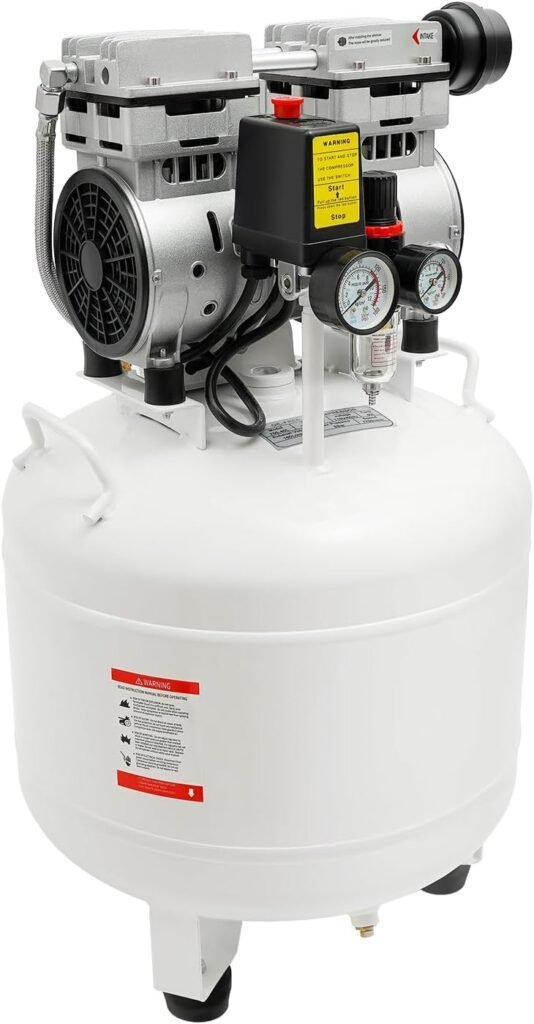
When we look at the 40L/10.57Gal Portable Dental Air Compressor, 8Bar/115PSI 750W/1HP Medical Air Compressor, Oil Free Air Pump, Exhaust Volume 165L/43.59gal/min, the first thing that stands out is how purpose-built it is for medical, dental, and lab environments. It is not just a generic shop compressor repurposed for dental use; it is designed with cleanliness, safety, and reliability in mind.
We get a substantial tank capacity, decent power, and an oil-free system that aims to give us clean, dry air with minimum fuss. For anyone running medical equipment, dental units, or lab tools, this combination is highly practical.
Key Specifications at a Glance
Before we talk about real-world use, it helps to see the core specs clearly laid out. These numbers give us a sense of what kind of performance and capacity we can expect during daily operations.
Main Technical Data
These are the essential specifications that define how this compressor performs and what workloads it can handle.
| Feature | Specification |
|---|---|
| Product Name | 40L/10.57Gal Portable Dental Air Compressor |
| Tank Capacity | 40 L (approx. 10.57 gallons) |
| Maximum Pressure | 8 Bar / 115 PSI |
| Motor Power | 750W / 1 HP |
| Air Exhaust Volume | 165 L/min (approx. 43.59 gal/min) |
| Type | Oil-free medical/dental air compressor |
| Materials | Copper, iron, aluminum, plastic |
| Main Uses | Medical equipment, experiments, dentistry, cosmetology, labs |
| Cooling | Large-diameter cooling fan |
| Protection Features | Solenoid valve, oil-water separator, overheat protection aid |
Having these specs in mind gives us a framework for judging how this compressor might fit into our own clinical, lab, or workshop environment.
Build Quality and Materials
The construction quality matters a lot for a machine that may run for hours at a time in demanding settings. According to the details, this compressor uses a combination of copper, iron, aluminum, and plastic, each chosen for a specific purpose.
We appreciate that the motor uses all-copper windings, which are typically more durable and better at handling continuous loads. The tank and structural components in iron and aluminum help provide strength and corrosion resistance, while plastic is sensibly used for covers, housings, and some fittings to keep weight manageable.
Durability and Resistance to Wear
In clinical and lab environments, compressors often sit in one place and get used heavily over long periods. For that, durability is essential.
The description mentions that the unit is impact-resistant and rust-resistant, which is exactly what we want when equipment may be placed in corners, moved occasionally, or operated in rooms with humidity. A sturdy tank and solid frame help ensure that normal bumps, vibrations, and environmental conditions are not a threat.
We also like that this is positioned as a long-term use machine. That gives us more confidence that it is not just built as a disposable piece of gear, but something meant to remain part of our setup for years.
Motor Performance and Power Output
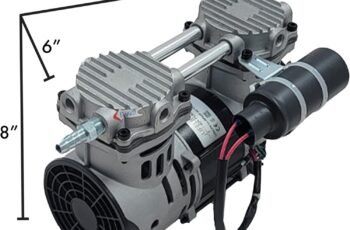
At the core of this compressor is a 750W / 1 HP all-copper motor. For a dental or medical air compressor, 1 HP is a reasonable sweet spot: powerful enough to keep up with small to medium workloads, but not so oversized that energy usage becomes wasteful.
Stable Performance in Daily Use
The all-copper motor is designed to provide strong, stable power. In practical terms, that means we can expect:
- More consistent air pressure while equipment is running
- Less voltage drop sensitivity compared to cheaper motors
- Better resistance to heat buildup during long duty cycles
When we need to run dental handpieces, air syringes, small lab tools, or instrumentation that requires continuous air, stable motor performance is crucial. The compressor’s rated 8 Bar / 115 PSI maximum pressure and 165 L/min exhaust volume suggest it is aimed at supporting one or a few workstations, rather than being a large, central system for a whole clinic.
Oil-Free Technology and Clean Air Delivery
One of the most important attributes for medical and dental use is that this compressor is oil-free. That dramatically changes how we maintain and operate it and affects the cleanliness of the air output.
Why Oil-Free Matters in Medical and Dental Settings
In dentistry, cosmetology, and medical experiments, we simply cannot afford oil-contaminated air. Oil in the airflow can:
- Contaminate instruments
- Affect patient procedures and outcomes
- Interfere with sensitive lab experiments
- Cause issues with certain equipment or coatings
Because this compressor is oil-free, we do not need oil lubrication, and we are spared from oil changes and worry about oil carry-over. The lack of oil-based maintenance also simplifies our upkeep schedule and reduces consumables.
We especially appreciate this when the compressor is serving applications such as:
- Dental chairs and handpieces
- Lab instruments requiring clean, dry air
- Cosmetic tools that contact skin or products
- Scientific research setups where purity matters
Cooling System and Thermal Management
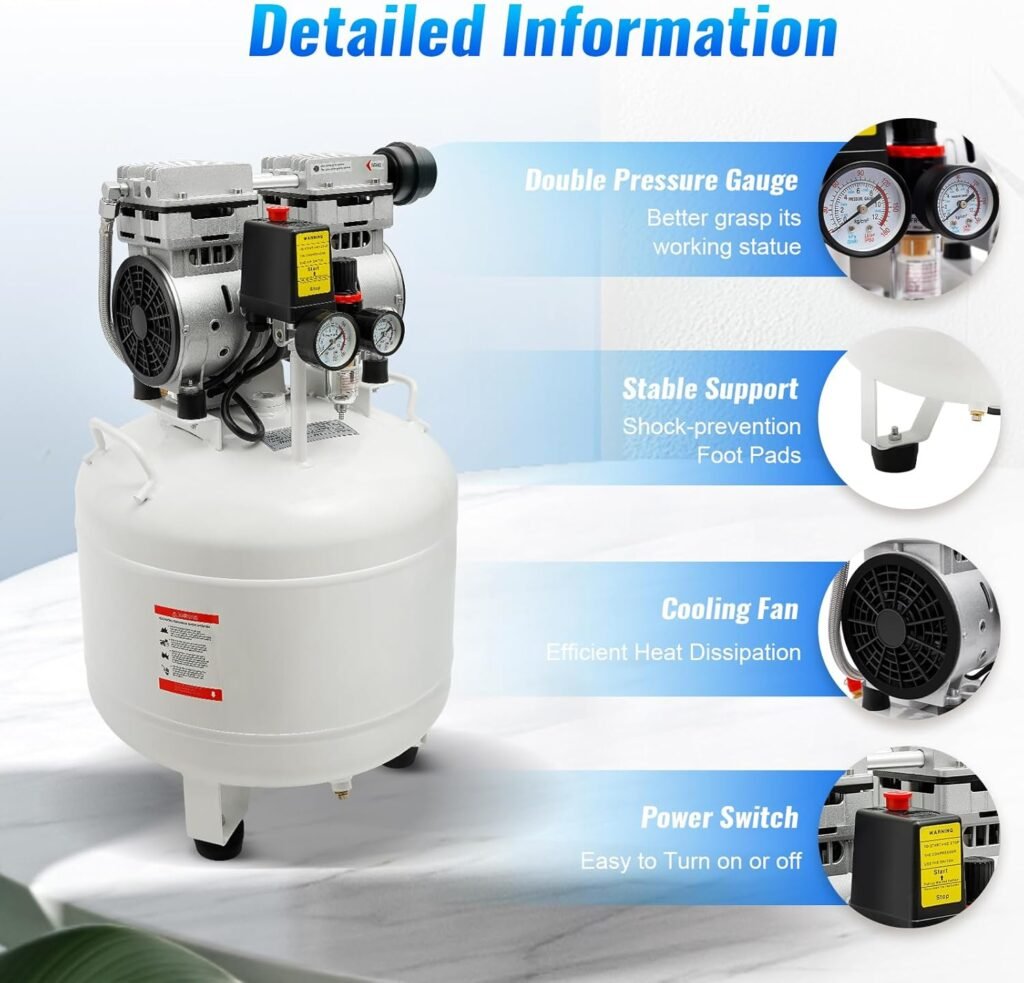
Compressors generate heat, especially when they run for extended periods or near their maximum output. This model uses a large-diameter cooling fan to enhance heat dissipation.
Protection Against Overheating
The presence of a sizable cooling fan is more than a minor detail. It helps keep the motor and compression components operating within a safe temperature range. If the machine overheated regularly, we would face:
- Shortened motor life
- Reduced performance
- More frequent breakdowns and possible safety risks
With proper cooling, the compressor can operate longer and more reliably during busy periods. In practice, this means we can run it more confidently during back-to-back patient sessions or lengthy experiments without constantly worrying about overheating.
We still should follow reasonable duty-cycle guidelines, but having that extra cooling capacity is reassuring.

Safety Features and Protection Systems
For equipment in a medical or lab environment, safety is never optional. This compressor includes several thoughtful safety and protection features that focus on both the machine and the people nearby.
Solenoid Valve Protection
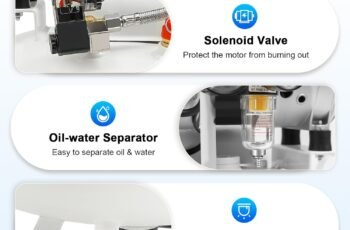
One standout feature is the solenoid valve, which is mentioned as protecting the motor from being burned in case of sudden power failure. In practical terms, when the power cuts out abruptly, there can be residual pressure or current that might harm the motor if not properly controlled.
The solenoid valve helps:
- Manage internal pressure during shutdown
- Prevent damaging backflow or sudden mechanical stress
- Safeguard the motor against unusual electrical and pressure conditions
By including such a valve, the compressor shows it was engineered with real-world power issues in mind, not just ideal lab conditions.
Oil-Water Separator for Cleaner Air
The oil-water separator is another important inclusion, even though the compressor is oil-free. Moisture naturally collects in compressed air systems, and in some setups, trace oils from hoses or other elements might appear.
This separator works to:
- Remove water vapor and condensation from the air stream
- Help separate any incidental oil and moisture
- Provide a cleaner, drier output better suited for sensitive equipment
In dental and medical contexts, drier air reduces corrosion and contamination in instruments, and in lab experiments, it can help improve measurement consistency and instrument performance. While no small separator can make air perfectly dry like a full-scale dryer system, it certainly improves air quality compared with a basic compressor.
Air Capacity, Pressure, and Flow Rate
We usually care about three main performance indicators: tank size, maximum pressure, and airflow rate. Together, these metrics tell us how long we can work before the compressor cycles and how intense our workloads can be.
Tank Size and Maximum Pressure
The 40L (10.57-gallon) tank is a good mid-sized option. It is not tiny, so it holds enough air to buffer short bursts of high-demand usage, but it is not so large that it becomes unwieldy or heavy for a small office or lab.
With a maximum pressure of 8 Bar / 115 PSI, this compressor reaches a level compatible with many dental and medical devices. For most dental chairs, handpieces, and air-driven tools, this is completely adequate. It may not match industrial shop compressors rated at higher pressures, but it is not intended for heavy pneumatic tools like impact wrenches.
Airflow Rate and Practical Workloads
The 165 L/min (about 43.59 gallons per minute) exhaust volume is the figure we look at when we want to know if the compressor can keep up with:
- One or two dental chairs
- A set of lab instruments with periodic air use
- Small-scale medical or cosmetic tools
For continuous, heavy use across multiple operatories or stations, we might want a larger compressor or multiple units. But for a small clinic, a single dental chair, or a lab bench setup, this flow rate is likely sufficient.
We just need to align our expectations with its intended scale: a compact medical compressor, not a large industrial system.
Usability and Day-to-Day Operation
Apart from the pure specs, we care about how easy this compressor is to live with. That includes startup behavior, controls, maintenance, and any small conveniences or annoyances.
Simple Controls and Operation
Most medical and dental air compressors follow a straightforward operation pattern: we turn them on, set the desired pressure (or rely on built-in regulators), and let them maintain tank pressure automatically. This unit fits that typical pattern.
Because it is oil-free, we do not have to check oil levels or schedule oil changes. That immediately simplifies our daily and weekly routines. We mainly focus on:
- Monitoring pressure
- Draining condensation from the tank as recommended
- Checking the oil-water separator occasionally
- Listening for abnormal noises or changes in behavior
These tasks are manageable even in busy environments.
Portability and Placement
While we do not have the exact weight listed here, the 40L tank and materials mix suggest a unit that is portable enough to move within a facility when needed but not something we would want to carry up and down stairs often.
In a dental office or lab, we might set it up in:
- A small equipment room
- A corner of the lab bench area
- A ventilated cabinet designed for compressor storage
Because it is not described as ultra-compact, we should plan a bit of space for it. However, for a 40L tank and a 1 HP motor, the footprint is usually reasonable.
Noise Level Considerations
The product details do not explicitly state the dB (decibel) level, which many of us would love to know. Still, we can make some reasonable expectations from its design and category.
What We Can Expect in Terms of Sound
Oil-free compressors can sometimes be a bit louder than some oil-lubricated models, but medical and dental units are typically engineered to keep sound manageable. While we cannot quote an exact number here, we can assume:
- It will make audible noise when running, but
- It should be quieter than typical garage or workshop compressors, and
- It is intended to be acceptable for clinical or lab environments
If we plan to place it directly in a treatment or laboratory room where people are working nearby all day, we might still consider simple sound-dampening measures, such as:
- Locating it in an adjacent room or enclosed cabinet with ventilation
- Using vibration pads or mounts under the compressor feet
In most cases, for a single or small practice, the sound levels are tolerable, but planning ahead for its location can make day-to-day life more pleasant.
Maintenance and Service Requirements
One of the strong benefits of an oil-free, medically oriented compressor is reduced maintenance compared to standard shop models. However, “maintenance-free” is rarely literally true, so we should still be mindful of a few simple routines.
Routine Tasks We Should Expect
While schedules will vary, our typical checklist might include:
- Periodically draining the tank to remove moisture buildup
- Checking the oil-water separator and emptying it when needed
- Inspecting hoses and connections for leaks or wear
- Visual inspection of the cooling fan to ensure no obstructions
- Monitoring pressure switch operation to ensure the compressor cuts in and out correctly
Because there is no oil lubrication requirement, we avoid one of the biggest maintenance jobs traditional compressors demand. This saves time, reduces the risk of error, and lowers the total cost of ownership.
Long-Term Reliability
The combination of:
- An all-copper motor
- Rust-resistant construction
- Good cooling via the large fan
- Built-in protections like the solenoid valve
suggests that the compressor is oriented toward reliable, long-term service rather than short-term, disposable usage. If we treat it well and perform light maintenance, we should expect it to provide several years of dependable operation, especially in small setups.
Application Scenarios: Where This Compressor Fits Best
The manufacturer clearly lists the primary applications: experiments, dentistry, cosmetology, scientific research, and medical equipment. These use cases share a need for clean, stable, and reasonably quiet air.
Dentistry and Dental Clinics
For a small dental practice, this compressor is a strong candidate. Here is where it fits particularly well:
- A single dental chair
- Possibly two chairs with moderate usage, depending on how intensive the air demand is
- Dental instruments like air turbines, scalers, and air syringes
- Equipment requiring clean, oil-free air for patient-safe procedures
We benefit from:
- Oil-free design (better hygiene and less contamination risk)
- Reasonable tank size and flow for a small clinic
- Safety features that align with medical expectations
If we run a larger clinic with multiple operatories operating simultaneously, we may need to think of this compressor as one component in a multi-unit system or move up to a larger capacity model.
Medical Equipment and Scientific Research
In medical labs and research facilities, this compressor can support:
- Laboratory devices that use compressed air for controls or pneumatics
- Experimental setups where clean air plays a role in tests and measurements
- Small medical equipment such as inflating certain devices or driving pneumatic actuators
The stable pressure and oil-free nature mean we are less likely to contaminate samples or degrade instrumentation.
We might still add external filtration or drying systems if our experiments demand ultra-dry or ultra-pure air, but as a base compressor, this one gives us a clean starting point.
Cosmetology and Aesthetic Clinics
In cosmetology and aesthetic clinics, there is increasing use of air-driven tools:
- Airbrush devices for cosmetic applications
- Pneumatic skin-care tools
- Equipment where clean air is essential for both hygiene and product consistency
An oil-free compressor with a moderate noise level and smaller footprint fits well into such spaces. Clients are often in close proximity, so we want a unit that is both reliable and not extremely noisy. This compressor’s design makes it more suitable than a generic workshop compressor in such settings.
Pros and Cons Summary
To make our decision easier, we can summarize our understanding of the strengths and limitations of this compressor for typical users.
Advantages We Appreciate
We see a number of clear positives:
-
Oil-free design
- No risk of oil contamination in air
- No need for oil changes
- Cleaner and simpler maintenance
-
All-copper motor
- Strong, stable power
- Better heat handling and durability
-
40L tank at 8 Bar / 115 PSI
- Good capacity and pressure for dental and medical applications
- Suitable for small clinics, labs, and single-chair offices
-
Safety and protection features
- Solenoid valve to protect motor in power failures
- Oil-water separator to improve air quality
- Large-diameter cooling fan for better heat dissipation
-
Versatile applications
- Suitable for dentistry, cosmetology, experiments, scientific research, and medical devices
These attributes all align with what we look for in a medical-grade compressor, not just a general-purpose unit.
Limitations to Keep in Mind
No product is perfect for every scenario, and we see a few practical considerations:
-
Not intended for heavy industrial use
- Airflow and tank size are best for small operations, not large factories or multiple heavy-demand stations
-
Noise level not explicitly stated
- We may want to plan a suitable location or sound-reducing measures if quiet operation is crucial
-
Capacity limits
- For a multi-chair clinic running at full capacity all day, we might need either a larger compressor or multiple units
As long as we match this compressor to the right scale of use, these limitations are manageable and expected.
Who Is This Compressor Best Suited For?
Putting everything together, we can identify the groups most likely to benefit from this particular model, based on its design and capabilities.
Ideal Users and Environments
We would consider this compressor especially well suited for:
-
Small to medium dental practices
- One primary chair and maybe a second with moderate use
- Practices wanting an oil-free, medically focused compressor
-
Laboratories and research facilities
- Benchtop experiments needing reliable, clean air
- Labs that do not require an industrial central air system
-
Medical clinics and small medical equipment setups
- Clinics using air for smaller devices, controls, or instrumentation
-
Cosmetology and esthetic clinics
- Beauty and skin-care environments where client comfort and equipment hygiene matter
In all of these scenarios, a compact, reliable, oil-free compressor with adequate but not extreme capacity is exactly what we want.
Practical Tips for Getting the Most Out of This Compressor
To make sure we get the longest, most reliable service life from this compressor, a few practical guidelines can help.
Installation Recommendations
When we first set it up, we might consider:
-
Placing it on a stable, level surface
- Reduces vibration, noise, and mechanical stress
-
Ensuring adequate ventilation
- The large cooling fan needs space for airflow
- Avoid tightly enclosed, unventilated cabinets
-
Using proper hoses and fittings
- Medical- or lab-grade hoses where required
- Leak-free fittings to maximize efficiency
We also want to verify that our local power supply matches the compressor’s voltage and frequency requirements as specified by the manufacturer.
Operational Best Practices
During daily use, we can:
- Avoid running the compressor at maximum pressure constantly if not necessary
- Allow rest periods if we notice it running non-stop at very high demand
- Listen for any unusual sounds that could indicate wear or damage
By treating the unit with reasonable care, we increase both its reliability and its lifespan.
Maintenance and Care Suggestions
Over time, good habits will matter:
- Regularly drain the tank to prevent rust and moisture issues
- Check and empty the oil-water separator
- Keep dust and debris away from the cooling fan and vents
- Schedule periodic visual inspections for wiring, hoses, and fittings
Following these basic steps takes only a little time but pays off in smoother, safer operation.
Final Thoughts on Value and Suitability
When we evaluate the 40L/10.57Gal Portable Dental Air Compressor, 8Bar/115PSI 750W/1HP Medical Air Compressor, Oil Free Air Pump, Exhaust Volume 165L/43.59gal/min, we see a machine that fits neatly into the needs of small clinics, labs, and professional spaces where clean air is essential.
We get:
- A robust, rust-resistant build
- An all-copper motor with stable performance
- Oil-free operation that simplifies maintenance and protects our equipment
- Safety features like the solenoid valve and cooling fan
- A reasonable tank size and airflow suitable for low to mid-level demand
If we are running a small dental office, lab, cosmetology practice, or medical setup, this compressor offers a balanced combination of performance, safety, and practicality. It is not the choice for high-volume industrial operations, but within its intended category, it stands out as a dependable, user-friendly solution that can become a quiet but essential backbone of our daily work.

Disclosure: As an Amazon Associate, I earn from qualifying purchases.