Have we ever wished our dental or medical practice had a quiet, reliable air source that just works without constant tinkering, leaks, and loud noise?
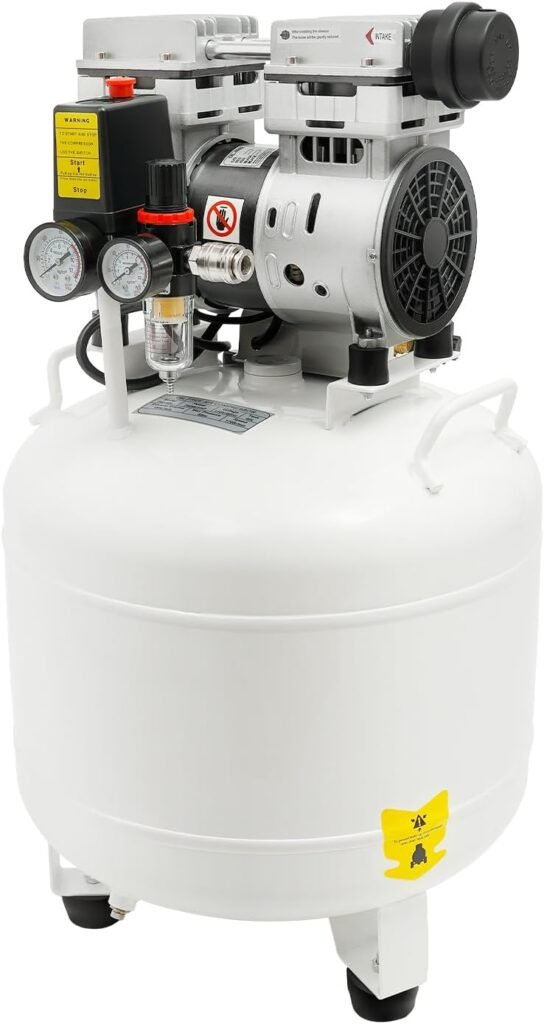

What Is the 40L Portable Medical Dental Air Compressor?
This 40L Portable Medical Dental Air Compressor, Oil-Free Silent Air Compressor 750W 110V Steel Tank (115 PSI max pressure, 165 L/min air flow) is designed specifically for environments where clean, consistent, and quiet air is essential. It is marketed for dental, medical, and industrial equipment, so it aims to serve both professional clinics and small workshops.
We are looking at a machine that tries to balance performance, safety, and portability. In this review, we walk through what it does well, where it falls short, and who we think will benefit most from using it.
Key Specifications at a Glance
Knowing the core numbers helps us quickly see if this compressor fits our needs. The table below summarizes the key specs in an easy-to-scan format.
| Feature | Specification |
|---|---|
| Product Name | 40L Portable Medical Dental Air Compressor |
| Power | 750W |
| Voltage | 110V |
| Tank Capacity | 40 liters (steel tank) |
| Max Pressure | 115 PSI (approx. 8 bar) |
| Air Flow Rate | 165 L/min |
| Compressor Type | Oil-free, silent |
| Primary Materials | Copper, iron, aluminum, plastic |
| Intended Use | Dental, medical, and industrial equipment |
| Mobility | Dual side handles for easy carrying/moving |
| Protection Features | Solenoid valve, large-diameter cooling fan, oil-water separator |
These core specs show us a compact but capable machine that targets clean, dry, oil-free air with enough output for small to medium professional applications.
Build Quality and Materials
High-Quality Construction
This compressor is built from copper, iron, aluminum, and plastic to offer a good balance between robustness and weight. The use of a steel tank adds durability, while aluminum and plastic help reduce weight where full metal is not necessary.
We appreciate that the manufacturer highlights resistance to rust, corrosion, and deformation. For us, that means we are less likely to deal with cracks, leaks, or flaking after only a year of use, especially in humid dental or medical environments.
Durability Over the Long Term
In a clinic or workshop, our air compressor is not a decorative item; it is a workhorse that runs regularly. The steel tank is important here, because cheaper thin tanks can fatigue faster, leading to leaks or unsafe conditions.
We also like that the motor uses copper windings, which generally handle heat better than cheaper alternatives. When we are running tools throughout the day, that added resilience helps extend motor life and keeps performance consistent.
Oil-Free and Silent Operation
Why Oil-Free Matters for Dental and Medical Use
Oil in compressed air is a major concern in dental and medical settings. We use air for handpieces, suction systems, air syringes, and other sensitive instruments, and we cannot afford oil contamination getting into patients’ mouths or delicate equipment.
Because this compressor is oil-free, we do not need to worry about oil mist getting into the air lines, which makes it more suitable for:
- Dental chairs and handpieces
- Air-driven medical tools
- Laboratory instruments requiring clean air
We also save ourselves the constant check-and-refill cycle of oil maintenance. Over time, that convenience turns into real time and cost savings.
Silent Performance for Comfortable Workspaces
Noise is another big consideration. Traditional piston compressors can be extremely loud, often requiring separate rooms or soundproofing. This model is described as “silent,” which typically means it is significantly quieter than standard units.
We still expect some mechanical noise, of course, but the reduced sound level helps:
- Keep patient anxiety lower in dental and medical environments
- Allow us to communicate more easily in treatment rooms or labs
- Maintain a more pleasant workspace for us and our staff
In many dental clinics, placing a noisy compressor too close to treatment chairs is not an option. With a quieter oil-free design, we gain much more flexibility in where we can put the unit.
Motor and Performance
All-Copper Motor for Strong, Stable Power
The compressor uses an all-copper motor, which is usually a sign of higher-quality construction. Copper windings handle heat and current better than cheaper materials, helping the motor sustain consistent performance under load.
For us, that translates to:
- Reliable pressure build-up to the 115 PSI max
- Less risk of overheating during typical duty cycles
- More stable performance over time with fewer electrical issues
We are not just looking for peak numbers; we want a motor that keeps delivering day after day without surprises.
Pressure and Air Flow in Real-World Use
This unit offers 115 PSI max pressure and an air flow rate of 165 L/min. Those numbers give us a sense of the types of tools and devices it can comfortably support.
For dental and medical uses, that generally means it is suitable for:
- Dental handpieces (depending on exact air demand and duty cycle)
- Air syringes and blowers
- Small suction and spray systems (where applicable)
- Light industrial tools like small nailers or airbrushes
We do need to keep in mind that continuous heavy industrial tools—like large grinders, multiple simultaneous high-demand air tools, or heavy sandblasters—will likely exceed this compressor’s ideal capacity. However, for clinics, small labs, and lighter industrial tasks, 165 L/min is usually enough.
40L Steel Tank Capacity
What a 40L Tank Means for Us
A 40-liter tank strikes a middle ground between very small portable units and large stationary shop systems. With 40L on tap, we get:
- A buffer of compressed air, reducing how often the motor needs to restart
- Smoother operation during brief bursts of higher demand
- More stable pressure for sensitive equipment
In a dental setting, where we often have short, frequent air usage, a 40L tank can cover those quick peaks without the compressor cycling on and off constantly.
Tank Material and Safety
The steel tank construction is important for both pressure integrity and longevity. Over time, compressed air tanks can collect moisture and potentially corrode. Steel tanks, especially with proper draining and care, can handle the stress better than thin or low-grade alternatives.
We should still regularly drain the tank to remove accumulated condensation. The combination of a robust tank and routine drainage helps protect against rust from the inside out.
Safety Features and Protection Systems
Large-Diameter Cooling Fan
One of the most reassuring aspects for us is the inclusion of a large-diameter cooling fan. Compressors generate heat, and excessive temperature is the enemy of both performance and longevity.
The cooling fan helps:
- Dissipate heat more quickly during operation
- Lower the risk of thermal damage to the motor and pump
- Maintain stable output even during longer usage periods
For busy days in a clinic or shop, this can be the difference between reliable service and an unexpected stop.
Solenoid Valve for Power Failure Protection
The compressor is equipped with a solenoid valve that protects the motor in case of sudden power failure. Abrupt shutdowns or voltage drops can sometimes cause back pressure or electrical stress on the motor.
The solenoid valve:
- Helps release or manage pressure safely when power is cut
- Reduces the risk of the motor “fighting” against residual pressure on restart
- Lowers chances of motor burnout and premature failure
We may not notice this feature day to day, but when we experience a power outage or flicker, the solenoid valve becomes a quiet guardian of the motor’s health.
Oil-Water Separator for Cleaner Air
Another thoughtful feature is the integrated oil-water separator. Even in oil-free compressors, moisture and microscopic contaminants can find their way into the air lines. The separator:
- Removes moisture that condenses in the air stream
- Traps traces of oil and contaminants from the system or environment
- Provides cleaner, drier air for sensitive dental or medical tools
This is especially helpful in humid climates, where moisture in the air lines can cause instrument issues, rust inside tools, and less-than-ideal patient experiences.
Ease of Use and Mobility
Convenient Side Handles
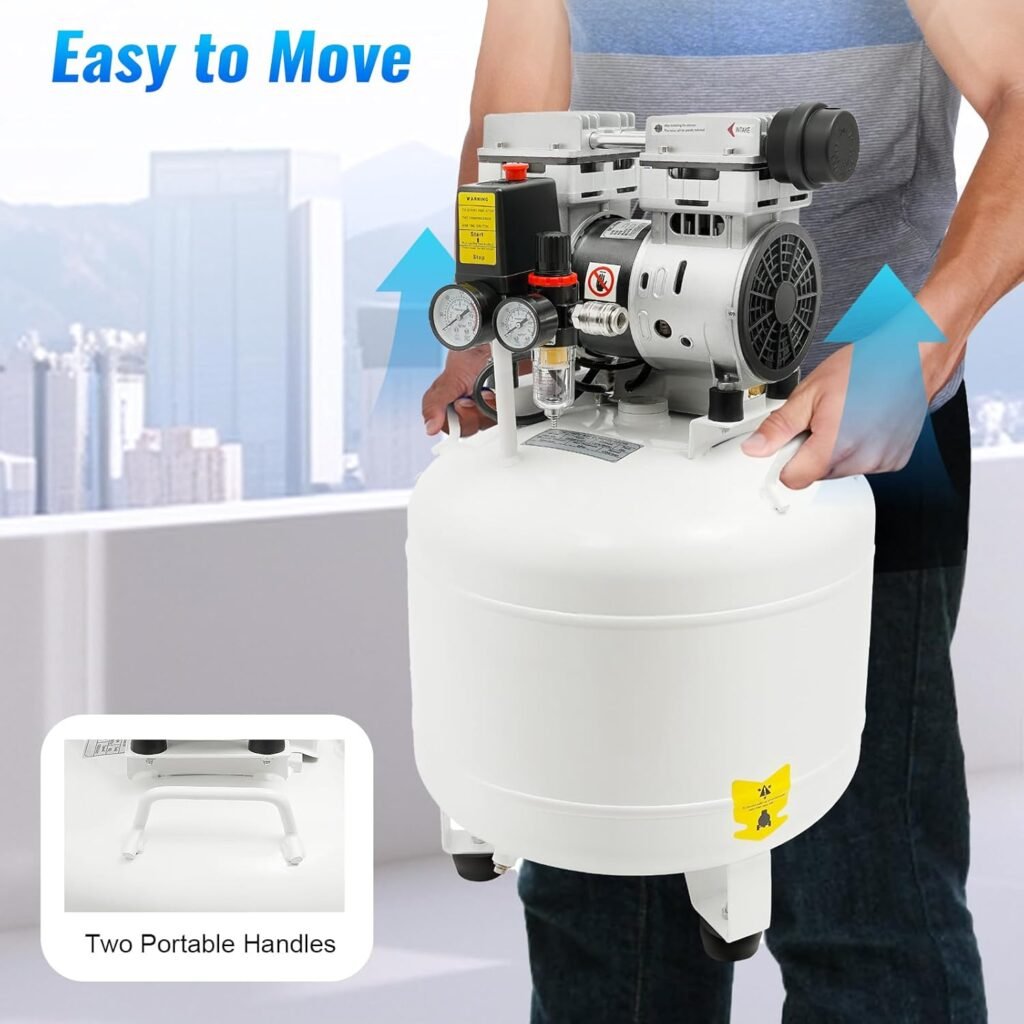
Portability is a strong point with this model. Two handles on both sides of the unit make it much easier for us to move it between rooms, floors, or even vehicles if needed.
These handles help:
- Avoid awkward lifting positions when moving the compressor
- Share the lifting load between two people in tight spaces
- Relocate the unit for cleaning, maintenance, or layout changes
While it is not a tiny handheld compressor, the side handles make it manageable for most adult users to reposition without strain.
No Oil Changes, Minimal Maintenance
An oil-free design simplifies life in more ways than one. We do not need to:
- Check oil levels regularly
- Perform oil changes on a schedule
- Deal with oil disposal or contamination concerns
Instead, our maintenance routine typically focuses on:
- Draining the tank to remove water
- Checking filters and the oil-water separator
- Inspecting connections and hoses for leaks
This lighter maintenance burden is a big advantage for teams that want to focus on patients or production work instead of servicing machinery.

Suitability for Dental Clinics
Dental Tools and Handpieces
For modern dental practices, air quality and stability are critical. This compressor’s oil-free, dry air and 115 PSI capability mean it can support:
- High-speed and low-speed air-driven handpieces (within its capacity)
- Air-water syringes
- Air abrasion systems with modest demands
We should always match our exact handpiece air consumption and duty cycle with the compressor’s 165 L/min rating. In many single- or dual-chair clinics, this output is generally adequate, especially if procedures are staggered.
Patient Comfort and Clinic Layout
The silent operation is particularly beneficial around patients who may already be anxious. The reduced noise level helps us:
- Run the compressor closer to treatment areas if space is limited
- Avoid placing it in distant rooms with long air lines that lose pressure
- Maintain a calmer, more professional environment in the clinic
Patients hear fewer mechanical noises, and we can converse more comfortably during procedures.
Suitability for Medical and Laboratory Settings
Medical Devices and Clean Air Needs
Hospitals, clinics, and labs often rely on compressed air for:
- Small pneumatic actuators and valves
- Sample handling equipment
- Laboratory testing devices
The combination of oil-free compression and the oil-water separator means we get cleaner air that is less likely to interfere with sensitive medical instruments. For many small systems that do not need a centralized facility compressor, this 40L unit is a practical local solution.
Laboratory Workflows and Reliability
In lab contexts, downtime is especially disruptive. We need steady, predictable air supply for experiments, test instruments, or sample processing equipment. The all-copper motor and cooling system contribute to consistent performance, while the safety features protect against unexpected failures.
We can integrate this compressor into a lab environment as a dedicated air source for one or a few workstations, giving us independence from building-wide air systems.
Suitability for Light Industrial and Workshop Use
Air Tools and Light Equipment
Although designed primarily for dental and medical use, this compressor can also serve in small industrial or workshop settings. With 165 L/min and 115 PSI, it can typically handle:
- Airbrushes and spray guns with moderate air needs
- Small nailers and staplers for carpentry or finishing
- Light pneumatic tools used intermittently
We need to be realistic though. For continuous heavy grinding, sandblasting, or multiple operators using air-hungry tools, we would want a larger, higher-flow unit. This compressor shines more in precision or intermittent applications rather than heavy industrial production.
Portability Around the Workshop
The side handles are useful if we occasionally move the compressor between workstations or projects. For example, we might use it in one room for painting and in another room for light assembly tools, moving it as needed.
Because it is oil-free, we can also use it indoors with fewer concerns about oil fumes or messy spills on workshop floors.
Performance vs. Noise and Size
Balancing Output and Quiet Operation
Many compressors force us to choose between power and noise. This unit aims to find a middle path: adequate power for typical professional tasks with quieter operation than traditional shop compressors.
We appreciate that we do not need to build a special soundproof room or invest in extra enclosures just to keep the noise tolerable, especially in customer-facing areas like dental or medical offices.
Size Considerations for Tight Spaces
The 40L tank and associated hardware give this compressor a moderate footprint. It is not tiny, but it is also not as large as a full workshop system. That makes it suitable for:
- Small clinics with limited mechanical space
- Laboratories where every square meter counts
- Home or small commercial workshops working within tight layouts
We should plan where it will live in the room, ensuring we leave sufficient space for airflow, cooling, and access to the handles for moving.
Maintenance and Daily Care
Routine Tasks We Should Expect
Even though it is oil-free, some simple care will keep it running smoothly. Our typical routine might include:
- Daily or weekly tank draining (depending on usage and humidity)
- Checking the oil-water separator and emptying it as needed
- Inspecting hoses and fittings for any signs of leaks
- Ensuring the cooling fan area is clear of dust and obstructions
By treating these steps as part of our regular clinic or workshop closing tasks, we help maximize the compressor’s service life.
Long-Term Reliability
Over many months and years, reliability is shaped as much by maintenance as by design. The high-quality materials, copper motor, and safety features all work in our favor. If we follow the basic care instructions, we are more likely to enjoy:
- Fewer breakdowns and service calls
- Consistent air pressure with minimal fluctuations
- Longer intervals before any major component replacement is needed
For teams that do not have a dedicated maintenance technician, this low-maintenance profile is particularly attractive.
Pros and Cons Overview
To make our decision easier, we find it helpful to summarize what stands out positively and what limitations we should keep in mind.
Advantages
- Oil-free, clean air suitable for dental, medical, and lab environments
- Quiet operation compared to many traditional compressors
- All-copper motor offering strong power and stable performance
- 40L steel tank providing a useful buffer for consistent pressure
- Safety and protection features including cooling fan, solenoid valve, and oil-water separator
- Portable design with dual side handles for easier relocation
- Low maintenance since no oil changes are needed
Possible Limitations
- Not intended for very heavy industrial use or multiple high-demand tools running continuously
- Still requires regular drainage and separator checks, which some users might overlook
- Noise is reduced but not eliminated, so it is quieter, not silent in the absolute sense
By weighing these pros and cons, we can better decide whether this compressor fits our particular environment and usage pattern.
Who This Compressor Is Best For
Ideal Users and Settings
We see this 40L Portable Medical Dental Air Compressor as a strong match for:
- Small to medium dental practices needing oil-free, quiet air for one or a few chairs
- Medical clinics and laboratories requiring clean, reliable compressed air without installing a full centralized system
- Light industrial or workshop users who prioritize quiet, oil-free operation and moderate air flow over maximum brute force
In all these settings, the blend of portability, clean air, and manageable sound levels is especially appealing.
Situations Where It May Not Be Enough
On the other hand, we may want to look at larger or more powerful systems if we:
- Run multiple high-consumption air tools at the same time for long periods
- Need very high flow rates well beyond 165 L/min
- Operate in heavy industrial environments with demanding air systems already in place
In those cases, this unit may still serve as a secondary compressor, but it may not be our primary workhorse.
Practical Tips for Using This Compressor
Installation and Setup Suggestions
When we bring this compressor into our space, a few practical steps help ensure a smooth start:
- Place it on a flat, stable surface to reduce vibration and noise
- Ensure adequate ventilation around the cooling fan and motor
- Use appropriate hoses and fittings rated for 115 PSI or higher
- Double-check electrical requirements (110V supply and proper grounding)
By setting it up correctly at the beginning, we reduce nuisance issues like leaks, overheating, or tripped breakers.
Operating Habits That Extend Lifespan
During regular use, some habits can go a long way:
- Avoid running the compressor right at its limit for long stretches
- Allow cooling periods if it has been operating continuously for extended sessions
- Address any unusual noises, smells, or vibrations immediately instead of ignoring them
Treating the compressor as an important piece of equipment rather than a background appliance will pay off in reliable long-term service.
Energy Use and Cost Considerations
Power Consumption and Efficiency
With a 750W motor, this compressor falls on the lower to mid range for professional units, which helps keep electricity use manageable. Of course, total energy consumption depends on:
- How often and how long it runs
- The duty cycle during heavy days
- The pressure settings and actual air demand of our tools
Because it is oil-free and designed for stable performance, it tends to operate efficiently within its intended use cases, avoiding prolonged, inefficient partial-load states that some poorly specified compressors face.
Total Cost of Ownership
We find it useful to consider total cost, not just purchase price:
- Initial purchase cost of the compressor
- Maintenance and repairs, which are relatively low thanks to the oil-free design and protective features
- Energy usage, which is modest in most clinical or light workshop uses
For many practices and small businesses, this sort of well-balanced compressor can be more economical over several years than a cheaper, noisier, maintenance-heavy alternative.
Comparing to Traditional Compressors
Oil-Lubricated vs. Oil-Free
Oil-lubricated compressors often provide longer life in dirty, industrial environments, but they come with:
- Higher maintenance (oil checks, changes, disposal)
- Risk of oil contamination in the air lines
- Typically more noise
This 40L unit, being oil-free, trades a bit of that heavy-duty industrial robustness for cleanliness and simplicity, which is exactly what we want in dental, medical, and lab contexts.
Large Stationary Units vs. Portable Systems
Large, fixed compressors with huge tanks and high flow rates may be overkill for many clinics and labs, not to mention they require dedicated installation space and infrastructure.
This portable 40L model:
- Fits into existing rooms and small equipment spaces
- Can be moved if we reconfigure our layout or move premises
- Does not lock us into permanent plumbing and wiring in the same way
For many smaller operations, that flexibility is a major advantage.
Our Overall Impression
After considering materials, performance, features, and intended use, we see the 40L Portable Medical Dental Air Compressor, Oil-Free Silent Air Compressor 750W 110V Steel Tank, 115PSI Max Pressure, 165 L/min Air Flow as a strong, practical choice for professionals who need clean, quiet, and dependable compressed air without the headaches of traditional oil-lubricated systems.
We appreciate:
- The thoughtful design choices around safety and cooling
- The focus on oil-free, low-maintenance operation
- The balance of power, portability, and quiet performance
It is not built to replace a massive industrial air plant, but it is well suited for what it claims: supporting dental, medical, and light industrial equipment with minimal fuss and very manageable day-to-day care.
Final Thoughts: Is This Compressor Right for Us?
If our work depends on clean compressed air—especially in dental and medical settings—this model offers a compelling combination of:
- Oil-free, quiet operation
- Practical 40L capacity and 115 PSI max pressure
- Protective features like the solenoid valve, cooling fan, and oil-water separator
- Sturdy construction with copper, iron, aluminum, and plastic components
We see it fitting perfectly into:
- Single to medium-size dental practices
- Medical clinics and labs that need dedicated air sources
- Light workshop environments that value clean, quiet air
If our needs align with those scenarios and we prefer a compressor that simply runs with minimal maintenance and hassle, this 40L Portable Medical Dental Air Compressor is well worth serious consideration for our next equipment purchase.

Disclosure: As an Amazon Associate, I earn from qualifying purchases.