Have we ever wished our air compressor were quieter, cleaner, and easier to move around our medical or dental workspace?
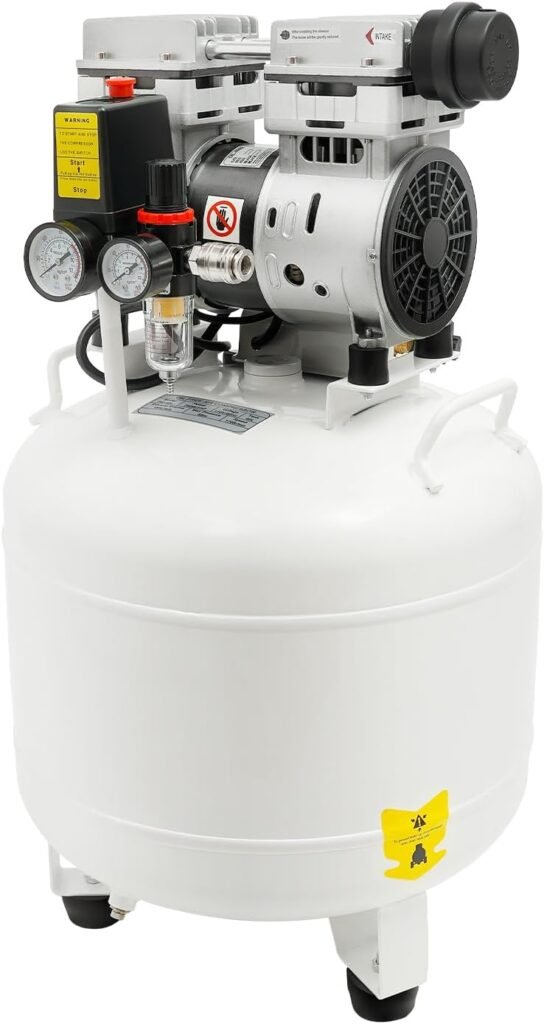

What Is This 40L Portable Dental Medical Air Compressor?
This product is a 40L Portable Dental Medical Air Compressor, 110V, 115 PSI, designed as an oil-free, low-noise commercial compressor for professional environments. It is aimed at hospitals, dental clinics, and medical facilities, but it can also support home workshops, offices, and small commercial applications.
We are essentially looking at a machine that provides clean, dry, and reliable compressed air without the typical mess and noise of traditional oil-based units. It is built to be portable, quiet, and low-maintenance, making it practical for daily professional use.
Key Features at a Glance
This compressor combines several design choices that make it stand out in clinical and commercial settings. We can think of it as a compact, mobile air supply with a strong focus on reliability and comfort.
The main strengths come from its oil-free design, integrated filter, solenoid valve protection, and large-diameter heat dissipation system. Together, these features aim to keep our work environment cleaner, quieter, and safer.
Technical Specifications and Core Data
Before we go into hands-on impressions, it helps to organize the basics into a simple table. This way, we can quickly check if it fits our needs in terms of power, capacity, and usage environment.
Key Specs and Functional Highlights
| Aspect | Details / Notes |
|---|---|
| Product Name | 40L Portable Dental Medical Air Compressor, 110V 115 PSI |
| Type | Portable, commercial, oil-free air compressor |
| Tank Capacity | 40 liters (suitable for clinics and small commercial tasks) |
| Voltage | 110V (standard in many North American settings) |
| Maximum Pressure | 115 PSI (adequate for dental, medical, and light industrial use) |
| Lubrication | Oil-free (clean air, minimal contamination risk) |
| Noise Level | Low-noise design with muffler and silent-oriented construction |
| Filter | High-efficiency air filter with low flow resistance |
| Solenoid Valve | Protects the motor during sudden power failures |
| Cooling | Large-diameter heat dissipation design for faster cooling |
| Portability | Portable, removable style, suitable for moving between rooms or stations |
| Use Cases | Hospitals, dental clinics, home decoration, tyre inflation, cleaning, nail guns, spray guns |
| Maintenance | Minimal filter maintenance, oil-free system reduces servicing requirements |
This overview gives us a good sense of the compressor’s positioning: a clinic-friendly, multi-purpose, oil-free unit that can comfortably handle both medical and light industrial jobs.
Design and Build Quality
The first thing we notice is the way the compressor is constructed to handle professional use while still being manageable in size. The 40L tank offers enough air storage without becoming too bulky to move.
We also appreciate that it is designed as a silent, oil-free compressor with a muffler. That combination immediately suggests a focus on user comfort and hygiene—two priorities in healthcare and office environments.
Materials and Construction
The build feels sturdy enough for repeated daily usage. The tank and frame typically rely on metal construction, while external fittings (like switches, covers, and handles) use durable plastics or metal composites.
We can see that the design emphasizes:
- Stability: The base and feet are set up to keep the unit from rattling excessively.
- Protection: Components such as the solenoid valve and cooling design protect the motor from common hazards.
Overall, we get a sense of a well-thought-out machine that is intended to last, not a flimsy consumer gadget.
Portability and Footprint
Size and Handling
For a 40L tank, the compressor remains reasonably compact and manageable. We can move it between rooms or stations without major effort, which is ideal for:
- Multi-chair dental clinics
- Mobile medical units or flexible treatment rooms
- Shared workshop or office settings
We should still be prepared for some weight, as a 40L tank and motor assembly are not ultra-light, but it is well within normal expectations for commercial portable compressors.
Use in Tight Spaces
The footprint is small enough that we can tuck it into a corner of a treatment room, equipment space, or maintenance room. Because of the low noise and oil-free operation, it is realistic to keep it relatively close to where we work without disrupting our environment.
This portability makes it unusually flexible for a unit that still reaches 115 PSI and has a good-sized tank.
Oil-Free Technology and Why It Matters
Cleaner Air for Medical and Dental Use
In dental and medical environments, oil contamination is more than a nuisance—it can interfere with instruments, affect patient safety, and compromise hygiene. An oil-free compressor virtually eliminates the risk of oil-mist in the compressed air stream.
We greatly reduce:
- The chance of oil entering dental handpieces
- The need for elaborate air filtration to remove oil aerosols
- Oily residue on tools, surfaces, or internal components of devices
For us, an oil-free system is an essential step toward maintaining clean, dry, and hygienic air, especially when we support patient-facing operations.
Lower Maintenance and Fewer Messes
With no need to change oil, we save:
- Time on scheduled maintenance tasks
- Costs on oil and related consumables
- The effort of dealing with spills, disposal, and stains
This means ongoing ownership is simpler and cleaner. Oil-free units often run with slightly different wear characteristics than oil-lubed compressors, but modern designs are built to handle the demands of clinic and shop environments reliably.
Noise Level and “Silent” Operation
Why Quiet Operation Matters
We all know how disruptive noisy machines can be. In a dental or medical setting, loud compressors can:
- Increase anxiety for patients
- Distract staff and professionals
- Make communication harder in treatment rooms
This unit is described as a silent air compressor with a muffler and design choices aimed at noise reduction.
Practical Noise Experience
While “silent” in a strict sense is an overstatement for any mechanical compressor, this type of machine is usually in the low-noise range compared to traditional shop compressors. In real-world use, we can expect:
- Noticeable noise when the motor runs, but muted and less sharp
- Acceptable operation inside or near treatment areas
- The ability to carry on conversations without shouting
For us, this translates into a more comfortable environment, particularly in dental clinics where patients are already sensitive to sounds.
Filtration System and Air Quality
High-Efficiency Filter
One of the standout aspects mentioned is the adoption of a high-efficiency filter:
- High filtration efficiency
- Low flow resistance
- No maintenance required while working
- Good silent effect
We appreciate that the filter is designed to clean the air while maintaining airflow and minimizing noise. By reducing flow resistance, the compressor does not need to work as hard to deliver the required pressure and volume.
Maintenance and Longevity
Although described as requiring no maintenance when working, we still recommend occasional checks:
- Inspecting for dust build-up
- Confirming fittings are secure
- Monitoring performance over time
The fact that we are not expected to constantly clean or replace the filter during normal use is a clear advantage in busy environments where time and resources are limited.
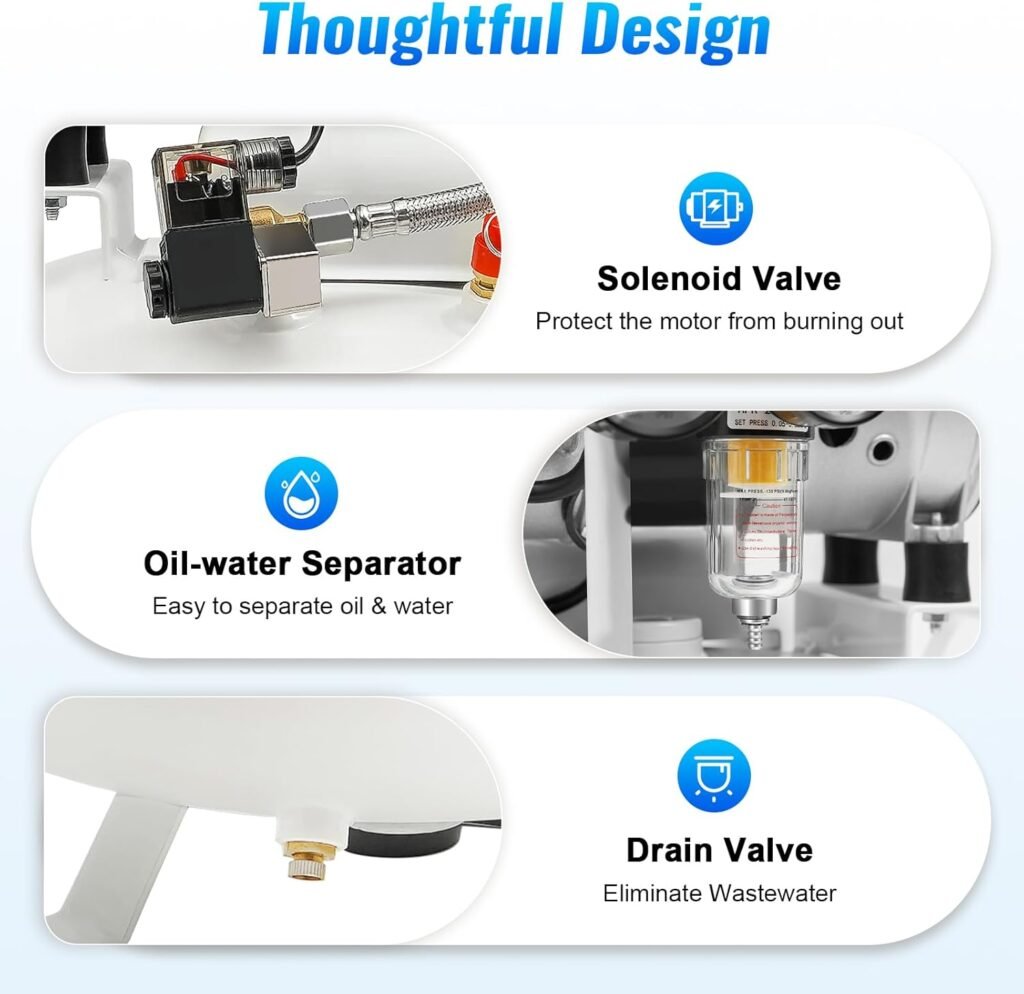
Motor Protection: Solenoid Valve Function
How the Solenoid Valve Helps
The air compressor uses a solenoid valve specifically to protect the motor. In particular, it helps in situations like:
- Sudden power failure
- Unpredictable voltage drops
- Automatic restarts
When power is cut unexpectedly, the solenoid valve helps prevent:
- Excessive pressure load on restart
- Sudden bursts of current or strain on the motor
- Premature wear or burnout of internal components
We effectively get an added layer of protection that prolongs motor life and keeps the unit more reliable.
Real-World Benefits
In clinics and offices, power interruptions occasionally happen. Without a protective system, compressors can restart into a pressurized line, placing huge stress on components.
With this solenoid valve, we:
- Reduce the risk of motor failure
- Enjoy smoother, safer restarting behavior
- Extend the working life of the compressor overall
For us, that means fewer service calls and less unexpected downtime.

Heat Dissipation and Continuous Operation
Large-Diameter Heat Dissipation Design
The compressor includes a large-diameter heat dissipation system that allows it to cool more quickly and efficiently. This matters because:
- Compressors naturally generate heat during operation
- Excessive heat can cause failure or shutdown
- Efficient cooling improves reliability under frequent use
By enhancing heat dissipation, the unit:
- Is less likely to overheat
- Can run longer or cycle more often
- Provides better efficiency and performance over time
Practical Impact on Usage
In busy clinics or workshops, we often run compressors multiple times per hour. Rapid heat dissipation ensures we:
- Avoid frequent breaks due to overheating
- Maintain steady performance across the day
- Keep the motor and electrical components within a safe temperature range
This design makes the compressor a better fit for professional, high-frequency use as opposed to just occasional home tasks.
Pressure, Performance, and Power
115 PSI and 40L Capacity
The compressor offers:
- Up to 115 PSI maximum pressure
- A 40L tank capacity
This range comfortably supports:
- Dental equipment
- Medical instruments requiring compressed air
- Light spray painting and airbrushing
- Tyre inflation
- Small air tools such as nail guns and air blow guns
With 40L of stored air, we get a good balance: long-enough runtime for many tasks, without excessively long refill times.
Everyday Performance Expectations
We should expect:
- Quick pressure build-up from zero to operating range
- Stable output for intermittent-demand tools (like dental handpieces and nail guns)
- Acceptable performance on jobs like blowing off dust, cleaning floors, or inflating tyres
It is not intended for heavy industrial tools that require very high CFM continuously, but for clinic operations and light commercial tasks, this range is very suitable.
Controls and Usability
Enhanced Vertical Power Switch
The product mentions an enhanced vertical switch, described as easy to start. This is essentially the main on/off power control, and it is meant to be intuitive and straightforward to operate.
We simply:
- Unplug or switch off to open (power off)
- Press to close (power on)
The wording may sound reversed at first, but in practice we can think of it like:
- Off: Button in the “released” or “open circuit” state
- On: Button pressed or locked into the “closed circuit” state
Handling Sudden Power Cuts
If the power is suddenly cut off during use, we are advised to:
- Ensure the pressure switch button is in the off state.
- Then restart the compressor (unplug to open, press to close).
This approach:
- Minimizes stress on the system
- Ensures the solenoid and motor restart safely
- Helps avoid overloading when power returns
We like that this guidance is simple and helps extend the life of the compressor.
Versatility: From Clinics to Workshops
Medical and Dental Applications
In our dental or medical practice, this compressor is especially helpful for:
- Powering dental handpieces
- Supporting air-water syringes (when properly integrated with the delivery system)
- Providing air for cleaning, drying, and operating small pneumatic tools used in healthcare maintenance
The oil-free, quiet, and filtered air profile suits these environments well.
Non-Medical Use Cases
The product description even notes many other uses:
- Home decoration tasks (such as powering small pneumatic tools)
- Tyre inflation for cars, bikes, and equipment
- Floor cleaning with an air blow gun
- Spray guns for light painting jobs
- Steel nail guns and small air guns
This flexibility gives us the option to use the compressor beyond the clinic, for maintenance work, or as a shared resource between a practice and a workshop or office facility.
Pros and Cons
Advantages
We see several strong advantages:
-
Oil-Free Operation
- Clean air, ideal for medical/dental environments
- Lower maintenance with no oil changes required
-
Quiet, “Silent-Oriented” Design with Muffler
- Much quieter than traditional compressors
- More comfortable for staff and patients
-
High-Efficiency Filtration
- Better air quality
- Low flow resistance for efficient performance
-
Solenoid Valve for Motor Protection
- Safeguards during power failures
- Extends motor life and improves reliability
-
Large-Diameter Heat Dissipation
- Faster cooling during frequent use
- Less risk of overheating, better efficiency
-
Multi-Purpose Use
- Suitable for clinics, hospitals, workshops, and home projects
- Capable of powering a broad range of light pneumatic tools
-
Reasonable Portability
- Easy enough to move between rooms
- Compact footprint for tight spaces
Limitations
There are also a few limitations and considerations:
-
Not for Heavy Industrial Tools
- Limited to 115 PSI and 40L capacity
- Not intended for large, constant-demand air tools
-
Noise Still Present
- Quieter than many compressors, but not completely silent
- Some users may still prefer to place it in a separate room if possible
-
Power Requirements
- 110V, which is ideal for North America, but may require adaptation elsewhere
-
Weight
- A 40L tank and motor assembly have some heft, even if portable
- We might not want to move it constantly without a cart or handle system
For many medical and dental settings, these trade-offs will be acceptable given the positive balance of cleanliness, quiet operation, and versatility.
Ideal Users and Use Scenarios
Who Benefits Most?
We see this compressor as especially suited for:
- Dental clinics needing a quiet, oil-free air source for handpieces and instruments
- Hospitals and medical clinics requiring clean, low-noise air for pneumatic devices and maintenance tasks
- Professional offices or labs doing light pneumatic work with a strong preference for low noise
- Home workshops and studios where oil-free, quiet operation is valued for comfort and cleanliness
Because it is flexible enough for tyre inflation, spray painting, and air tools, we can use it in both clinical and technical spaces.
Sample Daily Workflow
A typical day might look like this:
- Morning: Power on the compressor before the first patient, allow it to pressurize.
- During the day: It cycles on and off as instruments and air-powered devices are used.
- Between appointments: Staff use an air gun connected to the compressor to clean surfaces or equipment.
- After hours: The compressor might assist in maintenance tasks—cleaning floors, inflating tyres, or running small nail guns for fixtures and repairs.
This multipurpose capability makes it a valuable tool beyond just a single specialized use.
Setup, Installation, and Safety
Getting Started
Setting up the compressor usually involves a few straightforward steps:
-
Placement
- Position it on a flat, stable surface.
- Ensure adequate ventilation for cooling.
-
Connections
- Plug into a compatible 110V outlet.
- Attach air hoses and quick couplers as needed.
- Connect to a filter/regulator if our application requires additional drying or precise pressure control.
-
Initial Test
- Turn on the vertical power switch.
- Allow the tank to reach normal operating pressure.
- Check for air leaks using soapy water at joints and connections.
Safety Practices
We should follow some general best practices:
- Do not exceed the rated pressure or voltage.
- Avoid placing the unit near flammable materials.
- Drain any moisture from the tank periodically if a drain valve is included.
- Always turn off and unplug the compressor when performing any maintenance.
By observing these rules, we help ensure a safe and long-lasting experience.
Maintenance and Longevity
Routine Maintenance
Although the compressor is low maintenance, we still want to establish simple routines:
- Visual Inspection: Periodically inspect hoses, fittings, and the tank.
- Filter Check: Even though it is “no maintenance” during normal work, we can still check for excessive dust over time.
- Moisture Drainage: If the environment is humid, draining the tank occasionally helps avoid rust and water-related issues.
These small actions can greatly extend the life of any compressor.
What Extends Its Life the Most?
Key design features that contribute to longevity:
- Solenoid Valve: Protects the motor from harsh restarts after power failures.
- Cooling System: Large-diameter heat dissipation helps avoid overheating.
- Oil-Free Design: Less internal residue, simpler internal environment, fewer messy failures.
By combining these features with our own responsible usage, we can expect solid long-term performance.
Performance in Different Environments
In a Dental Clinic
In a dental clinic, this compressor stands out because:
- It runs quietly enough to maintain a relatively calm working atmosphere.
- It provides clean, oil-free air, essential for instruments and patient safety.
- It is compact enough to fit into a utility room or corner without dominating space.
We can power:
- Dental handpieces (with appropriate integration into the dental unit)
- Air nozzles for drying and cleaning
- Small lab tools requiring compressed air
In a Hospital or Medical Office
In a hospital or medical office, the compressor:
- Assists with maintenance work and technical tasks
- Provides air for some pneumatic devices when configured correctly
- Offers a quieter alternative to industrial shop compressors, reducing disturbance to patients
The oil-free and filtered air aspects remain a major plus here as well.
In a Home or Workshop Setting
For a home or small workshop, we can enjoy:
- Cleaner operation with no oil mess
- A quieter experience than typical DIY compressors
- The ability to work during evenings or in shared spaces without extreme noise complaints
Tasks like tyre inflation, finishing carpentry, and light painting jobs are well within this compressor’s capabilities.
Comparison to Traditional Compressors
Where It Shines
Compared to a standard, oil-lubed contractor compressor:
- Noise: Much quieter, better for indoor and clinical use.
- Cleanliness: No oil in the air, safer for medical/dental tools.
- Maintenance: Simplified routines, no oil changes.
We trade some of the brute-force robustness of industrial compressors for a cleaner, quieter, more specialized profile.
Where Heavier Units Still Win
Larger industrial compressors win in:
- Continuous high CFM output for large air tools
- Extremely heavy-duty operations like sandblasting or industrial spray booths
However, those use cases are far from the typical realities of dental, medical, and office environments, where the oil-free, quiet nature of this 40L portable compressor is far more important.
Value for Money
What We Get for the Investment
With this compressor, we are essentially buying:
- A specialized air system suitable for professional yet sensitive environments
- A quieter, oil-free, low-maintenance setup that can support both clinical and small workshop tasks
- Additional protections (solenoid valve, cooling system) that improve the safety and life of the motor
The 40L size and 115 PSI rating put it in a sweet spot between small hobby units and large industrial systems.
Long-Term Cost Perspective
Over time, we can expect savings due to:
- No oil purchases or disposal costs
- Fewer breakdowns caused by overheating or power-related stress
- Reduced need for extensive additional filtration systems in dental/medical air lines
If we value quiet operation and hygiene, the long-term return on investment can be quite strong.
Final Thoughts: Is This Compressor Right for Us?
If we are running a dental clinic, medical office, or any professional environment where clean air, low noise, and portability matter, the 40L Portable Dental Medical Air Compressor, 110V 115 PSI, oil-free with muffler and solenoid valve protection is a compelling option.
We gain:
- An oil-free system that protects patients, staff, and equipment from oil contamination
- A quiet, muffled unit that does not dominate the soundscape of our workspace
- Smart motor protection and heat dissipation that improve reliability and life span
- Enough capacity and pressure to handle a broad range of clinical and light workshop tasks
While it is not aimed at heavy industrial work or massive airflow applications, it excels in precisely the environments that demand cleanliness, quiet, and practicality. If our priorities align with those strengths, this compressor fits very well into our toolkit and daily operations.

Disclosure: As an Amazon Associate, I earn from qualifying purchases.