Have we ever wondered how much smoother our dental or lab work could run with a reliable, quiet, and low-maintenance air source?
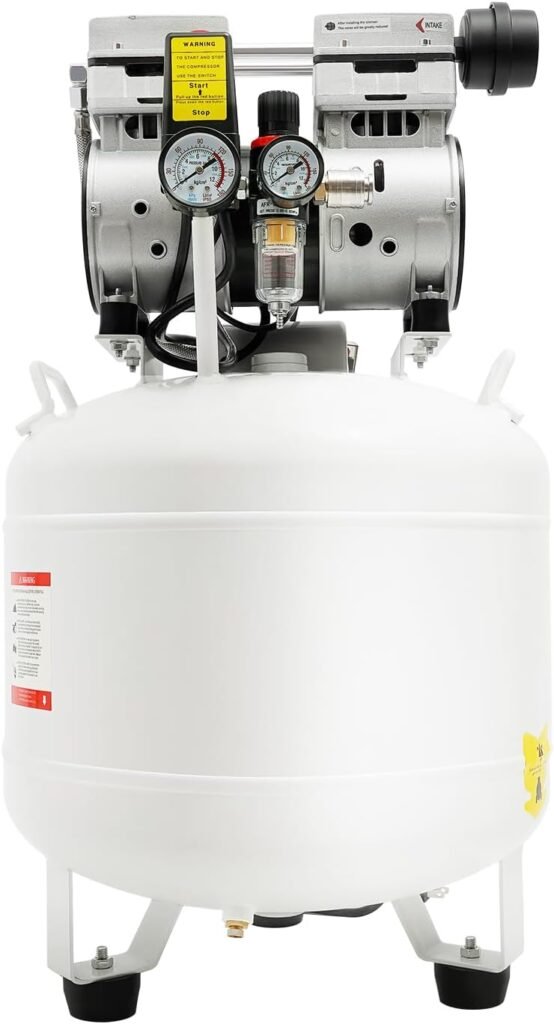

What Is the 40L/10.57 Gallon Portable Dental Air Compressor?
When we talk about the “40L/10.57 Gallon Portable Dental Air Compressor, oil-free silent air compressor 115PSI 750W Medical Air Compressor for Medical Equipment, Laboratory, Dental,” we are looking at a specialized machine built for clean, consistent, and quiet compressed air. It is designed with dental clinics, laboratories, and medical environments in mind, but it can also support beauty and scientific research applications.
This compressor uses an oil-free, low-noise design and a robust 750W all-copper motor. We get a good balance between power, reliability, and portability, which is often exactly what we need in a clinical or technical workspace.
Key Features at a Glance
Before we go deeper into what this compressor can do for us, it helps to see the main highlights side by side. Having a quick overview allows us to decide whether it meets our needs in terms of capacity, pressure, and noise level.
| Feature | Specification / Benefit |
|---|---|
| Tank Capacity | 40L / 10.57 gallons |
| Motor Power | 750W all-copper motor |
| Maximum Pressure | Up to 115 PSI |
| Compressor Type | Oil-free, silent type |
| Noise Level | Low-noise design suitable for dental and medical spaces |
| Portability | Handles on both sides for easier carrying and positioning |
| Safety Components | Solenoid valve to protect motor, large-diameter cooling fan for heat dissipation |
| Filtration | Oil-water separator to purify air and separate moisture and oil |
| Maintenance | Oil-free operation, minimal routine maintenance |
| Suitable Applications | Dental, laboratory, medical equipment, beauty, scientific research, experiments, and more |
This quick snapshot helps us see how the compressor sits in terms of size and performance. It is not a huge industrial unit, but it is clearly a serious piece of equipment aimed at professional use.
Build Quality and Design
When we invest in any compressor for a clinical or lab setting, we usually care a lot about sturdiness and reliability. With this model, the design focus is on a strong motor, effective cooling, and easy handling.
The overall build feels engineered for daily use. The tank capacity of 40L/10.57 gallons offers a solid storage volume for compressed air, which helps maintain a more stable supply during procedures or experiments.
All-Copper 750W Motor
The heart of this compressor is its 750W all-copper motor, which is a big factor in its stability and longevity. Copper windings handle heat better and are typically more durable than cheaper aluminum counterparts.
We can expect stronger starting torque and more consistent performance under continuous use. For dental chairs, lab equipment, or small medical devices, this level of power is usually more than adequate as long as we match it to realistic demands.
Oil-Free, Clean-Air Design
In medical and dental environments, contamination is not just an inconvenience; it can be a real hazard. Here, the oil-free design becomes very important. Because the compressor does not use engine oil for lubrication, the risk of oil traces entering our air lines is greatly reduced.
We do not need to manage messy oil changes or worry about oil carryover into tools and equipment. That makes this compressor well-suited for environments where air needs to be as clean as possible before additional filtration or drying.
Performance and Pressure Capability
Performance for us comes down to how consistently the compressor can provide air at the pressure we need, and how long it can hold that output during active use. This unit operates up to 115 PSI, which is a common and practical maximum for dental and many lab devices.
115 PSI Operating Pressure
With a maximum pressure of 115 PSI, we have a comfortable margin for most dental handpieces, 3-way syringes, small pneumatic valves, and many lab devices. We are not working with heavy industrial air tools here, so this range fits very well.
In practical use, we can expect the compressor to cycle on and off as air is consumed, maintaining pressure in the tank. The 40L capacity helps reduce the frequency of cycling compared to smaller tanks, which can be helpful when we want fewer interruptions and less noise.
Stable Output for Clinical and Lab Tasks
Because the motor is designed for steady performance, we can rely on this compressor for repeated daily tasks. Whether we are operating a single dental chair or small sets of lab instruments, the combination of motor power and tank volume should give us smooth, regular airflow.
For multi-unit clinics or heavy continuous use, we may still want to check our total air consumption. But for small to medium setups, the performance level looks very reasonable and practical.
Noise Level and Working Environment
Noise is one of the biggest concerns with compressors, especially in dental and medical settings. Patients, clients, and research staff are often within earshot of the equipment, so keeping noise down can make a big difference to comfort and concentration.
Silent or Low-Noise Operation
This compressor is described as an oil-free silent air compressor. While no compressor is completely silent, the design here clearly focuses on low operating noise. Oil-free units often run a bit louder than lubricated ones, but in this case, noise reduction techniques help keep sound levels more acceptable in a clinical environment.
We can expect the sound to be more like a moderate hum rather than a harsh industrial roar. For most dental clinics and labs, that prevents the compressor from being a major source of distraction.
Better Patient and Staff Comfort
Because the sound profile is softer and more controlled, we give our patients, clients, and team a calmer atmosphere. Especially in dentistry, where some patients are already anxious, reducing background noise is a real benefit. Staff who work around the compressor all day will also appreciate that it is not excessively loud.
In small labs or shared spaces, this can be the difference between constant irritation and an environment that feels professional and composed.
Safety Features and Motor Protection
Whenever we use compressed air, safety matters. Beyond basic construction, this compressor adds a couple of useful protections that increase reliability and reduce risk to both the user and the equipment itself.
Solenoid Valve for Power Failure Protection
One of the clever details here is the solenoid valve designed to protect the motor during sudden power failure. Power interruptions can cause pressure imbalances or abrupt stops that strain components. The solenoid valve helps control pressure in such events so that the motor is less likely to suffer damage.
This means we can feel more confident using the compressor in areas where the electrical supply might occasionally be unstable or subject to brief outages.
Large-Diameter Cooling Fan
Heat is the enemy of electric motors and compressors. Here, a large-diameter cooling fan supports better airflow around the motor and main components. That helps dissipate heat more quickly, especially during extended periods of operation.
By keeping temperatures lower, we reduce the risk of overheating and prolong the life of both the motor and other sensitive parts. It also contributes to safer operation, because overheated devices can potentially pose hazards or fail when we need them most.
Air Quality: Oil-Water Separator and Clean Output
For many of us, the purity of the compressed air can be just as important as the pressure and volume. This compressor includes an oil-water separator, which plays a key role in cleaning up the compressed air before it reaches our equipment.
Oil-Water Separator Function
During compression, moisture in the air can condense inside the tank and lines. When we combine that with even minimal traces of oil (from external environments or fittings), we can end up with small droplets that may harm sensitive instruments.
The oil-water separator works by filtering and separating these contaminants from the air stream. The end result is drier, cleaner air that is better suited for dental tools, lab instruments, and cosmetic devices.
Benefits for Sensitive Equipment
Clean, dry air reduces corrosion inside air lines and tools, extends the lifespan of valves and seals, and helps keep instruments operating smoothly. In dentistry and medical settings, that also supports hygiene standards, since we avoid pushing contaminated moisture through delicate devices.
We may still add extra filters or dryers for highly sensitive applications, but having a built-in oil-water separator gives us a strong first layer of protection right out of the box.

Portability and Ergonomics
Many clinics and labs need flexibility. We might rearrange rooms, move between treatment areas, or reconfigure a workspace based on current projects. Portability, even in a relatively large compressor, can make daily work much easier.
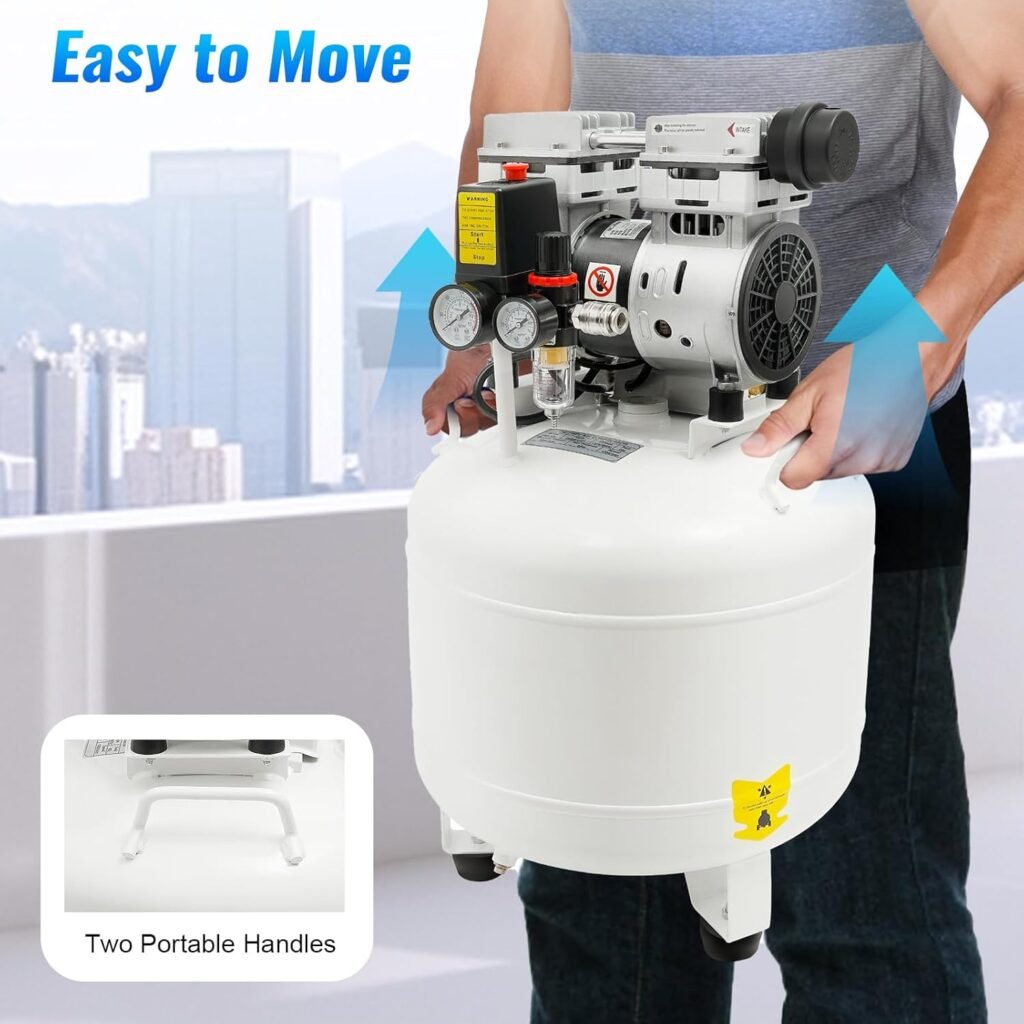
Dual Handles for Easier Movement
This compressor includes handles on both sides, making it more practical to lift or shift when needed. A 40L/10.57 gallon tank is not feather-light, but having proper gripping points lets us move it with more control and less strain.
If we run mobile clinics, temporary setups, or multi-room labs, we can reposition the compressor without too much trouble. We simply plan ahead for where outlets are available and where the compressed air lines need to reach.
Compact Footprint for Tight Spaces
In many medical and lab environments, floor space is at a premium. While the unit offers a generous tank, it remains compact enough to fit in corners, storage rooms, or behind equipment.
We can often tuck it away while still keeping access for maintenance and monitoring. This helps keep our treatment or working areas uncluttered and professional.
Maintenance and Daily Care
One of the biggest assets of oil-free compressors is reduced maintenance. When we run busy practices or labs, the less time we spend servicing equipment, the better—provided we keep things safe and reliable.
Oil-Free, Low-Maintenance Operation
Since this compressor does not require engine oil lubrication, we avoid regular oil changes, oil level checks, and the handling of used oil. That simplifies our maintenance schedule and cuts down on consumables.
We still need to perform basic tasks like draining moisture from the tank, cleaning or checking the oil-water separator, and ensuring the cooling fan is unobstructed. But these are much quicker than full oil service routines.
Longevity Through Simple Routines
By building a short checklist into our weekly or monthly routines, we can keep the compressor running smoothly for a long time. Tasks might include:
- Draining the tank to remove accumulated water
- Checking hoses and fittings for leaks
- Ensuring the cooling fan area is dust-free
- Inspecting pressure gauges and safety valves
These simple actions help us get more years of use and avoid unexpected downtime.
Suitability for Dental Clinics
Dental environments often demand the most from a compressor in terms of air quality, noise, and reliability. This model’s feature set lines up closely with what many small and medium dental practices need.
Support for Dental Handpieces and Equipment
Most dental tools require clean, relatively dry air in a pressure range that stays comfortably below 115 PSI. With this compressor, we have enough headroom to support:
- High-speed and low-speed handpieces (with appropriate regulators and filters)
- 3-way air/water syringes
- Suction-driven devices that use air assist
- Small pneumatic control valves in dental chairs
The tank capacity helps provide smooth operation, especially when we are using tools in quick bursts throughout procedures.
Patient-Friendly Noise Levels
Because the compressor is described as silent or low-noise, it should not cause significant disturbance in the treatment area. We can place it in a nearby room or utility space, and patients are unlikely to be distracted by loud compressor cycles.
This supports a calm, reassuring environment, especially important for more anxious patients or children.
Suitability for Laboratories and Scientific Research
In laboratories, we often rely on compressed air for a wide range of tasks, from powering small instruments to supporting experimental setups. Reliability and cleanliness are critical.
Supporting Experimental Setups
This compressor can serve:
- Pneumatic controls in small test rigs
- Air-driven pumps or valves
- Instruments that require low-contamination compressed air
Because of the oil-free design and oil-water separator, we reduce contamination risks in experiments, which is particularly important in sensitive chemical, biological, or analytical work.
Quiet Operation in Focused Workspaces
Lab work requires concentration, and a loud compressor in the corner can be disruptive. With a quiet or low-noise unit, we help maintain a focused atmosphere where conversations, measurements, and instrument sounds are not drowned out by mechanical noise.
If we run shared spaces or open-plan labs, this quieter profile becomes a real practical advantage.
Application in Medical Equipment and Beauty Fields
Beyond dental and lab uses, this compressor can serve various medical devices and beauty applications. Many of these devices rely on stable and clean compressed air but might not need industrial-level flow rates.
Medical Equipment Compatibility
The compressor’s pressure range and air purity make it suitable for:
- Certain types of medical analyzers (with compatible pressure requirements)
- Air-assisted medical instruments
- Devices that employ compressed air for control functions or actuation
We always need to check specific manufacturer requirements for each piece of equipment, but this compressor’s medical-focused design gives it a strong foundation.
Beauty and Aesthetic Applications
In beauty salons, clinics, and aesthetic centers, compressed air is used for:
- Airbrush makeup systems
- Cosmetic spray devices
- Some skin treatment tools that rely on gentle air jets
Using an oil-free, clean-air source helps maintain hygiene, prevents oil contamination on skin or tools, and supports consistent results.
Pros and Cons Overview
Every piece of equipment comes with strengths and trade-offs. To help us see where this compressor fits in our plans, it helps to summarize both sides.
Advantages
- Oil-free design: Cleaner air output, no engine oil lubrication required, low maintenance.
- 40L/10.57 gallon tank: Offers a solid buffer of compressed air for steady output.
- 750W all-copper motor: Strong performance and improved durability, with good thermal tolerance.
- Up to 115 PSI: Enough pressure for a wide range of dental, lab, and medical applications.
- Low-noise operation: Suitable for patient-facing and research environments.
- Solenoid valve protection: Safeguards the motor during sudden power failures.
- Large cooling fan: Promotes effective heat dissipation and safer, longer operation.
- Oil-water separator: Helps purify air and protect sensitive instruments.
- Portable design: Dual handles for easier movement and flexible placement.
These strengths position the compressor as a professional-grade unit tailored to healthcare and technical spaces.
Potential Limitations
- Not suited for heavy industrial tools: This is a medical and lab-oriented compressor, not a high-flow workshop machine.
- Weight can still be noticeable: Even with handles, a 40L tank and motor have some heft, so moving it frequently may require planning or two people.
- Requires regular moisture draining: Oil-free does not mean maintenance-free; we still need to manage condensation in the tank.
- Noise is low, not non-existent: While quiet compared to many compressors, we should still place it thoughtfully to minimize any remaining sound.
Recognizing these trade-offs helps us decide if it aligns with the scale and intensity of our operations.
Who Is This Compressor Best For?
Choosing the right compressor is about matching capabilities to real-world tasks. This unit targets professionals who need reliability, clean air, and quiet operation more than extreme industrial power.
Ideal Users and Environments
We think this compressor suits:
- Small to medium dental practices needing a reliable air source for a limited number of chairs and tools.
- Laboratories conducting experiments or running instruments that require clean, low-oil compressed air.
- Medical clinics with devices that rely on compressed air for actuation or support functions.
- Beauty and aesthetic centers using airbrushes and air-driven cosmetic tools.
- Educational and research institutions where a low-maintenance, quiet compressor is important for teaching and project work.
For these groups, the mix of 40L capacity, oil-free design, and quiet operation is very attractive.
Less Suitable Scenarios
This compressor might not be the best match if:
- We run a large industrial workshop with heavy air tools that demand high continuous flow.
- We need a central air system for a multi-room hospital or large-scale dental facility with many chairs running simultaneously.
- We operate in environments where extremely high pressures well beyond 115 PSI are required.
In those cases, we may need multiple units or a more industrial-grade compressor system.
Practical Tips for Daily Use
To get the most out of this compressor, we can adopt a few simple habits. These help us maintain performance, reduce wear, and stay safe.
Installation and Placement Suggestions
When we first set it up, we can:
- Place it on a stable, level surface to avoid vibration and movement.
- Ensure good ventilation around the compressor, especially near the cooling fan.
- Keep it away from direct heat sources or very damp areas.
- Position it where we can easily access drains, gauges, and handles.
Good placement at the start saves us trouble later and helps maintain proper cooling and operation.
Operating and Maintenance Practices
During daily or weekly usage, we might:
- Check the pressure settings and regulators before starting procedures.
- Listen for any unusual sounds that could indicate leaks or mechanical issues.
- Drain the tank regularly to remove accumulated water, especially in humid environments.
- Inspect the oil-water separator and clean or empty it as needed.
- Periodically check electrical connections and cords for wear or damage.
These small efforts contribute greatly to a long, trouble-free service life.
How It Compares to Typical Small Compressors
Many of us may already be familiar with generic hobby or workshop compressors. There are some meaningful differences between those and a specialized medical or dental unit like this one.
Medical-Grade Focus vs. General-Purpose Use
Standard small compressors are often designed for tasks like inflating tires or powering basic air tools. They may run louder, use oil lubrication, and lack advanced separation and safety features.
This 40L/10.57 gallon compressor, by contrast, is designed specifically for:
- Cleaner air with built-in oil-water separation
- Lower noise profiles to respect clinical and research environments
- Protective measures like the solenoid valve and optimized cooling
We might pay more for this type of unit than for a basic consumer compressor, but the added safety, cleanliness, and comfort are often worth it in professional settings.
Tank Size and Pressure Stability
Compared with tiny portable compressors that have very small tanks, the 40L capacity holds a lot more compressed air. That means:
- Fewer on-off cycles during regular use
- More stable pressure output under intermittent demand
- Less chance of tools losing power mid-task
For applications like dentistry or lab work, that stability matters far more than simply hitting a maximum PSI on paper.
Our Overall Experience and Impressions
When we look at the full package—power, capacity, air quality, noise level, and safety features—this 40L/10.57 Gallon Portable Dental Air Compressor stands out as a capable and thoughtfully designed option for professional environments.
Strengths That Stand Out
We especially appreciate:
- The 750W all-copper motor that promises reliable, consistent performance.
- The oil-free design that simplifies maintenance and supports hygiene standards.
- The quiet operation that makes it suitable for dental clinics and labs where people need calm surroundings.
- The protective features, including the solenoid valve and large cooling fan, that help keep the unit running safely.
- The 40L tank that offers a steady supply of compressed air for everyday needs.
These combined strengths give us confidence in relying on this compressor for ongoing, professional use.
Considerations Before We Commit
We still want to be sure that:
- The intended workload matches the compressor’s capacity.
- Our space can accommodate the unit’s size and ventilation needs.
- Our devices’ air consumption and pressure requirements are compatible with 115 PSI and the unit’s output characteristics.
If we check these boxes, this compressor becomes a strong candidate for medical, dental, and laboratory environments.
Final Thoughts: Is This Compressor a Good Fit for Us?
Taking everything into account, this 40L/10.57 Gallon Portable Dental Air Compressor, with its oil-free, silent design and 115PSI 750W motor, gives us a robust and user-friendly air source for professional settings. It is built to deliver clean, stable air with minimal fuss, while keeping noise and maintenance under control.
For small to medium dental practices, labs, medical equipment setups, beauty clinics, and research spaces, it offers an appealing balance between power, air quality, and comfort. If our priority is a dependable, quiet, and low-contamination compressor that we can move when needed and maintain easily, this model fits that description very well.
By aligning its capabilities with our actual usage patterns and environment, we can decide if it is the right partner for our clinical, research, or beauty applications.

Disclosure: As an Amazon Associate, I earn from qualifying purchases.