Have we ever wished our compressor could be quieter, cleaner, and easier to live with in a workshop or clinic?
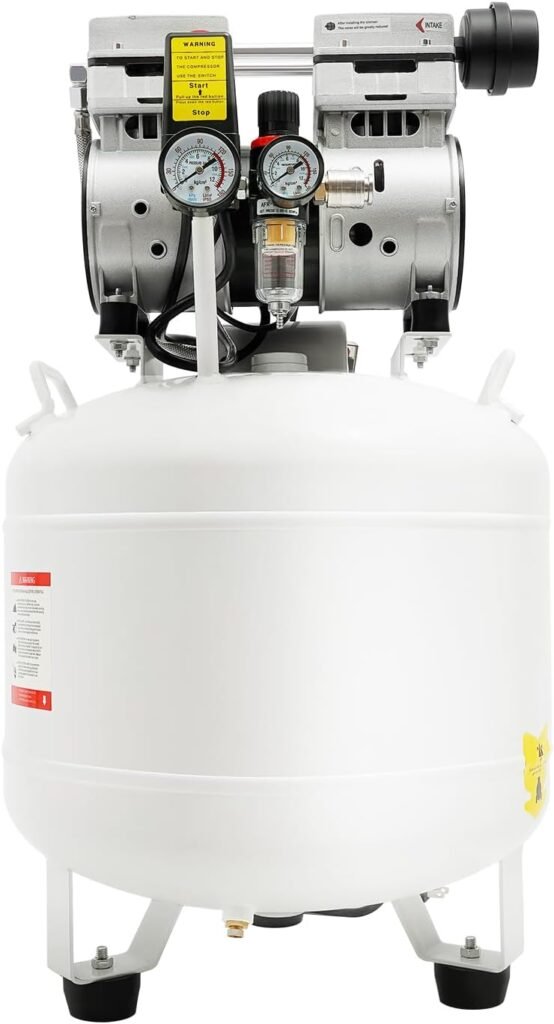

Overall Impression of the 40L Air Compressor, 750W 165L/min
When we look at the 40L Air Compressor, 750W 165L/min Quiet Dental Air Compressor, we see a machine designed for people who care about low noise, clean air, and low maintenance. It is clearly geared toward dental and lab environments, but it also fits surprisingly well in small workshops and home garages.
This compressor aims to solve three common frustrations at once: noise, oily air, and frequent maintenance. As we walk through its features and performance, we can see how well it meets those goals and whether it fits our needs for tools such as spray guns, steel nail guns, and other air-powered equipment.
Key Specifications at a Glance
It is often easier to understand a product when we break down the specifications in a clear format. This compressor combines a 40L tank with a 750W motor, offering a solid balance between capacity, air output, and power consumption.
Here is a summary of the main specs and characteristics we can expect:
| Feature | Specification / Description |
|---|---|
| Product Name | 40L Air Compressor, 750W 165L/min Quiet Dental Air Compressor |
| Tank Capacity | 40 liters |
| Motor Power | 750 watts (all-copper motor) |
| Air Delivery | 165 L/min (liter per minute) |
| Design Type | Oil-free, oilless compressor |
| Main Materials | Copper, iron, aluminum, plastic |
| Noise Focus | Quiet operation suitable for dental/clinic settings |
| Safety Features | Large-diameter cooling fan, solenoid valve protection, oil-water separator |
| Maintenance Requirement | No oil changes, low routine maintenance |
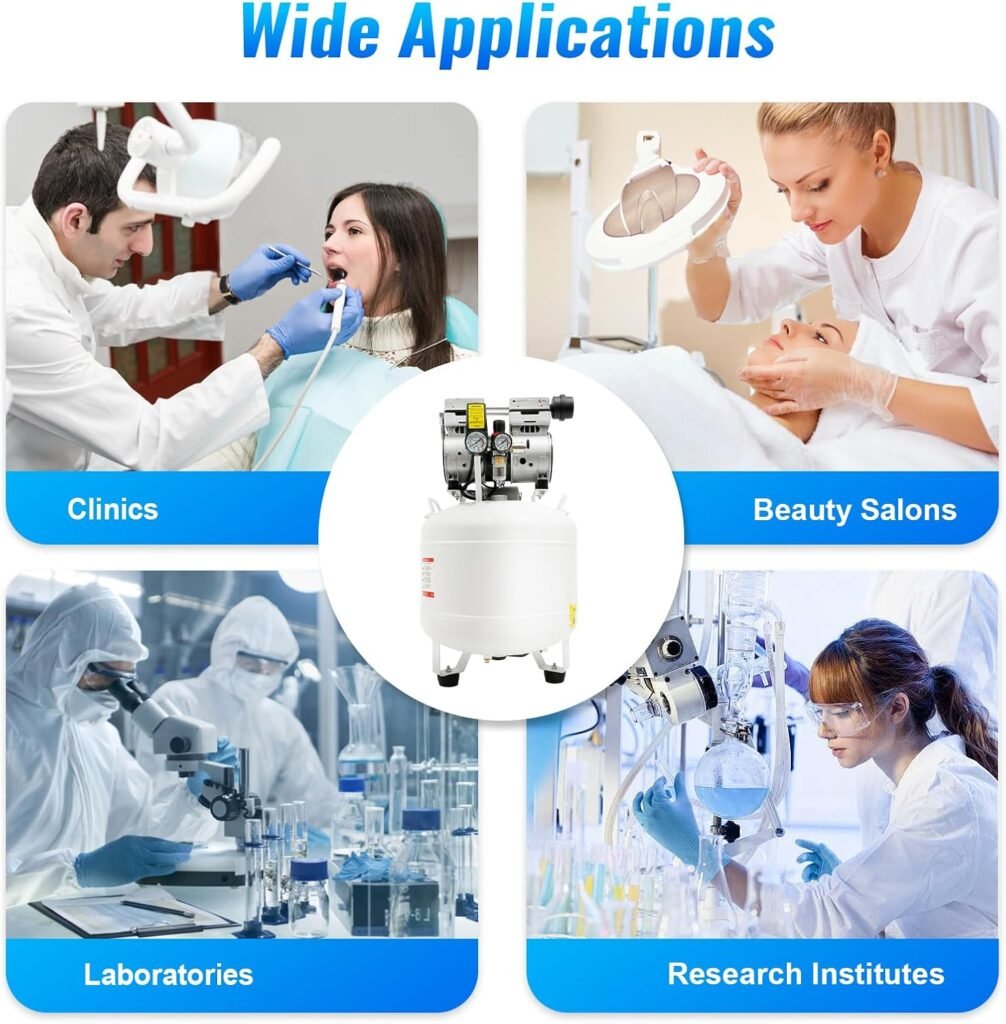
| Intended Uses | Dental chair equipment, spray gun, steel nail gun, experiments, research, beauty, clinics |
| Corrosion Resistance | Rust-resistant construction (iron and aluminum with protective finishes) |
| Portability | Medium-sized tank; generally movable with moderate effort |
| Air Quality | Oil-free, filtered air through an oil-water separator |
These basics already tell us quite a bit: it is not a tiny portable unit, nor is it a huge industrial system. It sits in that middle ground that works well for clinics, labs, and small workshops that need reliable, clean compressed air.
Build Quality and Materials
Sturdy, Durable Construction
We can usually judge a compressor’s durability by what it is made from. Here, we are dealing with a combination of copper, iron, aluminum, and plastic for various components. Copper and aluminum are especially important for conductivity and heat dissipation, while iron provides structural strength.
This mix suggests a design that should stand up to frequent use without easily cracking, warping, or rusting. With proper storage and basic care, we can expect the main tank and structural parts to last for years.
Resistance to Impact and Corrosion
The product description emphasizes impact resistance and rust resistance. For us, that matters in two scenarios: busy clinics where equipment gets moved around and workshops where humidity or dust can be a problem.
A rust-resistant tank reduces the risk of internal corrosion, which can compromise safety and tank life. Impact resistance means the outer shell and attached components are less likely to suffer from accidental knocks or bumps during transport or repositioning within the workspace.
Motor and Performance
All-Copper Motor for Stable Power
An all-copper motor is a positive sign when we care about efficiency and longevity. Copper windings usually handle heat better and ensure more stable current flow than cheaper alternatives. That translates into smoother starting, more consistent running, and less risk of overheating.
At 750W, we are in the range where the compressor can comfortably supply air for dental tools, nail guns, and light to moderate spray work. The 165 L/min delivery rate supports most continuous low to medium demand tasks without constant cycling.
Air Output and Practical Use Cases
On paper, 165 L/min sounds technical, but in practice we can relate it to typical tools:
- Dental equipment: Handpieces, suction systems, and dental chairs usually require clean, steady air with moderate flow. This compressor fits well in that category.
- Spray guns: For light to moderate spraying (small projects, touch-ups, or beauty/airbrush applications), the output is usually sufficient, especially if we allow the tank to refill between longer passes.
- Steel nail guns: Many brad nailers and finish nailers fall well within this air delivery range. For heavy framing guns at maximum speed, we might need to manage our work pace slightly, but for most workshop users this unit will keep up.
As always, we should match each tool’s air consumption (often listed in L/min or CFM) against the compressor output to be sure, but this model is clearly built for common professional and hobby tasks.
Noise Level and “Quiet” Operation
Why Quiet Compressors Matter
In a dental clinic or beauty salon, noise is more than just a nuisance. It affects how relaxed clients feel and how easy it is for staff to communicate. In lab environments, constant loud noise can also contribute to fatigue and distraction.
This compressor is marketed as “quiet” and suitable for dental use. While not completely silent, oil-free dental-style compressors are typically significantly quieter than traditional oil-lubricated shop compressors. That means we can often hold normal conversations nearby without raising our voices.
Practical Expectations for Noise
Even quieter compressors still make sound from:
- The motor and pump
- Air intake and exhaust
- Tank filling and release
What we gain with a quiet, oil-free design is a softer, less harsh sound profile and lower overall decibels. For many clinics and small businesses, that difference is enough to keep the compressor in the same room without disturbing people.
We would still want to place it on a stable surface and, if possible, in a corner or small equipment room to keep the sound level as low as possible.
Safety Features and Heat Management
Large-Diameter Cooling Fan
Heat is one of the primary enemies of any compressor motor. The large-diameter cooling fan in this model helps move more air across the motor and pump assembly, reducing the risk of overheating during extended use.
This is especially important for shops or clinics where we might run air tools over longer periods, or in warm rooms with limited airflow. Better cooling allows the compressor to maintain performance more consistently and prolongs motor life.
Solenoid Valve Protection
The solenoid valve is a thoughtful safety and reliability feature. It is designed to protect the motor if there is a sudden power failure or electrical issue. Under those conditions, there can be a risk of pressure or electrical stress that might damage the motor.
By controlling air release and system pressure in a more intelligent way, the solenoid valve helps ensure the compressor shuts down gracefully. This lowers the chance of motor burnout or internal damage, especially in areas with unstable power supply.
Oil-Free, Oilless Operation
Why Oil-Free Matters
We sometimes underestimate how much hassle traditional oil-lubricated compressors can create: oil changes, leaks, oil mist in the air lines, and contamination issues in sensitive environments. In dentistry, labs, and beauty applications, oil in the air is simply not acceptable.
This 40L compressor is oil-free and oilless, which means:
- No engine oil is required for lubrication.
- There is no need to schedule oil changes.
- The risk of oil contaminating the compressed air is minimized.
This is ideal for dental chairs, cosmetic procedures, and any application where we want clean air that will not stain, smell, or contaminate work surfaces or patients.
Maintenance Simplicity
Because there is no oil to replace, our maintenance routine becomes much easier. For most users, maintenance mainly consists of:
- Draining the tank periodically to remove condensed water.
- Checking air hoses and fittings for leaks.
- Inspecting the filter and oil-water separator.
- Keeping the compressor clean and clear of dust buildup.
This is a big advantage for busy clinics or home users who prefer to set up equipment and mostly forget about it.

Air Quality and Oil-Water Separation
Clean Air for Sensitive Applications
Dentistry, cosmetic treatments, and lab experiments all share one thing: they require clean, consistent air that does not carry oil droplets or excessive moisture. This compressor addresses those needs with both oil-free operation and an oil-water separator.
The oil-free design ensures there is no oil being introduced into the air stream from lubrication. The oil-water separator then goes a step further by removing water vapor and any remaining impurities.
Role of the Oil-Water Separator
Compressed air naturally builds up moisture as it cools in the tank and lines. If we do not remove this moisture, it can:
- Cause rust in tools and equipment.
- Spoil finishes when painting or spraying.
- Introduce contamination into dental or beauty procedures.
By separating oil and water from the air, the separator makes the output much cleaner. It improves tool life and gives us more reliable and hygienic performance in clinical applications.
Tank Capacity and Working Rhythm
40L Tank: A Practical Middle Ground
A 40-liter tank is a thoughtful choice. It is large enough to:
- Provide a stable buffer of air.
- Reduce how often the motor needs to run.
- Support short bursts of higher demand from tools.
At the same time, it is not so large that the unit becomes difficult to move or requires excessive startup time. For dental environments and small workshop setups, this capacity balances performance and practicality.
How the Tank Influences Workflow
With a 40L tank, we can:
- Run a nail gun for several shots in quick succession before the compressor needs to refill.
- Use dental tools or small spray guns with a mostly smooth, continuous air supply.
- Let the tank recharge between more demanding tasks, such as longer spraying sessions.
If our work involves heavy continuous air usage, we may want to plan short breaks while the tank refills or consider whether a larger tank or multiple compressors is a better fit. For moderate use, this capacity works very well.
Practical Applications and Use Cases
Dental Chair and Clinical Use
This compressor is specifically marketed for dental chair devices. In that context, we usually need:
- Clean, dry, oil-free air for dental handpieces.
- Reliable suction and instrument support.
- Low noise levels to keep patients at ease.
We can set this unit in a dental office, connect it through appropriate tubing and regulators, and expect it to deliver stable air with minimal contamination. Its safety features and quiet operation are clearly suited to this environment.
Spray Gun and Finishing Work
For spray guns, air quality directly affects our final finish. Oil or water droplets in the air can ruin paint jobs, leave fish-eyes, or create uneven surfaces. An oil-free compressor with an oil-water separator is a strong foundation for cleaner finishes.
With a 165 L/min delivery rate and 40L tank, this compressor works for:
- Small furniture projects.
- Automotive touch-ups.
- Hobby spraying and airbrushing.
- Beauty uses such as airbrush makeup (with appropriate regulators).
We should always check each spray gun’s air requirement. For very large spray projects or continuous industrial painting, a higher-capacity system may be required, but for typical small-scale uses, this compressor is well aligned.
Steel Nail Gun and Workshop Tools
Using a steel nail gun often means rapid firing over short bursts. A 40L tank has enough reserve to handle multiple shots without constant cycling. For DIY and light professional work, this is usually sufficient.
We can also pair this compressor with:
- Blow guns for cleaning surfaces.
- Light pneumatic ratchets and wrenches.
- Staple guns and finish nailers.
If we expect to run high-consumption tools (like large grinders or sanders) nonstop, we may want to confirm compatibility. For the majority of light-to-medium tasks, though, this compressor meets the needs comfortably.
Experiments, Research, and Beauty Applications
The manufacturer explicitly mentions experiments, dentistry, scientific research, and beauty. In these environments, oil-free air is often a requirement, not a luxury. Residue can interfere with test results, contaminate samples, or affect skin and hair treatments.
We can use this compressor for:
- Lab apparatus that needs controlled air pressure.
- Beauty salon tools that require compressed air for spraying or cleaning.
- Small pneumatic systems in research setups.
The quiet operation and safety features are valuable in shared lab spaces and salon rooms where comfort and safety are essential.
Ease of Use and Setup
User-Friendly Design Choices
The overall layout is clearly built with practicality in mind:
- Oil-free pump removes one frequent maintenance task.
- Oil-water separator helps provide clean air without extra aftermarket filters.
- Solenoid valve and cooling fan work in the background to protect the machine.
We simply connect our air line, set our pressure via the regulator (if provided on the unit or externally), and the compressor takes care of most protective functions automatically.
Everyday Handling and Operation
In daily use, our typical routine might be:
- Check that the compressor is on a stable, level surface.
- Confirm that air lines and connections are secure.
- Power on the unit and let the tank fill to its cut-out pressure.
- Adjust our tool’s working pressure.
- Use the tools or dental equipment as needed.
- After use, power down and periodically drain tank moisture.
Because this compressor does not require oil changes, the regular checklist is short and manageable even for non-technician staff.
Maintenance and Longevity
Routine Care Requirements
Even with an oil-free system, some tasks remain important:
- Draining the tank: We should open the drain valve periodically to remove condensed water from the bottom of the tank. This helps prevent rust and internal damage.
- Inspecting filters and separators: The oil-water separator and any air filters should be checked for dirt or saturation. Regular cleaning or replacement improves air quality and compressor efficiency.
- Checking hoses and connections: Over time, vibrations and handling can loosen fittings. A quick check helps prevent air leaks and wasted power.
By keeping to a simple maintenance schedule, we help the compressor run smoothly for many years.
What Supports Long Service Life
Several built-in factors contribute to the compressor’s expected lifespan:
- All-copper motor windings that handle heat better and resist electrical stress.
- Rust-resistant materials in tank and frame.
- A large cooling fan that reduces thermal wear.
- The solenoid valve, which protects against power-related motor damage.
- Oil-free design, which removes the risk of lubrication failures due to neglected oil changes.
With those elements combined, we can reasonably expect a long working life, assuming we use the unit within its rated duty cycle and handle it with care.
Strengths and Weaknesses
What We Appreciate About This Compressor
There are several clear advantages that stand out with this model:
- Quiet, oil-free operation: Perfect for dental offices, clinics, beauty salons, and quiet workplaces.
- Clean, dry air output: Oil-free pump plus oil-water separator significantly improve air quality.
- Low maintenance needs: No oil changes and simple care routines make life easier.
- Thoughtful safety features: Cooling fan and solenoid valve help protect against overheating and power issues.
- Versatile applications: Suitable for dental chairs, spray guns, nail guns, research, and beauty tools.
- Durable materials: Copper, iron, and aluminum construction improves robustness and rust resistance.
For many users who value reliability and cleanliness as much as raw power, this combination is very appealing.
Potential Limitations to Consider
No product is completely perfect, and we should be aware of a few likely trade-offs:
- Not a heavy industrial unit: For continuous high-volume air demand or large-scale spraying, we may need a larger or additional compressor.
- Medium portability: A 40L tank is movable but not tiny. We should expect some weight, and it is better suited to semi-permanent placement than constant carrying.
- Noise is reduced, not eliminated: It is quieter than standard shop compressors, but we will still hear it when running, especially in small rooms.
Being aware of these limitations helps us match the compressor to the right environment and expectations.
Comparison With Traditional Oil-Lubricated Compressors
Cleanliness and Air Quality Differences
In traditional oil-lubricated systems:
- Oil can migrate into the air lines.
- Extra filtration is often needed for sensitive uses.
- Oil changes and top-ups are mandatory.
With this oil-free compressor:
- There is no lubrication oil to leak into air.
- The oil-water separator focuses on moisture and any residual impurities.
- Air is far more suitable for medical, dental, and beauty tasks without significant add-ons.
For anyone who has struggled with oily residue or contaminated finishes, this difference is a major upgrade.
Maintenance and Total Cost of Ownership
Oil compressors may sometimes cost less upfront or support higher duty cycles, but they often require:
- Regular oil purchases.
- Filter maintenance for oil control.
- More frequent attention from technicians.
An oil-free unit like this one simplifies daily life, and over time that can reduce overall cost. We spend less time on maintenance and less money on oils and certain replacement parts, especially in smaller operations where in-house technical staff may be limited.
Who This Compressor Is Best Suited For
Ideal Users and Environments
This compressor fits best when our priorities are quietness, cleanliness, and moderate power. It aligns particularly well with:
- Dental clinics and dental labs.
- Beauty salons and cosmetic treatment centers.
- Research labs and experimental setups needing clean compressed air.
- Small workshops, garages, and serious hobbyists who use nail guns and spray equipment.
- Anyone who prefers low-maintenance, plug-and-play style operation.
In these settings, the balance of features—oil-free design, quiet operation, and robust safety mechanisms—matches the daily demands very well.
When We Might Need Something Else
We might want a different type of compressor if:
- We run heavy industrial pneumatic tools all day at maximum load.
- We require very large air reserves, such as multi-station manufacturing lines.
- We need extreme portability, such as ultra-compact units for on-site quick jobs.
In those cases, larger industrial or specialized portable compressors may be better aligned with our priorities. For most clinics, labs, and small shop users, however, this 40L model is a strong, practical choice.
Practical Tips for Getting the Most Out of It
Installation and Placement Advice
To get the best performance and lifespan, we can pay attention to where and how we place the compressor:
- Put it on a firm, level surface to reduce vibration and noise.
- Keep it in a well-ventilated area so the cooling fan can work effectively.
- Avoid hot or extremely humid corners, which can stress the motor and increase condensation.
- If it is near patients or clients, consider a discrete location behind a cabinet or partition for noise and aesthetic reasons.
These small choices can make daily operation smoother and more pleasant.
Operational Habits That Extend Life
We can support longevity by:
- Not exceeding the recommended duty cycle (giving the compressor breaks on very intense tasks).
- Draining the tank regularly to prevent internal corrosion.
- Keeping power connections stable and avoiding frequent unplugging during operation.
- Listening for unusual sounds or changes in behavior, which can signal that a part needs attention.
By treating the compressor like the valuable piece of equipment it is, we help ensure that it serves us reliably for a long time.
Summary: Is the 40L, 750W, 165L/min Quiet Dental Air Compressor Right for Us?
Looking at the entire feature set, this 40L oil-free compressor strikes us as a carefully balanced machine tailored for clean, quiet, low-maintenance air supply. Its combination of:
- 750W all-copper motor,
- 165 L/min airflow,
- 40L tank capacity,
- oil-free, oilless design,
- integrated oil-water separator,
- large cooling fan, and
- protective solenoid valve
makes it a strong contender for dental, beauty, research, and light-to-moderate workshop use.
If we are searching for a compressor that:
- keeps noise under control,
- delivers clean, oil-free air,
- requires minimal routine maintenance, and
- can comfortably power tools like spray guns and steel nail guns,
then this model aligns very well with those needs. For large-scale industrial work, we might outgrow it, but for clinics, labs, small businesses, and serious hobbyists, it offers a practical blend of reliability, safety, and ease of use.
In our view, this compressor is best seen as a dependable, everyday work partner: not the loudest or largest machine in the room, but the one we can trust to run smoothly, quietly, and cleanly when our tasks and clients depend on consistent, high-quality compressed air.

Disclosure: As an Amazon Associate, I earn from qualifying purchases.