Have we ever wished we could run our air tools, inflate tires, or spray paint at home without sounding like a construction site next door?
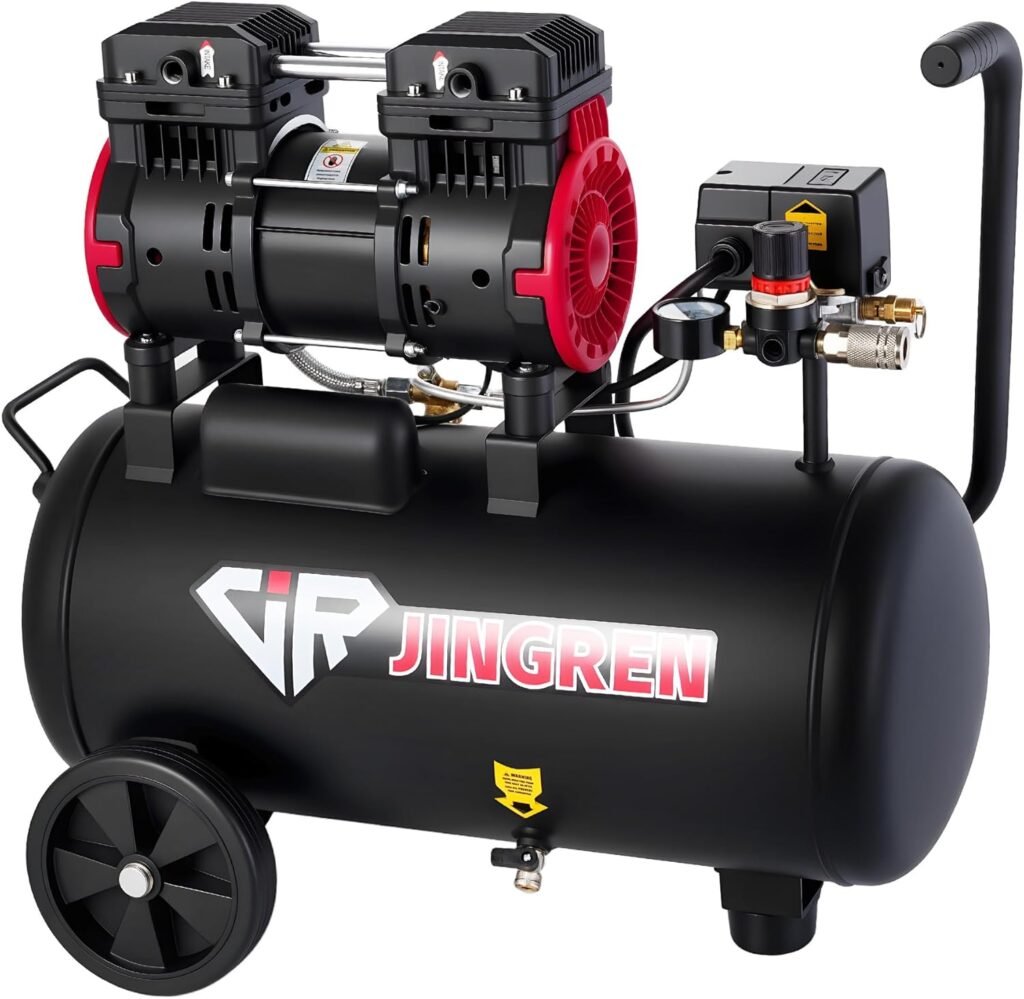

What Is the 8 Gallon Ultra Quiet Air Compressor Really Like?
When we look at the “8 Gallon Ultra Quiet Air Compressor, 2HP 4.2CFM, Max 120 PSI Oil-Free Air Compressor Tank, 120V/11A, 68dB for Car Repair, Spray Painting, Woodwork Nailing(With Accessories Kit),” we are really trying to answer one big question: is this a practical, quiet, and reliable compressor for home and small workshop use?
From the specs and real‑world performance, this model from JIR JINGREN is built as a general‑purpose, low‑noise workhorse. It is not a huge industrial machine, but it aims to give us enough power for car repair, DIY projects, and light professional work while keeping noise and maintenance low.
Key Specifications at a Glance
We often find it easier to judge a tool when we can see the numbers laid out clearly. This compressor brings together tank size, airflow, and low noise in a compact package.
Here is a quick breakdown of its main specs:
| Feature | Specification |
|---|---|
| Brand / Model | JIR JINGREN 8 Gallon Ultra Quiet Air Compressor |
| Tank Capacity | 8 gallons |
| Motor Power | 2 HP |
| Maximum Pressure | 120 PSI |
| Air Delivery @ 40 PSI | 5.0 CFM |
| Air Delivery @ 90 PSI | 3.5 CFM |
| Voltage / Current | 120V / 11A |
| Noise Level | 68 dB (ultra quiet) |
| Pump Type | Oil‑free |
| Intended Uses | Car repair, spray painting, woodwork nailing, inflation, small construction |
| Protection Features | Overheating protection, over‑current shutoff, pressure relief |
| Extras | Comes with accessories kit (for immediate use with common tasks) |
This blend of capacity, airflow, and quiet operation makes it especially suitable for garages, basements, home workshops, and small job sites where noise and space matter.
Performance and Power in Real Use
We all want to know how a compressor really performs once we plug it in and connect our tools. On paper, a 2 HP motor and up to 120 PSI look promising, but the real question is whether it can keep up with our tasks without constant pauses.
The combination of 5.0 CFM at 40 PSI and 3.5 CFM at 90 PSI is designed for typical home and light professional tools. This means we can handle a wide variety of jobs, especially intermittent ones, without waiting forever for the tank to refill.
How the 2HP Motor Feels in Day‑to‑Day Tasks
The 2 HP motor is the heart of this compressor, and it has enough strength to keep the 8‑gallon tank filled to 120 PSI reasonably quickly. That gives us solid performance for short bursts and moderate continuous use.
In practice, we can run brad nailers, finish nailers, staplers, and many airbrush or spray guns effectively. For impact wrenches or larger tools, we will likely use them in shorter bursts, which this compressor handles quite well for home and light workshop tasks.
Air Delivery: 5.0 CFM @ 40 PSI and 3.5 CFM @ 90 PSI
CFM (cubic feet per minute) tells us how much air the compressor can deliver continuously. At 40 PSI, we get 5.0 CFM, which is helpful for applications like low‑pressure spray guns and some inflation tasks. At 90 PSI, 3.5 CFM is enough for many pneumatic tools that require consistent mid‑pressure performance.
For example, typical finish nailers and brad nailers work comfortably at these levels. Many HVLP and LVLP spray guns fall into the usable range as well, especially if we are not running them hard all day in a professional environment.
Suitability for Short vs Long Tasks
With an 8‑gallon tank and these airflow numbers, we are looking at a compressor that excels with short to medium duty cycles. That includes tasks like:
- Nailing trim and baseboards
- Inflating car tires and sports equipment
- Light to moderate spray painting projects
- Short bursts with small impact wrenches or ratchets
For heavy, continuous sanding or long‑lasting, large‑panel automotive spraying, we would probably want a larger tank and higher CFM. However, for regular home and DIY use, this compressor strikes a very practical balance.
Noise Level: How Quiet Is 68 dB Really?
Many of us have painful memories of old, rattling compressors that sound like a jackhammer in the garage. The big promise here is “ultra quiet” operation at around 68 dB. That number matters far more than we might think.
A noise level of 68 dB is closer to a normal conversation or a running dishwasher than an industrial machine. That means we can use this compressor indoors or in a small workshop without feeling like we need ear protection every time it kicks on.
Using It in a Garage, Basement, or Workshop
With 68 dB, we can have this running in our garage while working, and we can still talk to someone standing nearby without shouting. If our workshop is part of our home or located under living spaces, that lower noise output helps us avoid disturbing family members or neighbors.
We might still hear the compressor clearly, but it is more of a steady background sound than an aggressive, rattling noise. For early‑morning or evening projects, this is a big plus.
Comparing 68 dB to Typical Compressors
Many conventional oil‑lubricated compressors easily reach 80–90 dB or more. That difference might not seem huge in numbers, but to our ears it is substantial.
To put it into perspective:
- 60–70 dB: normal conversation, office noise
- 80–90 dB: loud traffic, shop tools, potentially damaging with long exposure
At 68 dB, this model fits much closer to the “conversation” range than traditional compressors often do. That makes it especially attractive if we value comfort, communication, or simply a calmer working environment.

Tank Capacity and Design: Why 8 Gallons Matters
The 8‑gallon tank size sits in a sweet spot between small, portable 1–3 gallon compressors and bulkier 20–30 gallon shop models. We get more consistent airflow than tiny compressors while still being manageable in size and weight.
An 8‑gallon tank allows us to run tools for longer before the motor kicks back on to refill. That makes our workflow smoother and reduces the constant cycling we see with very small tanks.
Balancing Portability and Capacity
With 8 gallons, we are not locked into a single stationary work area. We can roll the compressor around the garage or carry it to different parts of a job site as needed. It is not feather‑light, but it is more mobile than large upright shop units.
This is perfect for:
- Moving between rooms during trim or flooring projects
- Rolling around the driveway for car repair and tire inflation
- Shifting between woodworking bench, paint area, and garage space
We get enough air storage to make our tools feel dependable, without needing a forklift to move the unit.
Tank Pressure: Up to 120 PSI
A maximum of 120 PSI is a standard and practical rating for general‑purpose work. It allows us to use most common pneumatic tools made for home and light professional use.
We can easily support:
- Nail guns (brad, finish, some framing at light duty)
- Small impact wrenches and ratchets
- Staplers and blow guns
- Airbrushes and small spray guns
The ability to go up to 120 PSI also provides a small buffer so the compressor does not need to run constantly at its upper limit just to keep tools working.
Oil‑Free Pump: Low Maintenance and Cleaner Operation
One of the standout features is the oil‑free design of the compressor pump. This matters both for maintenance and for the quality of air we get out of the system.
An oil‑free pump does not require us to monitor and change oil regularly. We also do not need to worry about oil mist potentially entering our air lines and affecting finish‑sensitive work like painting.
What Oil‑Free Means for Us
With an oil‑free compressor, we essentially get “plug and go” operation. We set it up, connect our tools, and start working without checking or topping off lubrication. For many of us, this simplicity is worth a lot.
Over time, we may still want to maintain the unit—drain condensation from the tank, keep filters clean, and store it properly—but we avoid the mess and hassle of oil changes and spotting oil leaks.
Benefits for Painting and Finishing Work
If we plan to use this compressor for spray painting or finishing woodwork, the oil‑free operation helps keep contaminants out of the air line. While we might still want to use in‑line filters and regulators for best results, we are starting from a cleaner base.
That can mean:
- Smoother paint finishes
- Less risk of fisheyes or contamination
- Cleaner results for clear coats and topcoats
For DIY painters and hobby woodworkers, this is a definite advantage.
Durability and Build Quality
The compressor housing and tank are designed to handle regular use without feeling flimsy. The manufacturer emphasizes a rugged construction that supports long‑term, stable operation with reduced maintenance costs.
We are not looking at a tiny plastic‑cased gadget; this is a metal‑tank, workshop‑ready unit intended to withstand bumps, movement, and frequent cycling.
Built for Prolonged and Heavy‑Duty Operation (Within Its Class)
While this is not a massive industrial compressor, it is engineered to handle prolonged use relative to its size. The motor and pump are designed for continuous and stable air supply for tasks like:
- Repetitive nailing in woodworking and construction
- Ongoing tire work and small shop car maintenance
- Extended spray painting sessions on furniture or small panels
It may need to pause and refill as we work through heavy cycles, but it is not a delicate, occasional‑use toy. The build suggests we can trust it as a central piece of a small shop or serious DIY setup.
Housing and Components
The robust housing helps protect internal components against everyday knocks and vibrations. Combined with the cooling fan and safety features, the design is aimed at long service life.
We can expect:
- A solid tank with adequate welding and fittings
- Sturdy feet or wheels (depending on configuration) that minimize walking or vibration
- Practical placement of gauges and controls for easy use
All of this contributes to a compressor that feels like a real tool, not a disposable gadget.
Safety Features and Protection
Using a compressor means working with pressurized air and electrical power, so safety features are not optional—they are essential. We appreciate that this model includes several layers of protection to keep the unit and us safer.
The main safety features include:
- Large cooling fan
- Automatic overheating protection
- Over‑current shutoff
- Pressure relief protection
Overheating Protection and Cooling Fan
The integrated cooling fan helps keep the motor and pump from getting too hot during longer sessions. Heat is a major factor in wear and failure for compressors, so active cooling is an important part of the overall design.
If the unit does approach unsafe temperatures, the automatic overheating protection kicks in. The compressor will shut down to prevent damage to internal components, rather than continuing to run until something fails.
Over‑Current and Pressure Relief Protection
In case of electrical issues, such as a spike in current, the compressor is designed to shut off automatically. That reduces the risk of damage to the motor or our home’s electrical system.
On the air side, pressure relief protection prevents the tank from being over‑pressurized. If the pressure rises beyond safe levels, the unit will release the extra pressure or shut down to keep things within safe limits.
All of this means we can work with more confidence, knowing the compressor is monitoring its own safety conditions.
Practical Applications: Where This Compressor Shines
The best way to judge a compressor is by what it allows us to do more easily. This 8‑gallon, 2 HP, ultra‑quiet model is tailored for a wide range of common tasks around the home, garage, and small workshop.
We can treat it as a general‑purpose air station for:
- Car repair and tire work
- Spray painting and finishing
- Woodworking and carpentry
- Construction and remodeling projects
- General inflation and cleaning tasks
Car Repair and Tire Inflation
For car enthusiasts and home mechanics, this compressor is a capable partner. We can use it for:
- Inflating car, motorcycle, and bicycle tires
- Running small impact wrenches or ratchets for lug nuts (within reason)
- Blowing out dust and debris from engine bays or brakes
- Operating air blow guns for parts cleaning
At 120 PSI max and 3.5 CFM at 90 PSI, we may not match a full‑scale automotive shop’s capacity, but we are more than covered for typical home garage needs.
Spray Painting and Finishing Projects
For spray painting, we get the combination of low noise, sufficient airflow, and oil‑free operation. That makes this compressor a strong choice for:
- Painting furniture, cabinets, and doors
- Applying finishes to woodworking projects
- Small to medium hobby or DIY paint jobs
We may need to check our spray gun’s exact CFM requirements and adjust expectations accordingly. For occasional and hobby work, this compressor typically does a solid job, especially if we are not spraying continuously for hours.
Woodwork Nailing and Construction Tasks
If we are into woodworking, trim installation, or light construction, this compressor is particularly well‑suited. We can easily power:
- Brad nailers for trim, molding, and small projects
- Finish nailers for baseboards, door casings, and cabinetry
- Staplers for upholstery or light sheathing
- Light‑duty framing nailers for smaller structural tasks (with moderate duty cycle)
The 8‑gallon tank and decent CFM ratings mean the compressor will not constantly cycle for every single nail, giving us a smoother workflow.
General Household and Workshop Use
Beyond the bigger tasks, we will likely find countless small uses for having reliable compressed air on hand:
- Inflating sports balls and pool toys
- Cleaning dust out of tools, filters, and work surfaces
- Powering small air tools for DIY repairs
- Supporting hobbies like airbrushing or model painting
Once we have a compressor like this, it tends to become a central part of our DIY ecosystem.
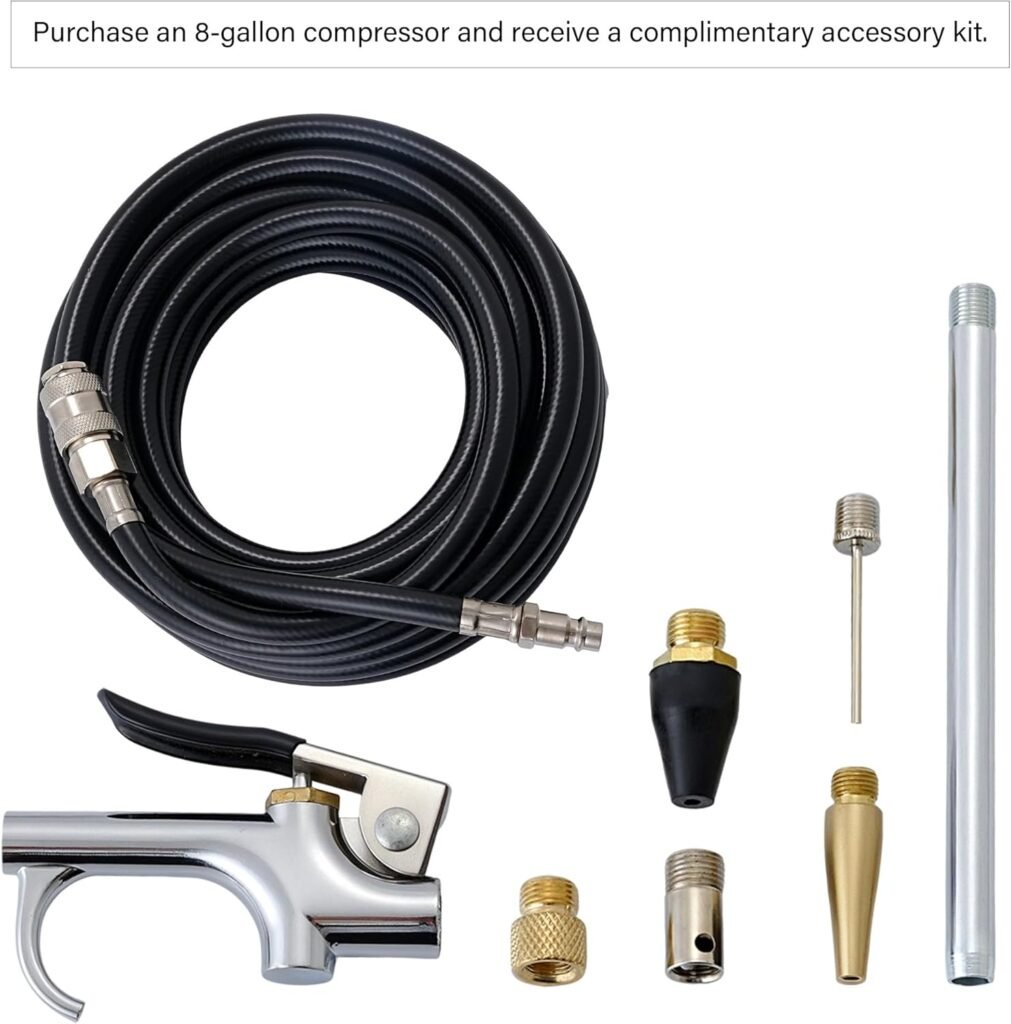
Included Accessories Kit: Getting Started Faster
One notable perk is that this compressor comes with an accessories kit. While the exact contents may vary, these kits typically include basics such as:
- Air hose or starter hose
- Quick‑connect fittings
- Blow gun
- Tire inflator or gauge attachments
- Common nozzles and adapters
This means we can start using the compressor for simple tasks almost immediately after unboxing, instead of needing to buy all the fittings and attachments separately.
Why an Accessories Kit Helps New Users
For those of us who are newer to air compressors, figuring out which fittings and hoses we need can be confusing. Having a starter kit simplifies that first setup.
We can:
- Inflate tires right away
- Use a blow gun to clean up the workspace
- Test our tools and air lines without extra purchases
Over time, we might upgrade hoses or add specialized tools, but a starter kit gives us everything we need to get comfortable with the compressor from day one.
Ease of Use and Everyday Operation
A tool can be powerful, but if it is awkward or confusing to use, we will reach for it less often. This compressor is designed to be straightforward to operate, even if we are not seasoned pros.
We plug it into a standard 120V outlet, attach the hose, set the regulator, and we are ready to go. The noise level is low enough that we do not feel overwhelmed when it kicks on, and the controls are placed where we can read and adjust them easily.
Setup and Controls
Typical operation involves:
- Plugging the compressor into a suitable electrical outlet (11A draw at 120V).
- Closing the tank drain valve if it is open.
- Switching the compressor on and allowing it to build pressure to the cutoff point.
- Adjusting the regulator knob to the correct pressure for our tool.
- Connecting our tool using the quick‑connect fitting.
The gauges show both tank pressure and regulated pressure, giving us a clear sense of what is happening during use.
Portability and Storage
While an 8‑gallon compressor is not pocket‑sized, it is still manageable for one or two people to move around. Wheels and a handle (if included with the specific configuration) make rolling it around the shop or driveway fairly simple.
When we are done, we can:
- Turn it off and unplug it
- Open the tank drain to remove condensation
- Coil the hose and stow accessories neatly
This makes it realistic to keep in a garage or small workshop without sacrificing too much space.
Maintenance and Longevity
One of the advantages of an oil‑free compressor is reduced direct maintenance on the pump itself, but that does not mean we should ignore the unit. A few small habits keep it running smoothly for years.
Regular tasks include:
- Draining condensation from the tank after use
- Checking hoses and fittings for leaks
- Keeping the unit clean and free of heavy dust buildup
- Ensuring vents and cooling fan areas remain unobstructed
Draining the Tank
Compressors naturally cause moisture in the air to condense inside the tank. Over time, if we never drain it, this can lead to rust and internal damage.
By routinely opening the drain valve (ideally after each day of use) to release water, we help protect the tank and extend its life. It is a simple step that pays off in longevity.
Watching for Leaks and Wear
Like any pressurized system, hoses and fittings can loosen or wear over time. If we notice the compressor cycling on frequently when we are not using air tools, it may be compensating for a slow leak.
Checking:
- Hose connections
- Quick‑connect fittings
- Threaded joints
will allow us to catch issues early. Replacing a worn hose or applying thread sealant where needed is usually easy and inexpensive.
Pros and Cons: An Honest Look
No product is perfect, and it helps to look at both strengths and limitations so we can decide whether this compressor fits our needs.
What We Are Likely to Appreciate
-
Ultra quiet operation at around 68 dB
We can work indoors or at night without overwhelming noise. -
Strong 2 HP motor and up to 120 PSI
Plenty of power for most home and light workshop tasks. -
Solid CFM performance (5.0 @ 40 PSI, 3.5 @ 90 PSI)
Supports a wide range of pneumatic tools in intermittent use. -
Oil‑free design
Lower maintenance and cleaner air for painting and finishing. -
8‑gallon tank
Nice balance of capacity and portability; less cycling than tiny units. -
Safety features
Overheating, over‑current, and pressure relief protections increase reliability and safety. -
Accessories kit included
Lets us start using the unit right away for basic tasks.
Potential Limitations to Keep in Mind
-
Not ideal for very heavy continuous industrial use
For nonstop sanders or large‑panel auto body shops, a larger compressor would be better. -
8 gallons is mid‑size, not ultra‑compact
Still portable, but may be a bit large if we have extremely limited space. -
CFM limits with large, air‑hungry tools
Bigger air sanders, grinders, or continuous high‑volume sprayers may outpace this unit during long sessions.
If we are honest about how we plan to use it—general DIY, home projects, car repair, woodworking, and moderate spray painting—these limitations are usually not a problem.
Who Is This Compressor Best For?
To decide if this model is right for us, we should think about our main use cases and our workspace. This 8‑gallon ultra quiet compressor is a strong match for:
-
DIY enthusiasts and homeowners
Who want a reliable, quiet compressor for regular use without professional‑level demands. -
Hobby woodworkers and furniture makers
Who need consistent air for nailers and finishing, without a roaring shop environment. -
Home mechanics and automotive hobbyists
Who handle tire work, light impact wrench use, and cleaning tasks in a garage. -
Small workshops or side‑business setups
Where space and noise are concerns but a solid, capable compressor is still required.
If we run a full‑time professional automotive paint booth or large construction crew, we may want more capacity and CFM. But for those of us who care about quality, quiet performance, and versatility in a compact format, this compressor fits very well.
Practical Tips for Getting the Most Out of It
Once we bring this compressor into our workspace, a few habits and accessories can help us maximize its usefulness and lifespan.
Pair It with the Right Tools and Hoses
We will get the best experience if we choose tools and hoses that are well matched to its capabilities. That means:
- Using nailers and staplers that operate within the 3.5 CFM @ 90 PSI range
- Choosing spray guns that do not demand excessively high CFM for continuous use
- Running hoses that are not overly long or narrow (to reduce pressure drop)
We can still push it a bit with more demanding tools in short bursts, but for consistent comfort, matching specs is smart.
Use Regulators and Filters Where Needed
While the compressor includes basic regulation, we may benefit from additional in‑line regulators, water separators, and filters, especially for painting and fine finishing.
These add‑ons help:
- Maintain stable pressure to sensitive tools
- Remove moisture before it reaches spray guns
- Keep impurities out of our finishes
Combined with the oil‑free pump, this setup can provide very clean, consistent air for detail‑oriented work.
Store and Transport It Thoughtfully
We can help the compressor last by:
- Storing it in a dry, sheltered area
- Avoiding long‑term exposure to rain, extreme cold, or heat
- Securing it properly during transport to avoid damage
If we frequently move it from place to place, we may also want to invest in durable hoses and quick‑connect fittings to make setup and breakdown faster.
Long‑Term Value and Cost‑Effectiveness
When we evaluate a tool like this, we are really asking whether it will earn its place in our workspace over the long term. We want something that works reliably, is comfortable to use, and does not demand constant attention or costly repairs.
The oil‑free pump, quiet operation, and solid safety features all contribute to long‑term value. We are less likely to deal with burned‑out motors or damaged tanks thanks to built‑in protections and better cooling.
Saving Time and Effort
Having a dependable compressor means:
- Faster tire and inflation jobs
- Quicker trim and carpentry work compared to hammer‑only methods
- Cleaner finishes and more professional results with spray equipment
Over time, it can significantly speed up our projects and open up new possibilities that would be much harder to tackle without air power.
Lower Ongoing Maintenance
Without oil changes or complex pump service, maintenance costs and time stay relatively low. Our main responsibilities involve draining condensation, keeping things clean, and checking for leaks.
That means more time working on our projects and less time tuning and fixing the compressor itself.
Final Thoughts: Is It Worth Adding to Our Workshop?
If we value a quiet, capable, and versatile air compressor for home and small workshop use, this “8 Gallon Ultra Quiet Air Compressor, 2HP 4.2CFM, Max 120 PSI Oil-Free Air Compressor Tank, 120V/11A, 68dB for Car Repair, Spray Painting, Woodwork Nailing(With Accessories Kit)” stands out as a strong choice.
We get:
- An ultra‑quiet unit that is far more pleasant to be around than typical compressors
- Enough power and airflow to handle most DIY and light professional tasks
- An oil‑free design that keeps maintenance and contamination issues low
- Safety features that protect both the compressor and our workspace
- An accessories kit that helps us get started right away
If our projects include car repair, woodworking, trim installation, spray painting, or general home maintenance, this compressor can easily become a central, frequently used tool. We might not power a full commercial shop with it, but for most of us building and fixing things at home or in a small workshop, it offers an appealing balance of performance, quiet operation, and long‑term practicality.

Disclosure: As an Amazon Associate, I earn from qualifying purchases.