Have we ever wished we could run our air tools without that constant, earsplitting compressor noise in the background?

Overall Impression of the 1.5HP 8 Gallons Air Compressor Tank
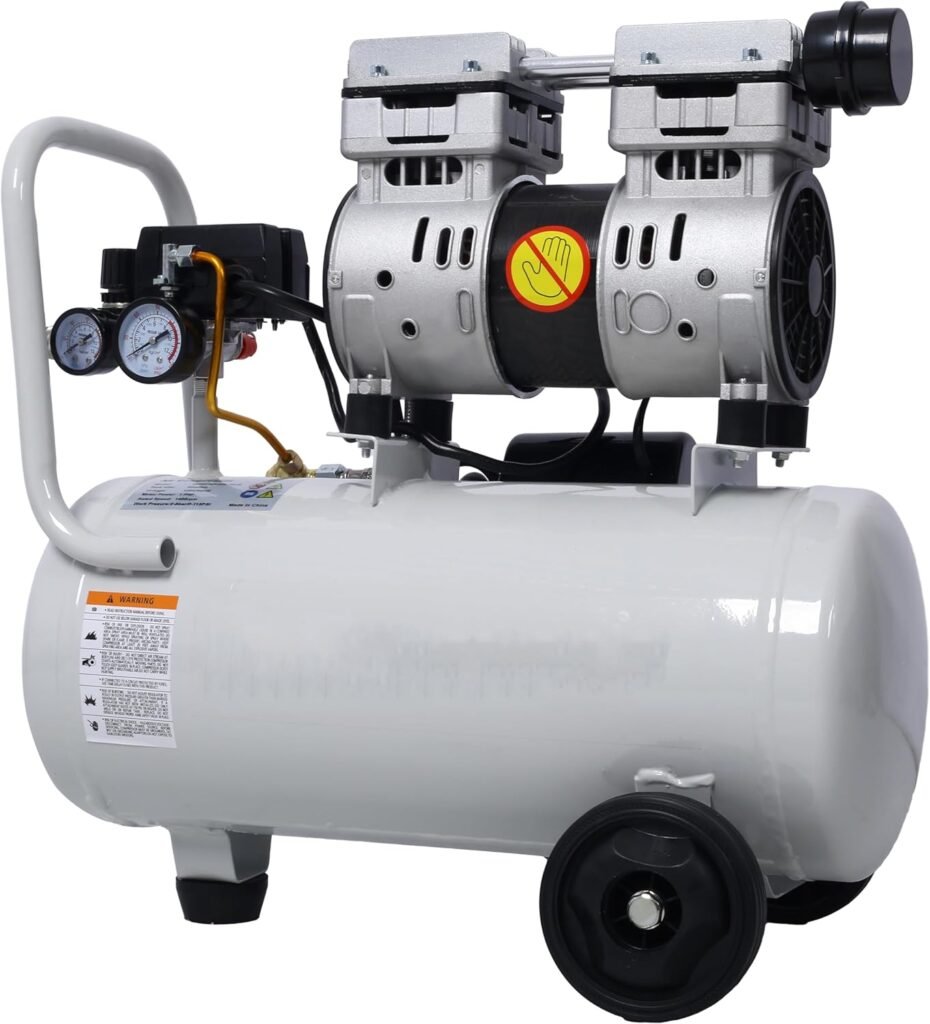
We find the 1.5HP 8 Gallons Air Compressor Tank Ultra Quiet Horizontal Tank Adjustable Pressure Ideal, Oil-Free, Electric Shop Air Compressor Portable with Wheels, with Automatic Drain Valve (Light grey) to be a surprisingly capable blend of power, portability, and quiet performance. It feels like it was made for people who want pro-level air performance without turning the workspace into a noisy construction zone.
From the first use, we notice how manageable the sound level is and how quickly the tank recovers between uses. It suits both serious DIYers and small-shop professionals who need dependable compressed air but also value comfort and convenience.
Key Specifications at a Glance
We often find it helpful to see the essentials in one place before getting into the details. This compressor has a well-balanced set of specs that make it suitable for a wide range of tools and tasks.
| Feature | Specification / Detail |
|---|---|
| Motor Power | 1.5 HP (Electric) |
| Tank Capacity | 8 gallons (horizontal, light grey) |
| Pump Type | Oil-free, low-maintenance |
| Max Pressure | 115 PSI |
| Air Delivery | 4.0 CFM @ 90 PSI, 5.2 CFM @ 40 PSI |
| Operating Speed | 1400 RPM (low RPM, high efficiency) |
| Noise Level | ~70 dB (ultra quiet compared to typical shop compressors) |
| Weight | Approx. 42 lbs |
| Tank Material | Rust-resistant aluminum |
| Mobility | Portable design with wheels |
| Drain System | Automatic drain valve |
| Intended Use | Residential & commercial; DIY and professional applications |
These numbers tell us a lot about real-world performance: strong enough air output for many common tools, manageable noise level, and a tank size that hits a sweet spot between portability and capacity.
Design and Build Quality
We notice right away that the compressor has a compact, horizontal tank layout with a clean light grey finish. The design appears intentional: low center of gravity, user-friendly controls, and a frame that feels stable when rolling or parked.
The materials feel well thought out, especially the rust-resistant aluminum tank, which keeps the overall weight down while adding durability. For anyone who has wrestled with heavy steel tanks or dealt with corrosion over time, this is a meaningful improvement.
Horizontal Aluminum Tank and Form Factor
We appreciate how the horizontal 8-gallon tank keeps the unit low and balanced. That helps when wheeling it around, parking it under a bench, or squeezing it between other tools.
The aluminum construction does two things for us: it resists rust in humid or damp environments, and it cuts down the overall weight. That means less worry about long-term tank life and less strain when moving it from place to place.
Portability and Weight
At about 42 pounds, this compressor falls into that “portable but substantial” range. It’s not a tiny inflator, but it’s far from an immovable shop anchor.
The integrated wheels and handle turn this into a practical, job-site-friendly machine. We can load it into a vehicle, roll it across a garage, or reposition it in a workshop without needing two people. For contractors, remodelers, or active DIYers, this level of portability adds real value.
Power and Performance
We care most about how strongly and consistently a compressor can actually power our tools. On that front, the 1.5HP motor and air output numbers are quite respectable for an 8-gallon portable unit.
The 1.5 HP electric motor drives the pump at a modest 1400 RPM, which is on the lower side compared to many consumer compressors. Lower RPM usually means less wear, less heat, less noise, and a longer service life.
CFM and Pressure Capabilities
Air delivery and pressure define what we can realistically do with a compressor. This model provides:
- 4.0 CFM at 90 PSI
- 5.2 CFM at 40 PSI
- Maximum pressure: 115 PSI
This output places the unit in a comfortable zone for many common shop and job-site tasks, including framing and brad nailing, light impact work, air brushing, inflating, and basic cleaning.
We would not consider it a heavy-duty solution for nonstop, high-demand tools like full-size sanders or grinders, but for intermittent use and a variety of light-to-medium tasks, the performance is more than adequate.
Suitable Tools and Tasks
To make things more practical, we like to think in terms of actual tools. With this compressor, we can comfortably run:
- Nail guns (brad, finish, many framing nailers)
- Staplers for upholstery and light construction
- Impact wrenches (especially for intermittent automotive work)
- Air ratchets for lighter mechanical jobs
- Spray guns for small to moderate paint jobs and touch-ups
- Blow guns for cleaning filters, work areas, or parts
- Tire inflators for cars, bikes, trailers, and lawn equipment
For continuous-demand tools like DA sanders or extended sandblasting, we’d want to manage expectations. This compressor can support occasional use in those categories, but it shines most when tools are used in bursts with short rest intervals.
Ultra Quiet Operation
Noise is often the deciding factor between using a compressor freely or avoiding it unless we absolutely must. With a sound level of around 70 dB, this unit stands out as significantly quieter than many piston-style shop compressors that easily climb into the 80–90 dB range.
At roughly 70 dB, we’re in the realm of a loud conversation or a running dishwasher, not the shrieking, metallic clatter that many of us associate with air compressors.
Comfort in Residential and Commercial Spaces
Because it is so quiet for its category, we feel comfortable using this compressor:
- In residential garages or basements without disturbing neighbors
- Inside shops where several people are working close by
- Near customers in small businesses, such as auto-detailing or carpentry shops
We still recommend hearing protection for prolonged use—good safety habits never hurt—but the reduced noise level makes the working environment far more pleasant and less fatiguing.
Low RPM and Noise Reduction
The relatively low 1400 RPM helps achieve that quiet operation. Instead of racing at high speed, the pump runs in a more controlled, smoother manner. That not only lowers the noise but tends to reduce vibration, which in turn can reduce wear and the chance of fittings loosening over time.
We appreciate the overall acoustic character too: more of a steady hum than an aggressive chattering sound. It’s easier on the nerves when we spend hours in the shop.
Oil-Free, Maintenance-Light Operation
One of the standout convenience features is the oil-free pump design. We don’t have to worry about checking oil levels, changing oil, or dealing with oil carryover into our air lines.
This design choice matters a lot for users who want a “plug it in and go” experience without ongoing maintenance schedules. For casual users, it helps ensure that the compressor is ready whenever we pull it out; for busy pros, it means fewer tasks to track in the workflow.
Performance in Cold Weather
Traditional oil-lubricated compressors can struggle in colder environments because oil thickens, making startups harder and putting extra strain on the motor.
An oil-free system doesn’t rely on oil viscosity, so we generally see more reliable starting and consistent operation in cold weather. That benefits us if we work in unheated garages, sheds, or job sites in cooler seasons. We’re not fighting sluggish startups every time the temperature drops.
Reduced Maintenance and Cleaner Air
Without oil in the pump system, we reduce the risk of oil mist contaminating air hoses, tools, and paint jobs. Our air remains cleaner, especially when combined with appropriate filters or moisture traps.
Maintenance mainly comes down to routine checks: ensuring connections are tight, monitoring the pressure gauges, and taking advantage of the automatic drain valve that removes moisture from the tank. Compared to compressors that demand periodic oil changes, this feels refreshingly simple.
Tank Capacity and Recovery Time
The 8-gallon aluminum tank gives us a solid middle ground—larger than tiny “pancake” compressors, but still small enough to carry or roll around easily.
Tank size matters because it defines how long tools can run before the motor must kick in. Combined with the pump’s output, we get an overall feel of how “tiring” the compressor is under continuous use.
8-Gallon Sweet Spot
We find this capacity fits well for:
- Trim carpentry and finish work
- Light framing tasks
- Automotive repairs and tire service
- Home renovation projects
- Small painting and staining jobs
Larger stationary tanks offer more reserve air, but at the expense of mobility. With this unit, we get enough tank volume to buffer tool demands while still being able to move it around easily.
Rapid Recovery in About 95 Seconds
The manufacturer states a recovery time from no load to full load in just 95 seconds. That means it can refill the tank from empty to working pressure in under two minutes.
In practical terms, we see benefits such as:
- Less waiting between cycles when using air-hungry tools
- Smoother workflow on projects that need frequent bursts of air
- Fewer interruptions when multiple small tasks are chained together
We appreciate this quick turnaround because the compressor keeps pace with many real-world workflows instead of constantly lagging behind our tool usage.


Automatic Drain Valve: Why It Matters
Moisture is a hidden threat inside every compressor tank. As compressed air cools, water condenses and accumulates at the bottom. Over time, that can shorten tank life and introduce water into tools and finishes.
The automatic drain valve on this model is a notable convenience feature. It takes over the job of regularly purging that collected moisture.
Convenience and Longevity
Instead of crouching under the tank and manually opening a petcock drain regularly, we let the system handle it. This encourages consistent draining, which:
- Helps prevent internal corrosion
- Keeps the tank healthier for longer
- Reduces the chances of excessive water reaching the air line
We still like to visually inspect and confirm that draining is happening properly, but the automatic system takes most of the hassle out of the equation.
Improved Air Quality for Tools and Finishes
Moisture can be a serious problem for:
- Paint and clear coat finishes
- Pneumatic nailers and staplers
- Air ratchets and impact tools
By encouraging regular draining via automation, we lower the amount of water that escapes into our system. Combined with a good inline filter, we get cleaner air, better tool life, and better surface results in painting or finishing tasks.
Adjustability and User Controls
A good compressor is only as useful as its controls are intuitive. We like that this unit supports adjustable pressure, letting us tune output to match tool requirements.
We typically see:
- A tank pressure gauge showing stored air pressure
- A regulated output gauge for tool pressure
- A regulator knob to set desired output PSI
- Standard quick-connect fittings for hose attachment
These elements make day-to-day operation straightforward, even for someone not deeply experienced with air systems.
Tailoring Pressure to the Task
Different tools want different pressures. Nail guns often operate in the 70–110 PSI range, while air brushes might use much lower pressure for finesse. Impact wrenches often run around 90 PSI.
With the adjustable regulator, we can:
- Lower pressure for delicate work to avoid damage
- Increase pressure for driving fasteners into hard materials
- Fine-tune for coatings and finishes that depend on smooth, controlled spray
This flexibility lets one compressor handle a broad set of tasks rather than being locked into a single role.
Easy-to-Read Gauges and Layout
We appreciate when information is easy to see at a glance. Clearly marked gauges and accessible controls mean we spend less time fumbling and more time working.
The horizontal format helps here too; it naturally positions the gauges and controls in a readable, reachable line. That’s especially handy when we’re moving quickly through a project and need to check status without breaking our rhythm.
Portability and Job-Site Use
Beyond specs, what we care about is how this compressor fits into our daily routine. The combination of weight, wheels, and compact design works well for users who move between rooms, floors, or entire locations.
Maneuverability with Wheels
The built-in wheels and handle mean we can:
- Roll the compressor from our vehicle to the job site
- Move it around different areas of a house or workshop
- Reposition it easily as hoses and tools change locations
We’re not forced to muscle a heavy, awkward tank; instead, the design encourages mobility. For anyone who does framing, trim, or small remodeling in multiple rooms, this becomes a quality-of-life asset.
Storage and Footprint
The horizontal tank keeps overall height moderate, so we can:
- Slide it under benches or shelves
- Park it in corners without bumping into overhead storage
- Fit it in cramped garages alongside other large tools
Its footprint feels appropriate for tight spaces, helping us maintain a tidy, organized shop environment instead of tripping over a bulky compressor.
Durability and Construction Quality
We always weigh the long-term reliability of a compressor because it’s a foundational shop tool. While we can’t see inside every component, several design choices point toward solid durability.
Rust-Resistant Aluminum Tank
The aluminum tank is a standout point. Rust is a common problem in steel tanks when moisture is not managed perfectly. With aluminum, we gain improved resistance to internal corrosion.
We still want to keep up with draining (which the automatic valve helps with), but we’re less likely to see the kinds of rust-related issues that can plague older or cheaper units.
Pump and Motor Longevity
The lowered 1400 RPM speed is also a durability signal. Slower-moving parts typically experience less friction and heat buildup, which can extend the life of bearings, seals, and other mechanical components.
Combined with the oil-free design, we end up with a pump built for consistent work without heavy demands on the user to maintain lubrication schedules.
Ideal Users and Use Cases
To understand where this compressor truly fits, we like to consider real-world user profiles. This model is clearly engineered for a mix of DIY and professional use, especially where noise control and portability matter.
Homeowners and DIY Enthusiasts
For home users, this compressor is well suited if we:
- Maintain vehicles, bicycles, or home equipment
- Take on woodworking projects with nail guns and staplers
- Need occasional painting or finishing support
- Want a quiet compressor that doesn’t overwhelm the house
It delivers more performance than the smallest inflators or trim compressors while staying manageable in both size and noise.
Professional Trades and Small Shops
Professionals who may benefit include:
- Carpenters and remodelers who need portable air on multiple job sites
- Finish carpenters and cabinet makers who appreciate quiet, controlled air
- Auto detailers who might use air tools near customers or in enclosed spaces
- Small workshops where several tasks happen in the same room
Noise reduction alone can justify this choice in many commercial settings where customer experience or worker comfort is a priority.
Advantages of the 1.5HP 8 Gallons Ultra Quiet Compressor
Every product has strengths, and we see several clear benefits in this compressor’s design and performance.
Key Strengths
We would summarize the main advantages as:
- Quiet operation (~70 dB): Much easier to live with daily than louder units.
- Decent power for its size: 1.5 HP with 4.0 CFM at 90 PSI serves many tools well.
- Lightweight and portable: About 42 lbs with wheels for easy movement.
- Oil-free pump: Minimal maintenance and cleaner outgoing air.
- Rust-resistant aluminum tank: Reduced risk of corrosion, better long-term reliability.
- Fast recovery (about 95 seconds): Less waiting, smoother workflow.
- Automatic drain valve: Hands-off moisture management for the tank.
These factors combine into a compressor that can genuinely support real projects without dominating the shop with noise or maintenance demands.
Potential Limitations to Consider
To keep our perspective balanced, we also want to highlight where this compressor may not be the perfect fit for everyone.
Not a Heavy Industrial Unit
This is not intended as a replacement for large, stationary compressors with huge storage tanks and significantly higher CFM output. If we:
- Run multiple high-demand air tools at once
- Sandblast frequently or operate large pneumatic grinders
- Need air for industrial-scale painting or bodywork
Then we may outgrow this model’s capabilities and should consider larger, more powerful solutions.
Intermittent vs. Continuous High-Demand Use
The 8-gallon tank and CFM output are ideal for intermittent bursts of tool use rather than long, continuous draw at maximum flow.
For many real-world tasks (nailing, short bursts of impact wrench use, quick cleaning blows), this is perfectly acceptable. But if our work requires holding a DA sander against metal for long stretches, we’ll likely notice the compressor cycling frequently and may find ourselves paused waiting for recovery.
Practical Tips for Using This Compressor
We like to gather a few usage habits that help us get the most value and life from a compressor like this, even though it is designed to be user-friendly.
Use Appropriate Hoses and Fittings
To maintain proper airflow, we want to:
- Use hoses with adequate inner diameter (often 3/8″ for higher-demand tools)
- Keep hose runs as short as practical to reduce pressure drop
- Check fittings periodically to ensure there are no persistent air leaks
Good airflow management ensures we actually get the rated CFM and pressure at the tool, not just at the tank.
Respect Duty Cycles and Cooling
Even though this compressor recovers quickly, we don’t want to treat it like an unlimited air source. Giving the unit brief rest periods during heavy use helps:
- Reduce heat buildup
- Extend pump and motor life
- Maintain consistent performance
Listening to how often it cycles—and for how long—gives us a good feel for when we might be pushing it too close to continuous duty.
Keep an Eye on Environment
We prefer to keep compressors:
- On flat, stable surfaces
- In reasonably ventilated areas to avoid overheating
- Away from excessive dust or debris when possible
Even robust units benefit from a clean, well-ventilated operating area, and we preserve performance over time by avoiding extreme conditions when we can.
How This Compressor Compares to Typical Alternatives
Without naming specific competing models, we can still describe how this unit stacks up against common categories of compressors.
Versus Small Pancake or Hot-Dog Compressors
Compared to compact 1–6 gallon “pancake” or “hot-dog” compressors, this 8-gallon unit generally offers:
- Higher air delivery (CFM), especially at 90 PSI
- Larger tank for better buffering of tool demand
- Quieter operation in many cases
- Slightly greater size and weight, but still portable
We would choose this unit over a tiny compressor if we frequently use nail guns, impact tools, or spray equipment.
Versus Large Stationary Shop Compressors
Compared to big, vertical stationary units, this model offers:
- Far better portability
- Lower power and air capacity
- Easier setup and more modest electrical demands
- More suitable noise level for mixed-use spaces
We see this as a flexible, everyday compressor rather than a heavy industrial workhorse. For many users, that’s exactly what is needed.
Real-World Scenarios Where It Shines
To anchor everything we’ve discussed, we like to picture a few typical uses where this compressor would be a particularly strong choice.
Renovating a Home
We can bring this compressor from room to room to power:
- Framing nailers for studs and framing changes
- Finish nailers for trim and molding
- Staplers for insulation or underlayment
- Blow guns for quick cleanup
Its quietness lets us work while others are in the house without constant complaints about noise.
Running a Small Woodworking Shop
In a small shop, we might use air for:
- Pin nailers and brad nailers for delicate joinery
- Blow-off tools for dust removal from benches and machines
- Occasional finishing with HVLP-style spray tools
The quieter operation helps maintain a more peaceful environment for focus and creativity.
Weekend Vehicle Maintenance
If we enjoy working on our cars or bikes, we can:
- Inflate tires and check pressures regularly
- Use an impact wrench for lug nuts or suspension parts
- Operate air ratchets for quicker disassembly
- Clean filters and parts with a blow gun
The portability allows us to roll it around the driveway or garage easily, and the power level is well-matched to typical hobbyist mechanical tasks.
Our Overall Verdict
Reflecting on everything, we see the 1.5HP 8 Gallons Air Compressor Tank Ultra Quiet Horizontal Tank Adjustable Pressure Ideal, Oil-Free, Electric Shop Air Compressor Portable with Wheels, with Automatic Drain Valve (Light grey) as a thoughtfully designed solution for users who want:
- Enough power for a wide range of common pneumatic tools
- Manageable noise levels that suit homes and small shops
- A portable, reasonably lightweight package
- Low-maintenance, oil-free operation
- Added durability from a rust-resistant aluminum tank
- Convenient features like fast recovery and an automatic drain valve
It is not meant to replace the giant industrial machines in big production shops, but for homeowners, dedicated DIYers, and many small professional operations, it fits a real sweet spot.
We feel confident recommending this compressor to anyone who values quiet operation, reliable performance, and straightforward usability. It gives us the flexibility to tackle everything from carpentry and auto work to small painting projects, all while keeping the workspace more comfortable and less noisy.

Disclosure: As an Amazon Associate, I earn from qualifying purchases.